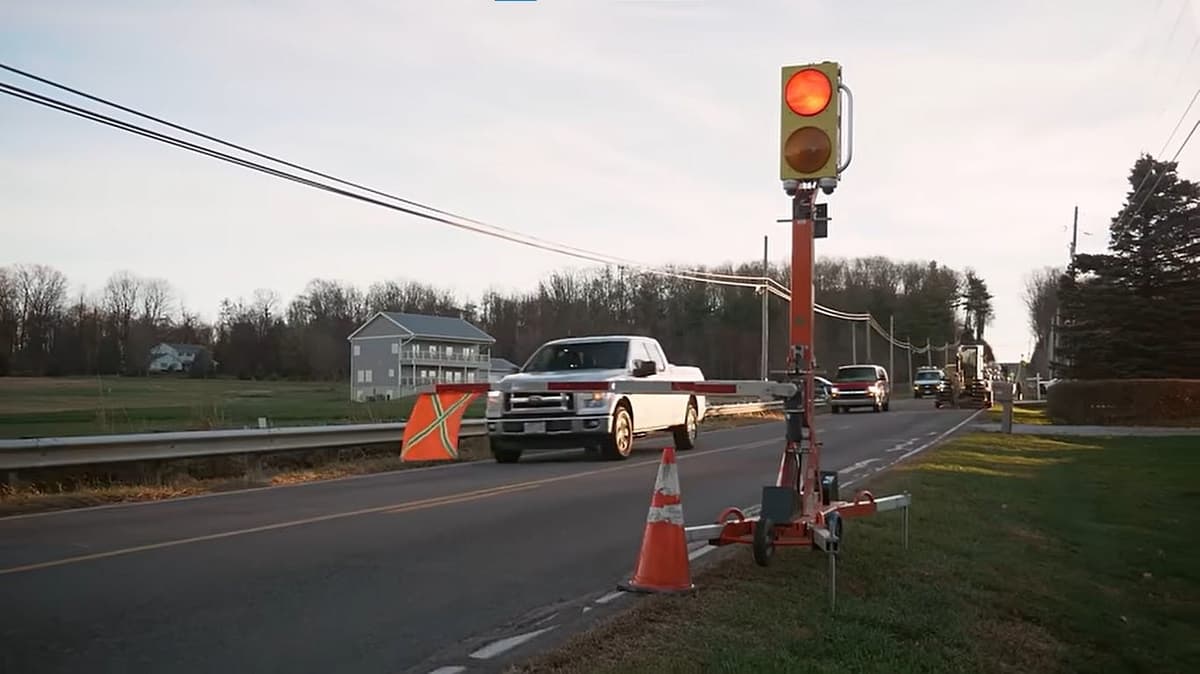
From Jobsite to Network: Scaling Smart Work Zones Across Programs
Why It Matters
Centralizing smart work‑zone data unlocks AI‑driven planning and real‑time automation, dramatically improving safety and operational efficiency for nationwide infrastructure projects.
Key Takeaways
- •WZDx standardizes work‑zone data for cross‑system sharing.
- •TMOs treat each zone as a node in a centralized network.
- •AI uses aggregated data to suggest traffic‑control plan templates.
- •Automated plans adjust warnings and detours in real time.
- •Metrics like queue growth and exposure gauge program‑wide performance.
Pulse Analysis
Smart work zones have moved beyond isolated sensor deployments toward a data‑first strategy, thanks to the FHWA’s Work Zone Data Exchange (WZDx). By codifying event details—location, lane closures, timing—in a machine‑readable format, WZDx removes the need for bespoke integrations and allows third‑party platforms such as 511 services, navigation apps, and connected‑vehicle ecosystems to ingest the same information instantly. This interoperability creates a foundation for broader safety initiatives, where every stakeholder receives consistent, up‑to‑the‑minute warnings without duplicating effort.
The real breakthrough comes when agencies adopt a Traffic Management Office (TMO) model that treats each work zone as a connected node within a centralized command structure. With a unified dashboard, operators can monitor queue lengths, speed differentials, and hotspot volatility across hundreds of sites, applying uniform triggers and resource allocations. Leveraging this rich, standardized data, artificial‑intelligence algorithms can generate traffic‑control‑plan templates tailored to roadway class, traffic volume and historical queue behavior. The next evolution—automated traffic control plans—enables the system to adjust warning placement, detour activation and timing on the fly, ensuring consistent, rapid responses that scale across state lines.
Measuring success now hinges on telemetry‑driven metrics rather than mere device deployment. Indicators such as queue formation speed, zone stability, exposure hours for flaggers, and response consistency provide concrete evidence of performance gains. As these metrics improve, agencies report fewer high‑risk moments, reduced emergency plan changes, and lower worker exposure to live traffic. The convergence of WZDx, centralized TMOs, and AI‑powered automation signals a paradigm shift: smart work zones become a networked safety layer that protects both travelers and crews while delivering measurable efficiency across the nation’s infrastructure portfolio.
From Jobsite to Network: Scaling Smart Work Zones Across Programs
Comments
Want to join the conversation?
Loading comments...