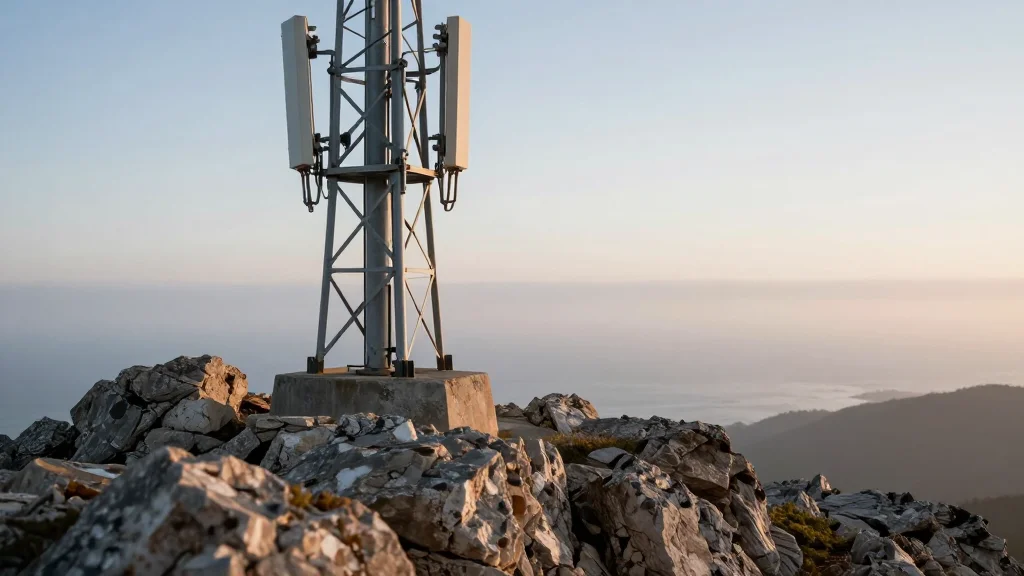
Grand Jury: Monterey County, Calif., Needs Better Emergency Radios
Why It Matters
Inadequate emergency communications jeopardize public safety and hinder coordinated fire‑fighting efforts, especially in a region prone to wildfires. Addressing the gaps will require substantial investment and inter‑agency collaboration, setting a precedent for other high‑risk jurisdictions.
Key Takeaways
- •Digital radio covers only 58% of Monterey County.
- •Analog radio leaves 18% of area without signal.
- •Terrain and fragmented fire districts hinder consistent coverage.
- •New towers cost >$1 million each; radios $12,000 per unit.
- •Next‑Gen Radio Network testing LTE, Wi‑Fi, satellite solutions.
Pulse Analysis
Effective emergency communication is a cornerstone of public safety, yet Monterey County’s sprawling 2 million‑acre landscape presents a formidable obstacle. Steep elevations, dense vegetation, and remote coastal cliffs disrupt radio waves, leaving large swaths of the region—particularly North Salinas, Prunedale, and Big Sur—without reliable digital or analog signals. When fire crews cannot instantly share situational updates, response times suffer, increasing the risk of property loss and casualties during the frequent wildfires that sweep California’s coast.
Compounding the technical challenges is a fragmented governance structure. Over a dozen independent fire districts, each funded primarily through property taxes constrained by Proposition 13, operate with disparate equipment and budgets. This patchwork results in uneven technology adoption, forcing firefighters to manually switch frequencies and rely on a mix of aging analog radios and newer digital units. The high capital cost of erecting additional towers—often exceeding $1 million due to difficult access—and the $12,000 price tag per multi‑mode radio further strain already limited resources, prompting the grand jury’s call for a coordinated funding strategy.
The county’s Next Generation Radio Network initiative offers a potential lifeline. By piloting LTE, Wi‑Fi, and low‑orbit satellite communications, the project aims to bridge coverage gaps without the need for costly tower construction. Early trials suggest these technologies can deliver clearer, more resilient links, especially indoors where traditional signals falter. Successful implementation will require aligning district budgets, securing state or federal grants, and establishing a unified command protocol. If Monterey can overcome its communication hurdles, it could serve as a model for other fire‑prone regions grappling with similar topographic and fiscal constraints.
Grand Jury: Monterey County, Calif., Needs Better Emergency Radios
Comments
Want to join the conversation?
Loading comments...