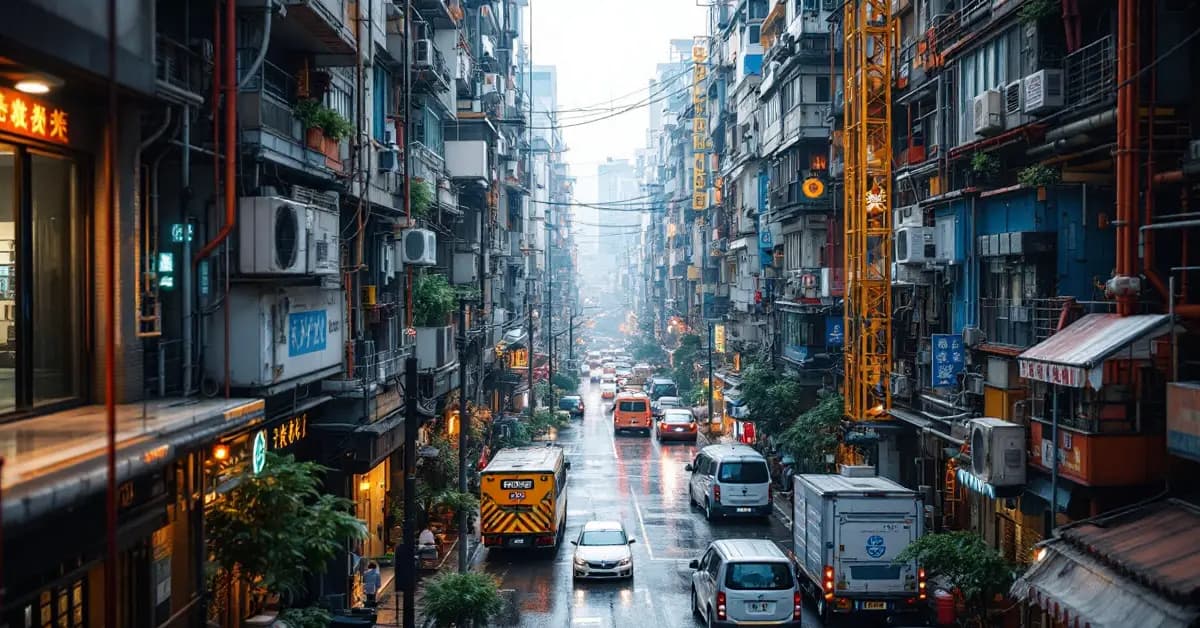
Hong Kong Reviews Building Repair Subsidies and Plans Enhanced Smart Tender Service
Why It Matters
The initiatives aim to safeguard occupants, curb tender‑rigging, and ensure sufficient funding for costly repairs, directly affecting property owners and the broader Hong Kong real‑estate market.
Key Takeaways
- •60% of Hong Kong's private buildings are over 30 years old
- •Enhanced Smart Tender to launch Q4 2026 with $38 M budget
- •$768 M OBB 2.0 fund nearly exhausted after 3,800 buildings
- •Additional $384 M earmarked for new subsidy framework in 2027
- •URA will act as gatekeeper, tightening contractor vetting
Pulse Analysis
Hong Kong’s ageing private‑building stock presents a systemic risk to safety and property values. With more than 29,000 structures surpassing the 30‑year threshold, the city has leaned on the Operation Building Bright 2.0 (OBB 2.0) scheme since 2018, channeling roughly HK$6 billion ($768 million) into inspections and essential repairs. While the programme has helped about 3,800 buildings, its funds are nearly depleted, prompting the government to allocate an additional HK$3 billion ($384 million) for a revamped subsidy model slated for early 2027. This financial boost reflects the urgency of maintaining an aging stock amid rising construction costs.
The upcoming enhanced Smart Tender service tackles another pain point: procurement transparency. By Q4 2026, the Urban Renewal Authority will operate a HK$300 million ($38 million) platform that tightens pre‑qualification, incorporates police and anti‑corruption background checks, and positions the URA as a gatekeeper for bids. Owners’ corporations will benefit from reduced collusion risk and clearer cost oversight, while contractors face stricter vetting, potentially raising service fees but improving overall project quality. The HK$200 million ($26 million) subsidy for service fees aims to offset these higher costs, especially for owners of lower‑value properties.
Coordinating the Smart Tender rollout with existing subsidy schemes, such as the Fire Safety Improvement Works programme, streamlines application processes and reduces administrative friction. By synchronising deadlines and using a single form, the URA encourages owners to address both structural repairs and fire‑safety upgrades simultaneously, fostering a more holistic approach to building resilience. As Hong Kong continues to explore AI‑enabled inspections and other tech solutions, these policy moves signal a broader shift toward data‑driven, transparent infrastructure management that could bolster investor confidence and protect residents alike.
Hong Kong Reviews Building Repair Subsidies and Plans Enhanced Smart Tender Service
Comments
Want to join the conversation?
Loading comments...