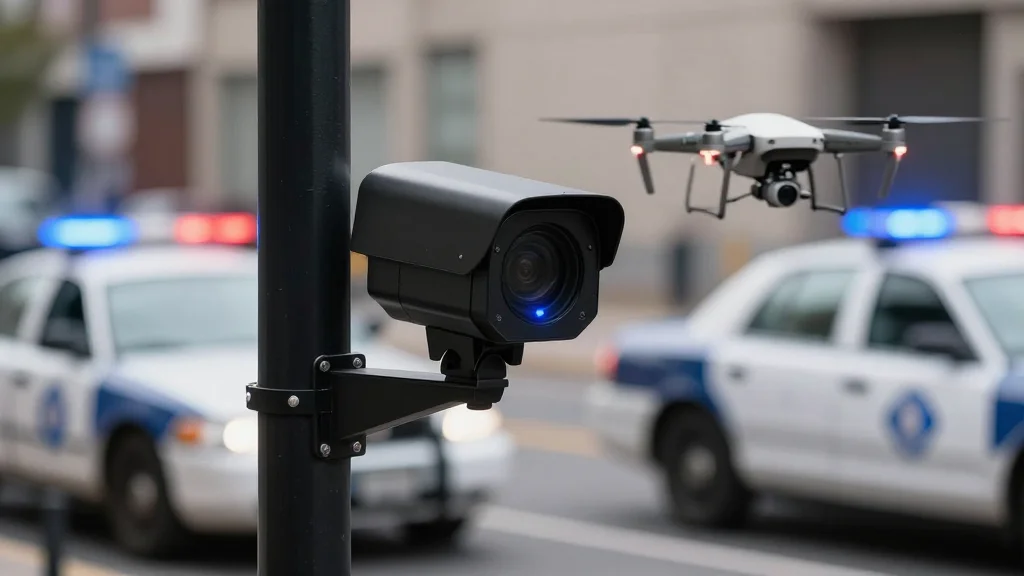
How Tech Is Transforming Police Work in Idaho
Companies Mentioned
Why It Matters
AI‑driven surveillance is reshaping public safety by delivering faster response times, but unchecked data sharing raises serious civil‑rights and accountability concerns for municipalities.
Key Takeaways
- •Raven AI identified gunshots, guiding Flock cameras to suspect vehicle
- •Flock cameras reduced Freeport Street shootings from seven to one
- •Idaho agencies spend over $484k annually on AI cameras and drones
- •30+ U.S. cities dropped Flock after data sharing with ICE
- •Mayor Phillips opposes $378k yearly Flock contract, cites budget concerns
Pulse Analysis
The rapid rollout of artificial‑intelligence tools in law‑enforcement reflects a broader national trend: by 2025, nearly 18,000 agencies were using AI for tasks ranging from audio gunshot detection to automated license‑plate reading. In Caldwell, Idaho, the integration of Raven’s acoustic analysis with Flock’s high‑resolution cameras enabled officers to triangulate a moving suspect in under a quarter‑hour, a speed that traditional dispatch and manual checks could not match. This synergy of AI and drones not only shortens response times but also promises cost savings for municipalities grappling with limited budgets.
However, the technology’s promise is shadowed by mounting privacy concerns. Investigations have revealed that Flock’s data streams are routinely shared with federal entities such as ICE, and even with commercial data brokers, without citizen consent. At least thirty cities have terminated contracts after learning their surveillance footage was repurposed for immigration enforcement and other non‑criminal investigations. In Idaho, the ACLU highlights cases where officers misused the system for personal tracking, underscoring the need for robust oversight, transparent data‑use policies, and independent audits to protect constitutional rights.
Looking ahead, policymakers face a delicate balancing act. While AI‑enabled cameras and drones can demonstrably reduce violent incidents—as evidenced by the drop in shootings on Caldwell’s Freeport Street—public trust hinges on clear limits and accountability mechanisms. City leaders like Caldwell’s mayor are already questioning the $378,000‑plus yearly expense, arguing that community policing should not be replaced by pervasive surveillance. Effective governance will require transparent budgeting, regular public reporting, and legislation that delineates permissible uses, ensuring that the benefits of AI do not come at the cost of privacy and civil liberties.
How Tech Is Transforming Police Work in Idaho
Comments
Want to join the conversation?
Loading comments...