India Rolls Out First Barrier‑Free Toll System on Surat‑Gujarat Highway

Companies Mentioned
Why It Matters
The barrier‑free toll system demonstrates how GovTech can modernize legacy infrastructure, delivering tangible benefits to commuters while enhancing fiscal efficiency. By eliminating physical booths, the NHAI reduces labor costs, minimizes cash‑handling risks, and creates a seamless, cash‑less payment ecosystem that can be integrated with other smart‑city initiatives. Moreover, the data generated by MLFF—vehicle counts, speed profiles, and payment patterns—offers policymakers a granular view of traffic dynamics, enabling more responsive congestion‑management strategies and better-informed investment decisions. Beyond transportation, the project signals a broader shift in Indian government agencies toward automation and digital identity verification. Successful scaling could spur private‑sector participation in sensor manufacturing, AI‑driven image processing, and fintech services, catalyzing a new wave of public‑private partnerships in the GovTech arena.
Key Takeaways
- •NHAI launched the first barrier‑free toll system at Choryasi Toll Plaza on NH‑48 near Surat.
- •Vehicles can travel at 80‑100 km/h while tolls are deducted via FASTag or ANPR.
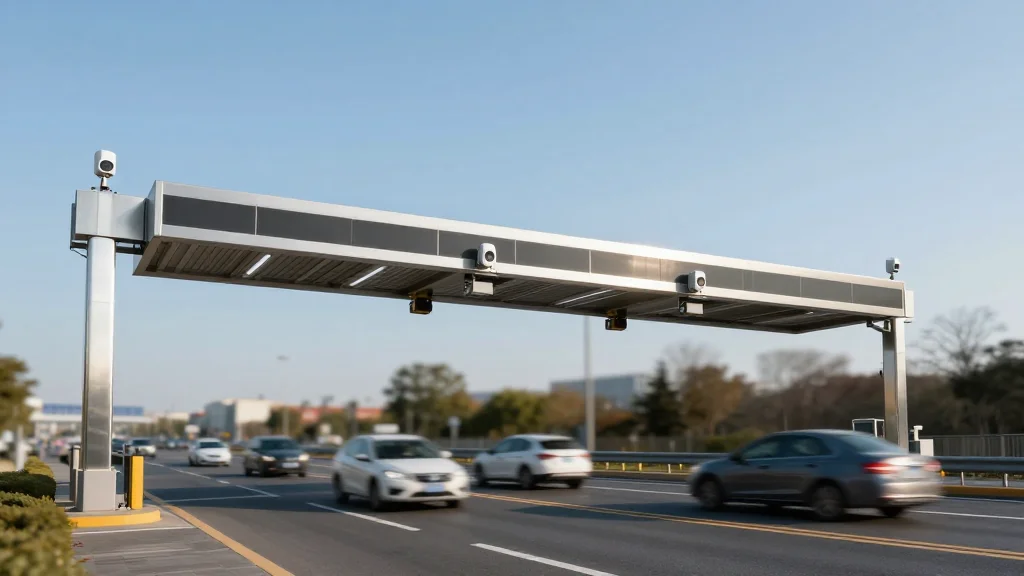
- •System uses gantry‑mounted sensors and high‑speed cameras to automate toll collection.
- •NHAI plans to extend MLFF to major routes like the Delhi‑Mumbai Expressway within a few years.
- •Goal: phase out all physical toll booths nationwide, shifting to GPS‑linked, cash‑less payments.
Pulse Analysis
India’s adoption of Multi‑Lane Free Flow technology is a textbook case of GovTech accelerating public‑service delivery. Historically, toll collection has been a labor‑intensive, cash‑heavy process prone to bottlenecks and revenue leakage. By embedding RFID and ANPR capabilities directly into the roadway, NHAI not only cuts operational overhead but also creates a data‑rich environment that can feed predictive traffic models and dynamic pricing schemes. The move mirrors similar deployments in Europe and East Asia, but the scale—potentially over 2,000 toll plazas—makes it one of the world’s largest digital tolling transformations.
The rollout also raises competitive dynamics in the Indian tech ecosystem. Domestic firms specializing in IoT sensors, computer vision, and fintech stand to gain contracts for hardware, software, and integration services. International players may enter through joint ventures, especially in AI‑driven license‑plate recognition, where accuracy and latency are critical. However, the success of the pilot hinges on addressing privacy concerns and ensuring that the backend payment infrastructure can handle high‑volume, real‑time transactions without glitches.
Looking ahead, the barrier‑free system could become a cornerstone of a broader smart‑infrastructure agenda, linking toll data with emission monitoring, freight logistics, and even autonomous‑vehicle corridors. If NHAI meets its performance targets, the model may be replicated in other sectors—railway ticketing, port fees, and municipal services—propelling India’s GovTech market toward a more integrated, data‑driven future.
India Rolls Out First Barrier‑Free Toll System on Surat‑Gujarat Highway
Comments
Want to join the conversation?
Loading comments...