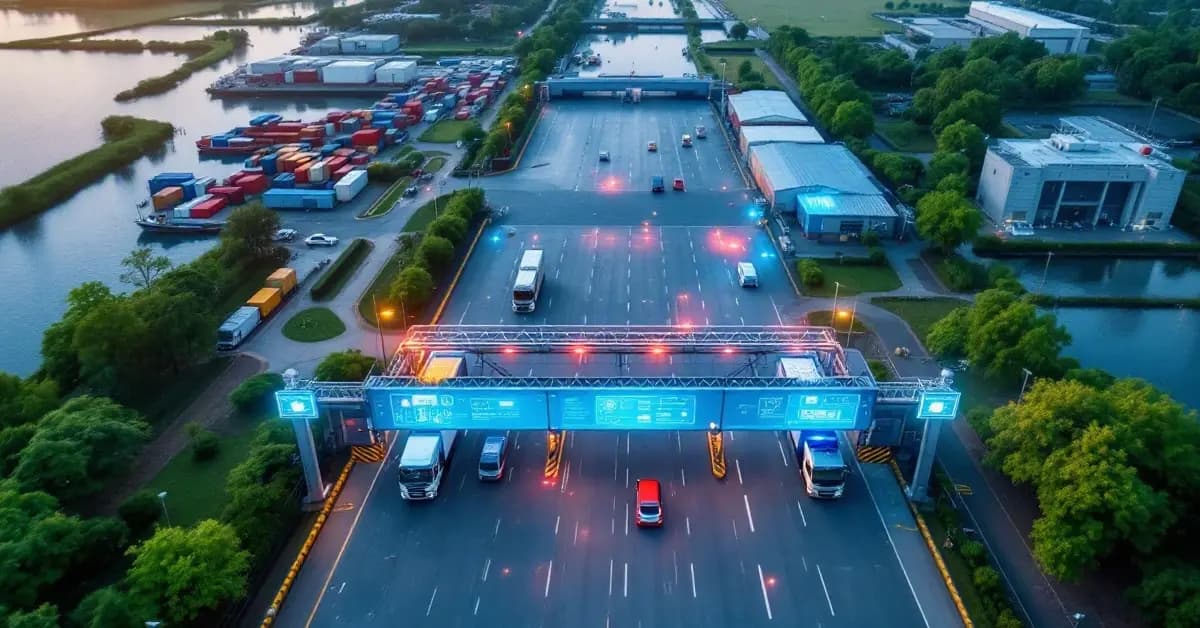
India to Launch Land Port Management System to Digitise Border Trade and Travel
Why It Matters
The platform modernises India’s over‑land trade infrastructure, improving efficiency and security while supporting the country’s broader digital‑economy agenda.
Key Takeaways
- •LPMS launches June 9, 2026 to digitize India's land ports
- •Platform links ICEGATE, ULIP, vehicle systems for single‑window clearance
- •Trade value rose from $600 M (2014‑15) to $10 B (2024‑25)
- •Cargo vehicle movements grew six‑fold to about 660,000 annually
- •Passenger traffic peaked at 2.58 M (2024‑25) then fell to 1.19 M
Pulse Analysis
India’s decision to roll out the Land Port Management System (LPMS) reflects a global shift toward digitising border operations that were traditionally paper‑heavy and fragmented. By mirroring the integrated workflows already standard at airports and seaports, LPMS promises real‑time data exchange among customs, immigration and logistics providers. The platform’s open architecture, which ties into national systems like ICEGATE and ULIP, creates a single‑window environment that can dramatically reduce clearance times and lower the risk of data silos, a critical step for a country handling over a dozen international land crossings.
The economic stakes are significant. Land‑border trade in India has exploded from roughly $600 million in 2014‑15 to an estimated $10 billion in 2024‑25, while cargo vehicle traffic has risen from 110,000 to about 660,000 trips per year. This surge underscores the strategic importance of efficient over‑land corridors for regional supply chains, especially with neighboring economies such as Bangladesh, Nepal and Myanmar. Faster, transparent processing can boost export competitiveness, attract foreign investment in border‑adjacent industrial zones, and help mitigate the volatility caused by geopolitical tensions that recently depressed passenger flows.
Looking ahead, LPMS is positioned to become a backbone for India’s broader smart‑border agenda, linking with initiatives like the National Industrial Corridor Development programme and upcoming high‑speed rail projects. Private logistics firms stand to benefit from streamlined slot booking and payment mechanisms, while policymakers gain better visibility for security monitoring. As the platform scales, it could set a template for other emerging economies seeking to harmonise trade facilitation with digital governance, reinforcing India’s role as a pivotal trade hub in South Asia.
India to Launch Land Port Management System to Digitise Border Trade and Travel
Comments
Want to join the conversation?
Loading comments...