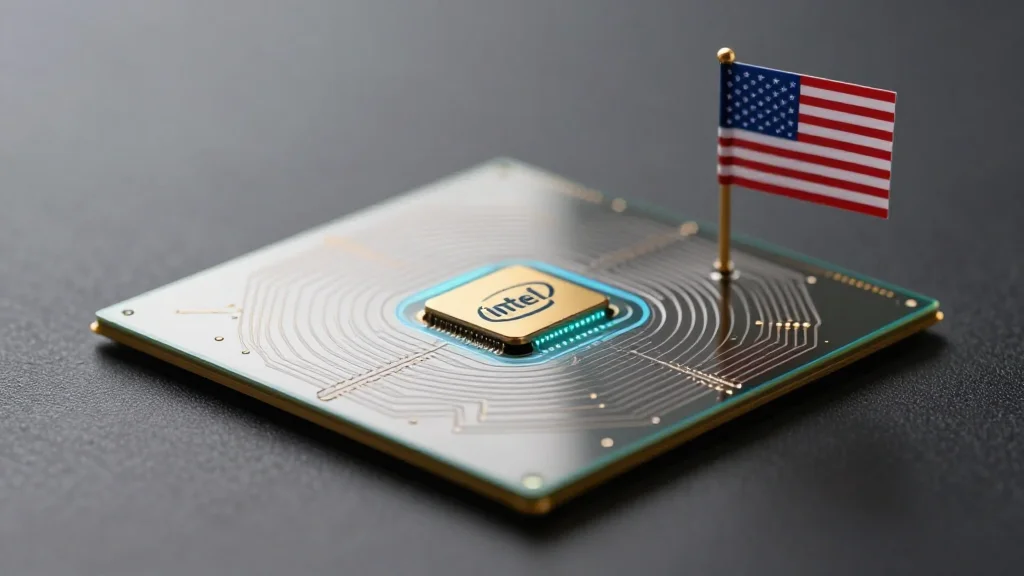
Intel Accelerates Fab Expansion with $500 Million CHIPS Act Funding

Companies Mentioned
Why It Matters
The $500 million CHIPS Act infusion into Intel’s Fab 9 and Fab 11X signals a concrete step toward reducing U.S. dependence on foreign semiconductor capacity. By focusing on advanced packaging—a technology that enables heterogeneous integration of chiplets—Intel aims to capture a growing slice of AI‑related demand, a market projected to exceed $200 billion by 2030. Success would validate federal industrial policy, bolster national security, and create high‑skill jobs in the Southwest. Conversely, if Intel fails to translate the funding into profitable contracts, the CHIPS Act’s credibility could suffer, prompting policymakers to reassess future allocations. The stakes are amplified by the competitive pressure from TSMC and the rapid scaling of custom silicon by cloud giants, making Intel’s turnaround a bellwether for the broader GovTech agenda of securing critical technology supply chains.
Key Takeaways
- •Intel receives $500 million from the U.S. CHIPS Act to revive Fab 9 and Fab 11X
- •Packaging revenue projection revised to "well north of $1 billion"
- •Intel in talks with Google and Amazon for multi‑billion‑dollar packaging deals
- •Foundry segment posted a $10.3 billion operating loss in 2025
- •Expansion targets AI‑driven chip demand and U.S. supply‑chain resilience
Pulse Analysis
Intel’s latest fab revival is less about volume than about value. The company is betting that advanced packaging—where multiple chiplets are integrated into a single package—will generate higher gross margins than traditional wafer sales. CFO Dave Zinsner’s projection of "well north of $1 billion" in packaging revenue suggests Intel is positioning this line as a cash‑flow engine capable of offsetting the deep losses in its broader foundry business. Historically, Intel’s attempts to pivot to a foundry model have been hampered by delayed product rollouts and cost overruns; the CHIPS Act funding provides a rare infusion of non‑dilutive capital that can accelerate infrastructure upgrades without further straining the balance sheet.
The competitive dynamic with TSMC adds urgency. TSMC’s 2024 capacity expansions are already booked through 2027, leaving little room for new entrants. Intel’s strategy to lock in hyperscaler contracts before TSMC can offer comparable packaging services could carve out a niche, especially as Google and Amazon look to differentiate their AI workloads with custom silicon. However, the technical complexity highlighted by Jim McGregor means execution risk remains high. If Intel can demonstrate reliable, high‑volume packaging throughput, it could command premium pricing and achieve the 40% gross margins Zinsner cites as a target.
From a policy perspective, the CHIPS Act funding underscores a shift from pure R&D subsidies to tangible production incentives. Successful deployment at Fab 9 will likely influence future appropriations, encouraging lawmakers to allocate more funds to firms that can quickly translate subsidies into market‑ready capacity. For investors, the story is a litmus test: Intel’s ability to convert federal dollars into profitable contracts will determine whether the company can re‑emerge as a credible competitor in the AI chip ecosystem or remain a cautionary tale of government‑backed industrial policy.
Intel Accelerates Fab Expansion with $500 Million CHIPS Act Funding
Comments
Want to join the conversation?
Loading comments...