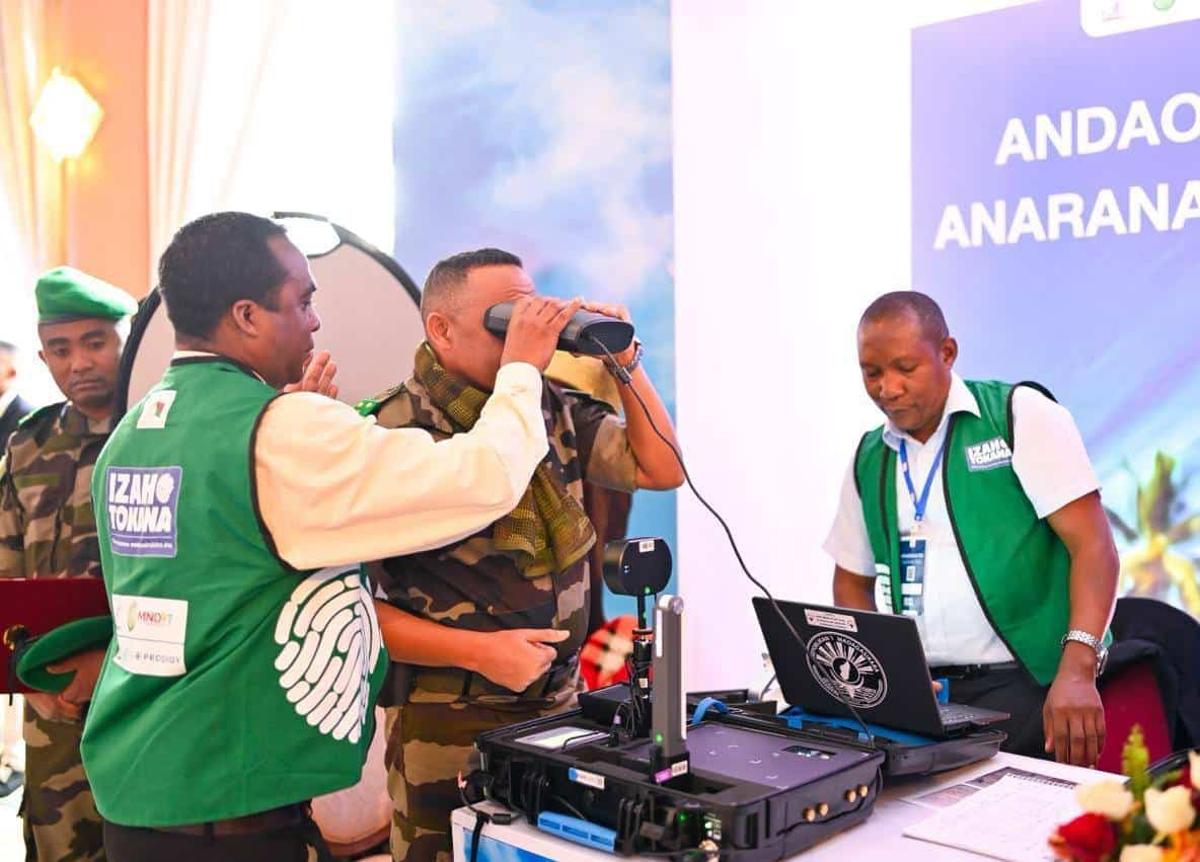
Madagascar Navigates Biometric Enrollment Challenges with Laxton’s Help
Companies Mentioned
Why It Matters
The rollout demonstrates that resilient, low‑connectivity biometric systems can deliver large‑scale identity coverage in fragile environments, accelerating Madagascar’s digital‑economy agenda and setting a model for other African nations.
Key Takeaways
- •2,500 biometric kits deployed across Madagascar’s remote regions
- •Pilot enrolled 130,000 citizens in four weeks
- •Average enrollment time under 10 minutes per person
- •100% data completeness and 99% kit functionality achieved
- •Project proceeds despite regime change, civil unrest, cyclone
Pulse Analysis
Madagascar’s Digital Governance and Identification Management System (PRODIGY) reflects a growing trend among low‑income countries to build a digital public infrastructure that underpins financial inclusion and public service delivery. Backed by roughly $143 million in World Bank funding, the initiative seeks to issue two million national IDs by mid‑2026, a critical step for a nation where formal identification rates have historically lagged. By partnering with Laxton, a specialist in biometric enrollment, Madagascar leverages a proven, weather‑resistant kit that captures iris, facial and fingerprint data, ensuring continuity even in areas without reliable internet.
Laxton’s solution, now a full‑service partner of the open‑source MOSIP ecosystem, delivered 2,500 kits capable of offline operation, a key advantage for Madagascar’s dispersed population. During a four‑week pilot, 130,000 individuals were enrolled across 116 centers, with each registration taking less than ten minutes. The pilot reported 100% data completeness and a 99% functional rate for the kits, highlighting the robustness of the technology and the effectiveness of Laxton’s training and field support. These metrics provide a real‑world validation that large‑scale biometric enrollment can be both rapid and reliable under challenging conditions.
The success of PRODIGY has broader implications for the region’s digital transformation. A reliable national ID platform enables streamlined access to banking, social services, and e‑government portals, fostering economic growth and reducing fraud. Moreover, Laxton’s involvement in parallel projects, such as Ethiopia’s goal to issue 90 million digital IDs by 2030, suggests that the lessons learned in Madagascar will inform future deployments across Africa. As more governments adopt resilient, low‑connectivity biometric solutions, the continent moves closer to a unified digital identity ecosystem that can support inclusive development and cross‑border interoperability.
Madagascar navigates biometric enrollment challenges with Laxton’s help
Comments
Want to join the conversation?
Loading comments...