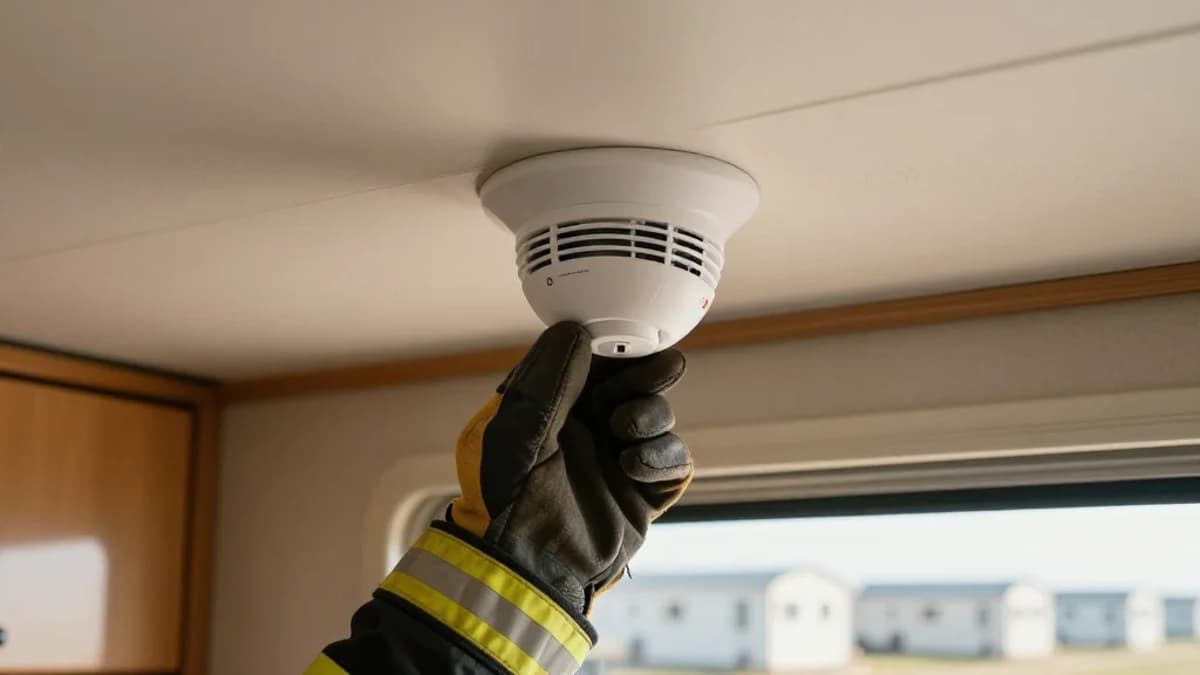
Mass. Fire Officials Credit Free Smoke Alarm Program with Saving Family in Mobile Home Fire
•February 22, 2026
0
Why It Matters
The success proves that free detector programs can directly prevent injuries and deaths, encouraging other municipalities to replicate the model. It also highlights cost‑effective fire risk mitigation for vulnerable housing clusters.
Key Takeaways
- •25% enrollment achieved in first month
- •Free alarms installed in mobile home complex
- •Alarm alerted family, preventing injuries
- •Fire likely caused by electrical outlet
- •Program response to prior fatal fire
Pulse Analysis
Mobile‑home communities often face elevated fire hazards due to dense construction, older wiring, and limited resources for safety upgrades. National fire statistics show that homes without working smoke alarms are up to three times more likely to experience fatal outcomes. By targeting high‑risk neighborhoods, local fire agencies can address these disparities, reducing both human and economic losses. The Chelmsford initiative reflects a data‑driven approach, focusing resources where historical fire incidents have been most severe.
The "Get Alarmed Chelmsford" effort deployed nine firefighters in December to install free detectors across 270 Littleton Road. Within weeks, the program reached a 25% participation rate, a notable achievement for a voluntary, door‑to‑door campaign. The February 8 fire provided the first concrete proof of concept: the alarm sounded, waking residents who then used water to suppress the flames and escaped unharmed, aside from a brief smoke‑inhalation evaluation for a 12‑year‑old. This real‑world outcome validates the department’s investment and showcases how rapid response combined with preventive technology can avert tragedies.
For policymakers and fire officials, Chelmsford’s experience offers a replicable template. Funding can be sourced from municipal budgets, state grants, or public‑private partnerships, while community outreach—leveraging local leaders and clear communication—drives enrollment. Scaling such programs could lower insurance premiums, reduce emergency service strain, and improve overall public safety metrics. As climate‑related power surges and aging infrastructure increase fire risks, proactive detector distribution becomes an essential component of resilient urban planning.
Mass. fire officials credit free smoke alarm program with saving family in mobile home fire
0
Comments
Want to join the conversation?
Loading comments...