Govtech News and Headlines
  • All Technology
  • AI
  • Autonomy
  • B2B Growth
  • Big Data
  • BioTech
  • ClimateTech
  • Consumer Tech
  • Crypto
  • Cybersecurity
  • DevOps
  • Digital Marketing
  • Ecommerce
  • EdTech
  • Enterprise
  • FinTech
  • GovTech
  • Hardware
  • HealthTech
  • HRTech
  • LegalTech
  • Nanotech
  • PropTech
  • Quantum
  • Robotics
  • SaaS
  • SpaceTech
AllNewsDealsSocialBlogsVideosPodcastsDigests
NewsDealsSocialBlogsVideosPodcasts
GovtechNewsMichigan Bills Would Regulate Automatic License Plate Readers
Michigan Bills Would Regulate Automatic License Plate Readers
LegalTechLegalGovTech

Michigan Bills Would Regulate Automatic License Plate Readers

•February 18, 2026
0
Government Technology – Public Safety/Justice
Government Technology – Public Safety/Justice•Feb 18, 2026

Companies Mentioned

Flock Safety

Flock Safety

Why It Matters

Without clear rules, ALPR data can be repurposed for broad surveillance, eroding public trust. The legislation would set enforceable privacy standards, shaping how emerging surveillance tech is governed nationwide.

Key Takeaways

  • •ALPRs currently lack statewide regulation in Michigan
  • •Over 125 Michigan jurisdictions have active ALPR contracts
  • •Proposed bills limit data retention to fourteen days
  • •Private firms could face $1,000 damages for violations
  • •Quarterly usage reports would increase transparency and oversight

Pulse Analysis

Automatic license plate readers have become a staple of modern policing, capturing thousands of vehicle plates per hour and feeding data into investigative databases. Proponents cite rapid identification of stolen cars, uninsured drivers, and missing persons, while critics warn that the technology can morph into a tool for indiscriminate tracking. Across the United States, more than 90 percent of large police departments already deploy ALPRs, and Michigan mirrors that trend with over 125 localities operating the systems. The lack of statewide oversight, however, has sparked privacy alarms, especially after reports of undocumented immigration queries and potential data sales.

The bipartisan bill package introduced by Reps. Jimmie Wilson Jr. and Doug Wozniak seeks to impose concrete limits on ALPR usage. House Bill 5493 would confine government access to specific law‑enforcement purposes—such as locating uninsured or stolen vehicles—and cap data retention at fourteen days unless a warrant or preservation order applies. House Bill 5492 extends similar safeguards to private vendors, mandating prompt destruction of records and prohibiting Freedom of Information Act disclosures without owner consent. Violations would trigger statutory damages of at least $1,000 plus attorney fees, and agencies would be required to publish quarterly usage reports, creating a transparent audit trail.

Michigan’s effort joins at least sixteen states that have already codified ALPR rules, signaling a growing consensus that surveillance technology must be balanced with civil liberties. If enacted, the measures could set a template for other jurisdictions grappling with the same privacy‑security dilemma, potentially influencing federal guidance on data retention and inter‑agency sharing. For vendors like Flock Safety, stricter regulations may prompt contract renegotiations and heightened compliance costs, while law‑enforcement agencies will need to adjust investigative workflows. Ultimately, the legislation could restore public confidence by demonstrating that advanced surveillance tools are deployed responsibly and with clear accountability.

Michigan Bills Would Regulate Automatic License Plate Readers

(TNS) — Automatic license plate readers — cameras that capture and store images of vehicles — aren’t yet regulated in Michigan.

A bipartisan bill package would change that.

State Reps. Jimmie Wilson Jr., D‑Ypsilanti, and Doug Wozniak, R‑Shelby Township, have introduced a two‑bill plan intended to regulate the use of automatic license plate readers, ALPRs, by private companies and government entities.

The bills would create clear limits on how data is collected, stored and shared, Wilson said, ensuring the tools are “used to improve public safety, not to enable routine mass surveillance.”

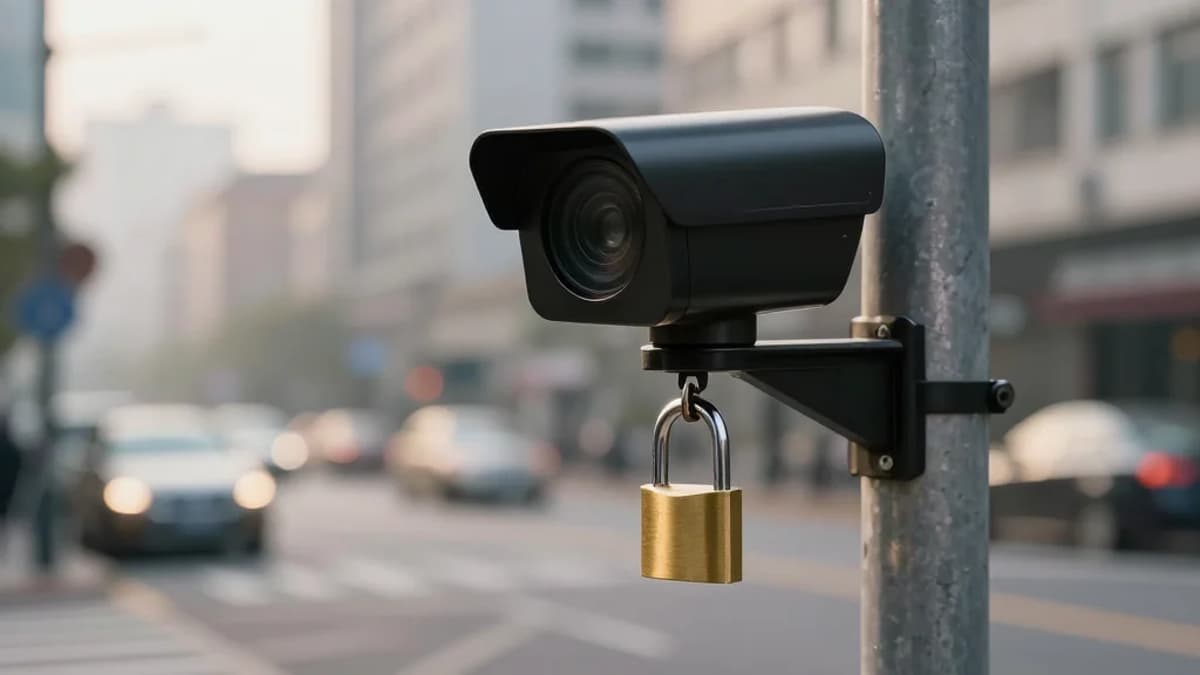
License plate readers are small mobile or mounted surveillance cameras that capture vehicle license plates as they pass by, sometimes snapping photos of as many as hundreds of plates per minute. In addition to license plates, the cameras capture other vehicle information, such as make and model.

They have been primarily used by local law‑enforcement agencies. According to a July 2025 report by Congress, 100 % of police departments serving over a million residents used ALPRs, along with nearly 90 % of sheriff’s offices with 500 or more sworn deputies.

More than 125 cities and counties across the state now use the cameras in some form, according to data reported by Bridge Michigan.

The state of Michigan now has a $2.626 million contract with Flock Safety valid through June 2030.

In the last few years, communities across the state — like Kentwood, Kalamazoo, Flint, Portage, Wixom and several townships surrounding Traverse City — have also signed or renewed license‑plate‑reader contracts, though not all with Flock.

Police have credited the automatic systems for playing a role in solving homicides and violent assaults, recovering stolen vehicles and property and finding missing children.

But Flock Safety, which is used by most Michigan law‑enforcement agencies, has also come under scrutiny in recent months for potential use by federal Immigration and Customs Enforcement. Independent media company 404 Media found in May 2025 that local police around the country are performing lookups in Flock’s ALPR system for immigration‑related searches, giving federal law enforcement unofficial access to a tool without a formal contract.

A Jan. 6 statement from Flock said it “does not work with U.S. Immigration and Customs Enforcement (ICE) or any other sub‑agency of the Department of Homeland Security,” and added that ICE does not have direct access to its cameras, systems or data.

But in the months since, communities have faced pushback when the time comes to renew contracts.

In November of last year, local leaders in Bay City rejected a two‑year contract with Flock following public privacy worries. American Civil Liberties Union of Michigan policy strategist Gabrielle Dresner, who testified in Bay City ahead of the decision, said she was concerned about the lack of existing state regulations.

Last month, Genesee County also postponed decisions on whether to renew contracts for its 30 Flock Safety cameras because of the same concerns. Commissioner Shaun Shumaker, R‑Fenton Twp., said the technology “helps (law enforcement), but guess what? If they’re taking that data and selling it overseas and selling it to other agencies and organizations, we need to know.”

Kalamazoo residents have called on the city’s department of public safety to stop using the cameras from Flock Safety, claiming they are a violation of residents’ Fourth Amendment rights.

In a press release shared last month, bill sponsors Wozniak and Wilson said information amassed by the plate readers can be used to track individuals, including what doctors, protests, meetings or religious institutions a person visits. Without clear limits on acceptable use, those systems risk shifting from targeted investigative tools into “broad, ongoing tracking systems that monitor everyday people who are not suspected of wrongdoing,” they wrote.

“Michiganders deserve to know that new technology is being used responsibly, not in ways that invade privacy or erode public confidence,” Wozniak said. “These bills protect the privacy of Michigan motorists while setting clear, commonsense rules that help maintain trust between law enforcement and the public.”

The bill package would define what automatic license plate readers systems are. Wilson’s House Bill 5493 would clarify that government entities could use automatic readers systems only to:

  • Compare captured plate data with alert data to identify uninsured, unregistered or stolen vehicles, along with vehicles registered to someone who has an outstanding arrest warrant, is associated with a missing individual or is relevant to an ongoing criminal investigation

  • Regulate the use of parking facilities by parking enforcement entities

  • Control access to secured areas

  • Collect electronic tolls

Captured plate data couldn’t be used or shared for any other purpose under the bill package, and couldn’t be retained for more than 14 days, except for cases where it’s needed for an ongoing investigation, or is necessary to retain under a preservation request, disclosure order or judicially‑issued warrant.

The bill package also requires government entities that use automatic license plate readers to adopt and post policies on their use. They would be required to submit a quarterly report on practices and usage to the state or local government that oversees them, including the number of license plates scanned and the number of data matches that resulted in an arrest.

Wozniak’s House Bill 5492 would then regulate the use of ALPR systems by private companies, requiring them to preserve captured plate data for “not less than 14 days” after a preservation request is received by a government entity or defendant in a criminal case. Data must otherwise be destroyed 14 days after a request is received or if the application is denied, whichever is later. Violators can be sued for damages or $1,000, whichever is greater, along with attorney fees.

The bill would also mandate that data held by private companies not be disclosed under the Freedom of Information Act, and would be otherwise disclosed only to the registered owner of the vehicle or with their prior consent, unless in the case of a valid warrant or court order.

At least 16 states have statutes expressly addressing the use of license plate readers or the retention of the data they collect, according to the National Conference of State Legislatures.

The bills have been referred to the House Judiciary Committee. A hearing date has not yet been set.

Read Original Article
0

Comments

Want to join the conversation?

Loading comments...