Michigan Capitol Deploys Drone Traffic Platform to Monitor Skies
•March 9, 2026
0
Why It Matters
The deployment strengthens protection of a critical government facility while showcasing a scalable model for nationwide counter‑drone coordination as low‑altitude traffic surges.
Key Takeaways
- •AirHub provides unified airspace picture for Capitol security
- •System integrates Remote ID, ADS‑B, radar, optical sensors
- •Multi‑agency access enables real‑time coordinated responses
- •Vendor‑agnostic design allows flexible sensor deployment
- •Platform also manages authorized inspection drones
Pulse Analysis
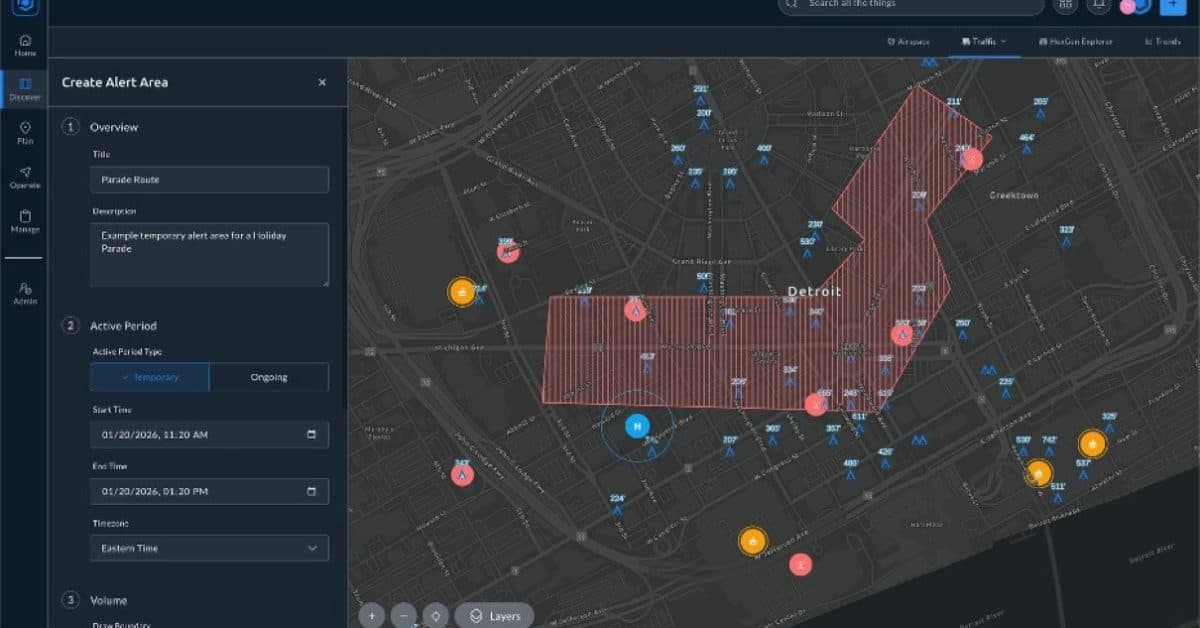
The proliferation of commercial and government‑operated drones has turned low‑altitude airspace into a congested, data‑rich environment that traditional radar struggles to monitor. As Remote ID mandates take effect and municipalities grapple with privacy and safety concerns, agencies are seeking platforms that can ingest disparate feeds and present a coherent operational picture. Michigan’s State Capitol deployment of Airspace Link’s AirHub portal exemplifies how state governments are moving from ad‑hoc detection to integrated airspace management, setting a benchmark for other high‑profile sites. The platform also supports automated alerts, enabling rapid threat classification before a drone breaches the protected perimeter.
AirHub’s strength lies in its vendor‑agnostic architecture, which fuses Remote ID broadcasts, ADS‑B transponder data, radar returns, RF detectors and optical cameras into a single dashboard. This sensor‑fusion approach delivers a “common operating picture” that can be shared instantly among Capitol Police, State Police and local law‑enforcement partners, reducing decision latency during potential incursions. By allowing agencies to plug in whichever detection hardware best fits their terrain, the system avoids costly lock‑in contracts while maintaining scalability for future sensor upgrades. Real‑time analytics flag anomalous flight patterns, giving operators actionable intelligence for escalation.
The Michigan rollout mirrors a national surge in counter‑drone investments as federal agencies allocate billions toward securing venues like the 2026 FIFA World Cup sites and critical infrastructure. Analysts predict that integrated DOMS solutions will become a prerequisite for any facility handling sensitive operations, driving demand for platforms that combine detection, identification and mission‑control capabilities. As more jurisdictions adopt similar systems, the market is likely to see heightened competition among sensor manufacturers and software providers, accelerating innovation in low‑altitude airspace security. Early adopters report reduced response times and higher confidence in airspace sovereignty.
Michigan Capitol deploys drone traffic platform to monitor skies
0
Comments
Want to join the conversation?
Loading comments...