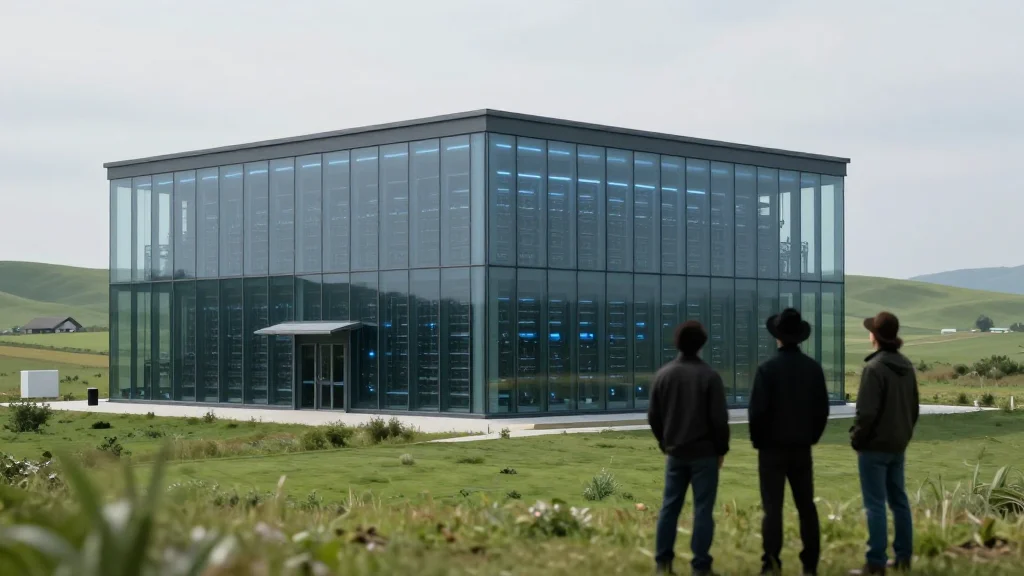
Midterms Drive State Competition for AI Data Centers as Local Opposition Rises

Companies Mentioned

Why It Matters
The race for AI data‑center siting illustrates how technology infrastructure is increasingly subject to political calculus. As states vie for multi‑billion‑dollar projects, the decisions made now will shape the United States' competitive edge in AI, affect regional job markets, and set environmental precedents. Moreover, the growing voter activism signals that future GovTech initiatives will need to address community impact more directly, or risk electoral backlash that could stall critical digital infrastructure. If state leaders succeed in securing data‑center deals without robust oversight, they may accelerate AI capabilities but also expose communities to higher utility costs and environmental risks. Conversely, strong local opposition could lead to stricter standards that protect residents while potentially slowing the deployment of AI services that rely on massive compute capacity. The balance struck will influence the trajectory of GovTech investments for years to come.
Key Takeaways
- •Louisiana economic development chief Susan Bourgeois received a Meta AI data‑center pitch within minutes of her appointment.
- •Christabel Randolph (Center for AI and Digital Policy) called data‑center siting a "kitchen‑table issue" ahead of the midterms.
- •Four Festus, Mo., council members lost seats after supporting a $6 billion data‑center project.
- •Two Independence, Kan., council members were voted out for backing a tax break for a large data center.
- •Local opposition cites rising power bills, water contamination, and environmental degradation as core concerns.
Pulse Analysis
The data‑center boom is a textbook case of GovTech intersecting with electoral politics. Historically, large‑scale infrastructure projects—highways, airports, broadband—have been leveraged by politicians to claim economic stewardship. AI data centers, however, bring a new set of variables: massive electricity consumption, water‑intensive cooling, and opaque corporate negotiations. The midterm cycle amplifies these dynamics because incumbents are desperate to showcase tangible economic wins, while challengers can weaponize community grievances.
From a market perspective, the rush to secure AI compute capacity is driven by the exponential growth in generative AI workloads, which demand petaflops of processing power. Companies like Meta are willing to invest billions, but they also seek favorable tax regimes and relaxed environmental oversight. States that offer these incentives risk a short‑term fiscal windfall but may incur long‑term costs in grid upgrades and water treatment. The political calculus therefore hinges on whether voters prioritize immediate job creation over sustainable development.
Looking forward, we can expect a two‑track evolution. First, states will likely codify data‑center incentive packages into legislation, creating a more predictable but potentially contentious policy environment. Second, community activism will push for stricter permitting standards, possibly prompting federal agencies to intervene with baseline regulations. Companies may respond by adopting greener cooling technologies or locating facilities in regions with abundant renewable energy. The ultimate outcome will shape not only the geographic distribution of AI compute but also the broader narrative of how GovTech projects are governed in a hyper‑politicized era.
Midterms Drive State Competition for AI Data Centers as Local Opposition Rises
Comments
Want to join the conversation?
Loading comments...