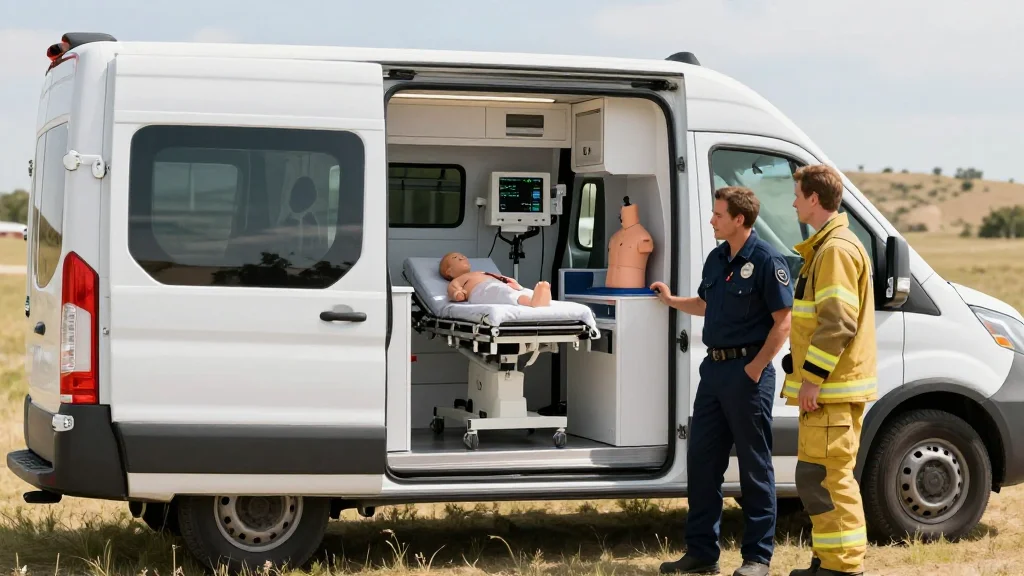
Mobile Medical Lab Brings Lifesaving Training to Texas First Responders
Companies Mentioned
Why It Matters
The mobile lab directly addresses the training gap for rural first responders, enhancing emergency care quality while mitigating staffing shortages that Texas faces across its growing healthcare system.
Key Takeaways
- •43‑foot mobile lab delivers hands‑on simulation to North Texas EMS
- •Training includes intubation, IV, intraosseous, pediatric asthma, drowning scenarios
- •Rural responders avoid 60‑mile trips, saving time and costs
- •Program funded by philanthropy, expands Texas Health’s simulation network
- •Project helps address projected 57,000 RN shortage by upskilling EMTs
Pulse Analysis
Mobile simulation units are emerging as a pragmatic solution to the chronic training deficits that plague rural emergency services. In Texas, where 4.3 million residents live in sparsely populated areas, the distance to advanced medical education can exceed 60 miles, inflating costs and delaying skill refreshers. By converting a Freightliner into a fully equipped patient room and classroom, Texas Health Fort Worth brings the learning environment to the responders’ parking lots, ensuring that critical procedures are rehearsed in realistic settings without disrupting daily operations.
The Fort Worth mobile lab offers a curriculum that mirrors the hospital’s Amon G. Carter Simulation Center, covering high‑risk interventions such as intubation, intraosseous access, and pediatric emergency scenarios. Participants engage in interactive mannequins that respond to medication administration and decision‑making, fostering muscle memory and confidence. Feedback from Johnson County EMTs highlights immediate applicability to real‑world calls, translating simulation drills into faster, more accurate patient care. This on‑site approach also shortens downtime, allowing crews to return to duty promptly after training.
Beyond immediate skill gains, the initiative tackles Texas’s looming healthcare workforce crisis. Projections indicate a 38.8 % rise in demand for registered nurses by 2032, leaving a shortfall of over 57,000 RNs. By upskilling EMTs and paramedics, the mobile lab creates a secondary talent pool capable of bridging gaps in acute care delivery. Its philanthropic funding model demonstrates a scalable blueprint for other health systems seeking to extend high‑quality education to remote communities while bolstering overall patient outcomes.
Mobile medical lab brings lifesaving training to Texas first responders
Comments
Want to join the conversation?
Loading comments...