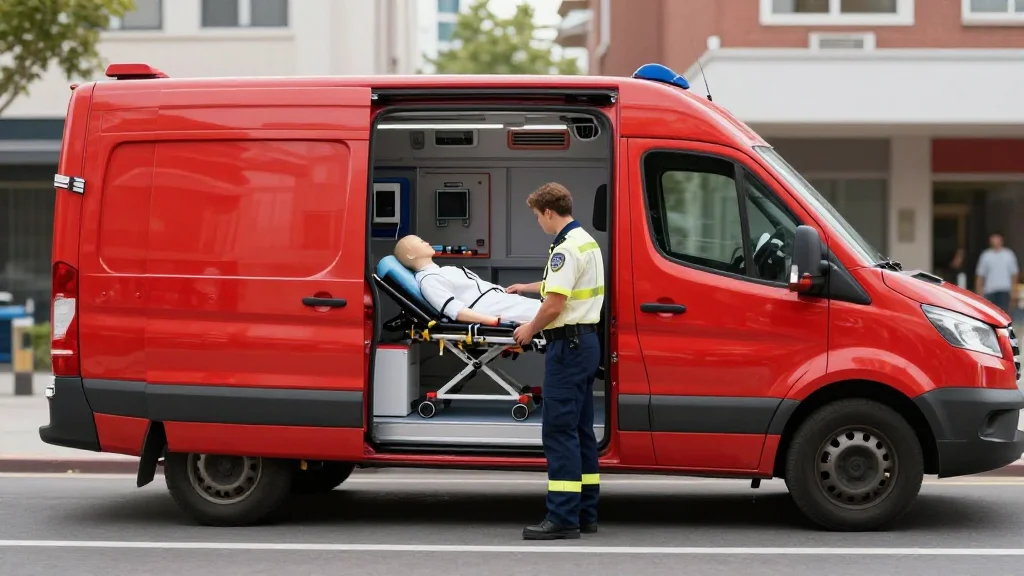
Mobile Sim Lab Helps Neb. First Responders with EMS Training
Why It Matters
Accelerated paramedic certification boosts emergency medical capability for Omaha’s first responders, improving response times and patient outcomes. The model shows how portable simulation can modernize public‑safety training nationwide.
Key Takeaways
- •670 firefighters trained in first year of mobile lab.
- •Classes reduced to 20‑30 minutes versus 2‑3 hour lectures.
- •Lab simulates ambulance and hospital environments with high‑fidelity mannequins.
- •Training delivered at fire stations, eliminating long travel.
- •UNMC donated the simulation bus, enhancing community health resources.
Pulse Analysis
The United States faces a growing demand for advanced pre‑hospital care, yet many fire departments struggle to provide paramedic certification without pulling crews away from duty. Traditional classroom‑based curricula often require multi‑hour sessions and long commutes to centralized training centers, creating scheduling bottlenecks and limiting the number of personnel who can be upskilled. Mobile high‑fidelity simulation units have emerged as a solution, delivering realistic medical scenarios directly to first‑responder stations, thereby compressing learning cycles and preserving operational readiness.
In Omaha, the partnership between the Fire Department and Creighton University leverages a simulation bus donated by the University of Nebraska Medical Center to transform paramedic education. Since its launch, the lab has trained roughly 670 firefighters, cutting instruction time to 20‑30 minutes per class compared with the previous two‑to‑three‑hour lectures. The vehicle houses two treatment bays—one mimicking an ambulance interior and another a hospital room—equipped with defibrillators, vital‑sign monitors, blood‑warmers and responsive mannequins that can speak, cough and breathe. This hands‑on approach enables smaller, focused groups to practice life‑saving interventions on the spot.
The success of Omaha’s mobile lab signals a scalable model for municipalities seeking to elevate emergency medical services without incurring prohibitive costs. By bringing training to the field, agencies can accelerate certification pipelines, improve crew confidence, and ultimately shorten response times for critical conditions such as cardiac arrest. As more jurisdictions adopt portable simulation technology, the industry may see a shift toward competency‑based, on‑site education, fostering a more resilient first‑responder workforce nationwide.
Mobile sim lab helps Neb. first responders with EMS training
Comments
Want to join the conversation?
Loading comments...