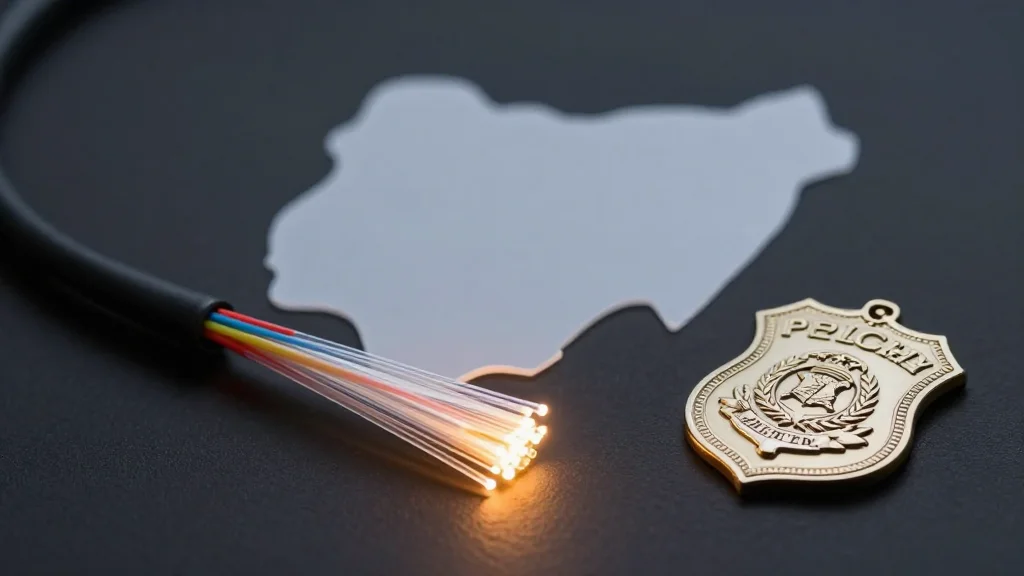
Nigeria Launches $2 B Project BRIDGE to Wire Police Stations to National Fibre Backbone

Why It Matters
Project BRIDGE represents the most ambitious public‑infrastructure investment in Nigeria’s digital sector, directly tying broadband expansion to public‑safety outcomes. By giving police stations reliable, high‑speed connectivity, the government can modernise crime‑fighting tactics, reduce response times and introduce data‑driven decision‑making at the precinct level. The open‑access design also promises downstream benefits for the private sector, potentially lowering broadband costs and encouraging new entrants into the market. The initiative also signals a policy shift toward integrating security functions into the broader digital‑economy agenda. As African nations compete for foreign investment in tech, showcasing a secure, AI‑ready public‑sector backbone could make Nigeria a more attractive destination for fintech, health‑tech and e‑government ventures that rely on trustworthy data pipelines.
Key Takeaways
- •Nigeria launches $2 billion Project BRIDGE to connect ~1,200 police stations to a 90,000 km fibre network.
- •The fibre footprint will grow from 35,000 km to about 125,000 km, creating an open‑access national backbone.
- •Minister Bosun Tijani highlighted AI‑enabled tools for incident response, case management and predictive policing.
- •Funding combines federal budget allocations with multilateral development finance under a blended PPP model.
- •Full police‑station connectivity targeted for completion within 24 months, with quarterly progress reports.
Pulse Analysis
Project BRIDGE arrives at a moment when Nigeria is grappling with both a surge in cyber‑crime and a chronic broadband deficit. By anchoring law‑enforcement capabilities to a high‑capacity fibre network, the government is effectively turning policing into a data‑centric service. This could narrow the gap between Nigeria and more digitally mature economies where predictive policing is already in use.
Historically, large‑scale infrastructure projects in Nigeria have suffered from delays and cost overruns. The blended public‑private financing model, coupled with multilateral backing, may mitigate some of those risks, but execution will hinge on clear governance structures and transparent procurement. The involvement of the Nigeria Police Trust Fund as a project overseer is a positive sign, yet the success of AI deployments will depend on the quality of data collected and the readiness of police personnel to adopt new tools.
Looking ahead, the open‑access nature of the backbone could catalyse a wave of private‑sector innovation. Service providers that secure capacity on the network may launch affordable broadband packages for underserved regions, while startups could develop niche security analytics platforms tailored to police needs. If the rollout stays on schedule, Project BRIDGE could become a template for other African nations seeking to fuse digital infrastructure with public‑safety objectives, reinforcing Nigeria’s ambition to be a regional tech hub.
Nigeria Launches $2 B Project BRIDGE to Wire Police Stations to National Fibre Backbone
Comments
Want to join the conversation?
Loading comments...