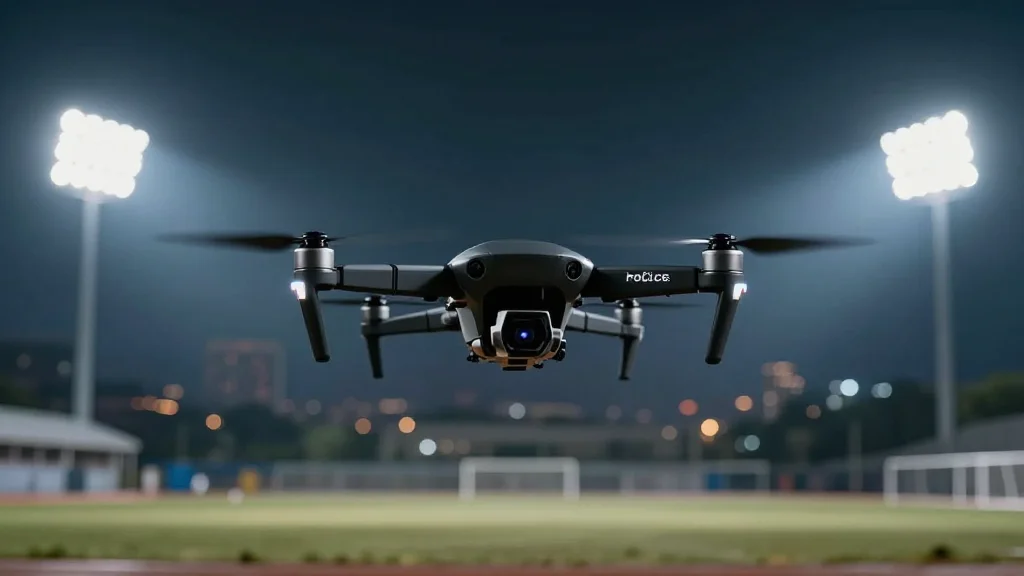
NYPD Allocates $6.5 Million for Drone Detection Ahead of FIFA World Cup

Companies Mentioned
Why It Matters
The NYPD’s investment underscores a broader trend of local governments adopting high‑tech security solutions to protect large public gatherings. By taking on drone‑interdiction duties, cities can reduce reliance on federal resources, potentially speeding response times and tailoring tactics to local threat landscapes. At the same time, the deployment raises policy debates about the balance between safety and privacy, especially as counter‑UAS tools become more sophisticated and accessible. If New York’s approach proves effective, it could trigger a wave of similar procurements across U.S. municipalities and internationally, reshaping the GovTech market toward integrated aerial‑threat platforms. Conversely, any operational failures or civil‑rights challenges could prompt stricter regulatory frameworks, influencing how future public‑safety tech is funded and governed.
Key Takeaways
- •NYPD Commissioner Jessica Tisch announced a $6.5 million purchase of drone‑mitigation equipment.
- •The Safer Skies Act now authorizes local police to take down dangerous drones, a power previously held by the FBI.
- •Deputy Commissioner Rebecca Weiner highlighted the global weaponization of drones as a real security threat.
- •FBI Assistant Director Jim Barnacle warned that unauthorized drone flights over MetLife Stadium are a federal crime with fines up to $100,000.
- •The spend is one of the largest municipal counter‑drone investments, potentially spurring a $5 billion global market by 2028.
Pulse Analysis
New York’s $6.5 million counter‑drone rollout is a textbook case of municipal GovTech scaling in response to a specific, high‑visibility risk. Historically, U.S. cities have relied on federal agencies for aerial threat mitigation, but the Safer Skies Act reflects a legislative pivot toward decentralizing that capability. This shift aligns with a broader post‑pandemic trend where localities demand rapid, autonomous response tools for everything from public health to security.
From a market perspective, the procurement signals confidence in commercial counter‑UAS platforms that can be fielded quickly and integrated with existing command‑and‑control systems. Vendors that can demonstrate low false‑positive rates and compliance with privacy safeguards are likely to capture a growing share of city budgets. However, the NYPD’s opaque operational plans may invite scrutiny from civil‑rights watchdogs, especially if the technology is used beyond the narrow event window. Transparency and clear usage policies will be critical to avoid backlash that could stall further adoption.
Looking ahead, the success—or failure—of New York’s deployment will set a benchmark for other major event hosts, such as Los Angeles for the 2028 Olympics or Chicago for future political conventions. If the system proves effective without infringing on lawful drone activity, we may see a cascade of similar investments, effectively creating a new sub‑segment within GovTech focused on aerial threat management. Conversely, any high‑profile incident could prompt Congress to revisit the Safer Skies Act, potentially tightening federal oversight and reshaping the regulatory landscape for municipal counter‑drone programs.
NYPD Allocates $6.5 Million for Drone Detection Ahead of FIFA World Cup
Comments
Want to join the conversation?
Loading comments...