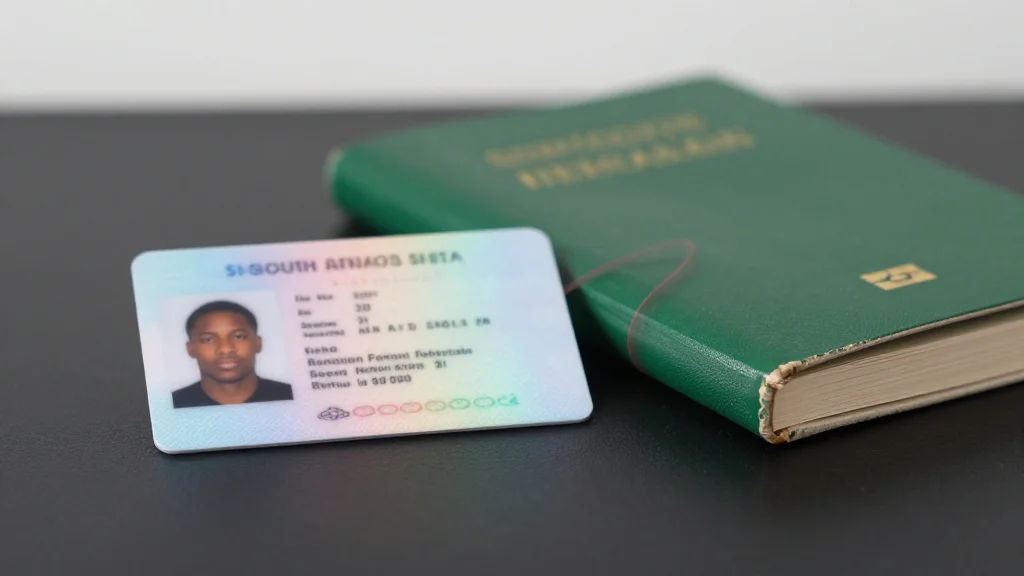
Officials Deface Your Green ID Book when You Get a Smart ID
Why It Matters
Defacing the green ID books curtails a major fraud vector and strengthens the reliability of biometric verification, benefitting both consumers and financial institutions during South Africa's digital identity transition.
Key Takeaways
- •Home Affairs defaces, not collects, green ID books.
- •Defacing prevents reuse for fraudulent identity documents.
- •Banks accept defaced books if essential data visible.
- •Smart ID rollout expands to 130 bank branches.
- •Biometric verification increasingly replaces physical ID checks.
Pulse Analysis
The shift to defacing, rather than reclaiming, green ID books reflects Home Affairs' response to systemic abuse uncovered in recent investigations. By manually invalidating the physical document, the department eliminates a tangible loophole that fraud rings exploited to fabricate counterfeit IDs. This procedural tweak also simplifies the hand‑over process for citizens, who can retain the book as a keepsake while ensuring it cannot be weaponized by insiders. The move underscores a broader regulatory emphasis on closing legacy vulnerabilities as South Africa modernises its identity infrastructure.
Financial institutions have swiftly adapted to the new protocol, balancing regulatory compliance with customer convenience. While banks such as FNB will still process a defaced book provided the holder's name, ID number, birth date and issuance details are readable, they are increasingly cross‑checking fingerprints against Home Affairs' biometric repository. This dual‑layer approach reduces reliance on paper‑based verification, mitigates the risk of forged documents slipping through, and aligns with global best practices for Know‑Your‑Customer (KYC) standards. Consequently, banks can expedite onboarding while preserving robust anti‑fraud safeguards.
The broader rollout of smart ID services through 130 bank branches marks a pivotal step toward a fully digital identity ecosystem in South Africa. By leveraging polycarbonate cards and embedded biometric data, the government aims to enhance security, streamline public service delivery, and foster financial inclusion for underserved populations. However, challenges remain, including ensuring consistent biometric capture quality and expanding digital literacy among citizens. Continued collaboration between Home Affairs, banking partners, and technology providers will be essential to realize the full economic benefits of a secure, interoperable identity framework.
Officials deface your green ID book when you get a smart ID
Comments
Want to join the conversation?
Loading comments...