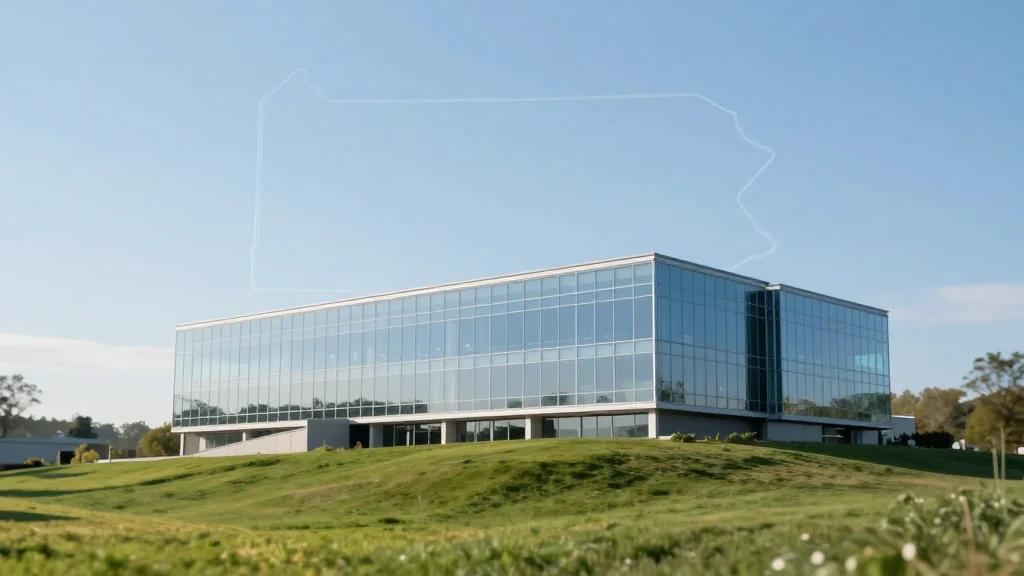
Pennsylvania Bills Aim to Fast-Track Data-Center Permits Amid 4,000% Growth Forecast

Companies Mentioned
Why It Matters
The debate over Pennsylvania’s data‑center bills highlights a broader tension in GovTech: the push for centralized, technology‑friendly regulation versus the preservation of local oversight. As states vie to attract AI‑driven infrastructure, the regulatory framework they adopt will shape how quickly projects move, who benefits, and what environmental safeguards are enforced. Pennsylvania’s approach could become a template for other jurisdictions, influencing the balance of power between state agencies, municipalities, and private tech firms. Moreover, the projected 4,000% capacity increase underscores the scale of digital infrastructure growth and its ripple effects on energy grids, labor markets, and climate policy. Policymakers must grapple with aligning economic incentives with sustainable practices, ensuring that rapid deployment does not outpace the capacity of local services or exacerbate environmental risks.
Key Takeaways
- •HB 502, SB 939 and SB 991 would shift data‑center permitting from municipalities to a statewide board.
- •Industry report forecasts a 4,000% increase in Pennsylvania data‑center capacity by 2036.
- •Projected electricity demand for data centers to rise from 186 MW to 7,196 MW by 2036.
- •Report estimates 19,400 jobs created across manufacturing, energy and related sectors.
- •Environmental groups warn the surge could increase natural‑gas use and strain water supplies.
Pulse Analysis
Pennsylvania’s legislative package reflects a classic GovTech dilemma: accelerate digital infrastructure to capture economic gains while safeguarding democratic oversight. By centralizing approvals, the state hopes to reduce bureaucratic lag that can deter investment, a strategy that mirrors similar fast‑track initiatives in Texas and North Carolina. However, the loss of local zoning power may provoke legal challenges, especially in communities that have historically leveraged land‑use authority to negotiate environmental concessions.
Historically, data‑center booms have been tied to favorable energy pricing and tax incentives. Pennsylvania’s unique combination of abundant electricity, natural‑gas resources, and a robust manufacturing base creates a compelling value proposition, but also raises the stakes for grid reliability and emissions accounting. The projected 7,196 MW demand will test PJM’s capacity planning and could accelerate the state’s transition to cleaner generation sources if policymakers tie fast‑track permits to renewable‑energy benchmarks.
Looking ahead, the success of these bills will likely depend on how well the state can embed environmental safeguards into the streamlined process. If Pennsylvania can demonstrate a model where rapid permitting coexists with strong community input and climate‑friendly standards, it may set a new benchmark for GovTech‑driven infrastructure policy. Conversely, a backlash from municipalities could stall the initiative and force a recalibration toward more collaborative, multi‑level governance structures.
Pennsylvania Bills Aim to Fast-Track Data-Center Permits Amid 4,000% Growth Forecast
Comments
Want to join the conversation?
Loading comments...