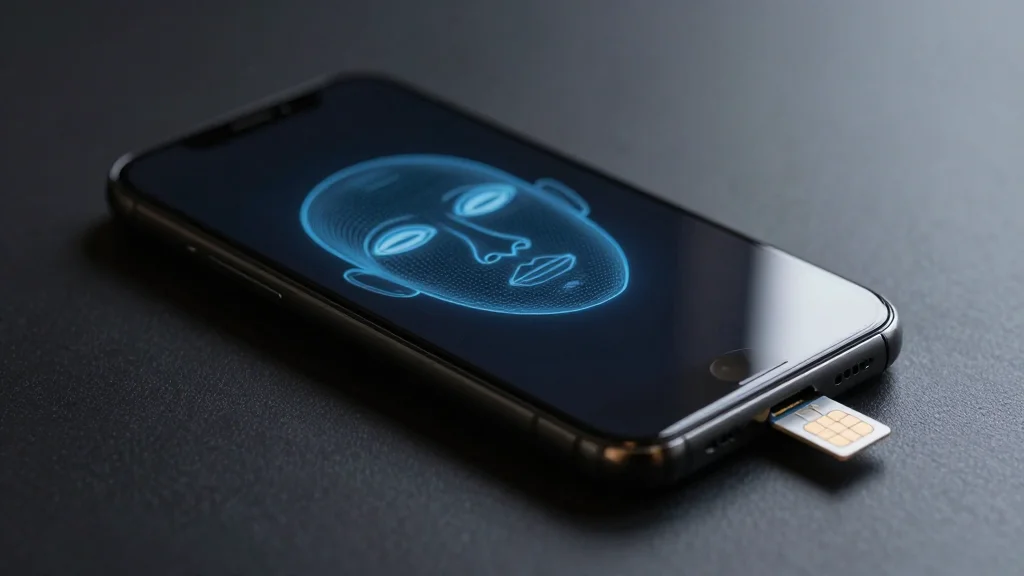
South Korea Extends Facial Recognition SIM Registration Pilot to June 2026
Why It Matters
The extended pilot gives regulators and telecoms a longer runway to evaluate biometric security, influencing regional fraud‑prevention standards and raising privacy‑governance questions that could affect future mobile‑ID policies.
Key Takeaways
- •Pilot extended to June 2026 for further refinement
- •Facial biometrics verify identity at SIM activation
- •Aims to curb stolen‑identity mobile fraud in East Asia
- •Carriers cite technical issues and need broader data
- •Civil groups worry about biometric data security and oversight
Pulse Analysis
South Korea’s facial‑recognition SIM registration pilot, launched in December, represents a bold step toward binding mobile subscriptions to verified identities. By requiring a live facial scan that cross‑checks against government‑issued documents, the system directly tackles a pervasive fraud vector in East Asian markets—activating lines with stolen or borrowed credentials. The Ministry’s decision to extend the trial until mid‑2026 reflects practical challenges: carriers need more time to fine‑tune algorithms, address false‑match rates, and integrate the workflow across legacy billing platforms. This additional data‑gathering phase will also allow previously hesitant operators to join, broadening the demographic sample and improving statistical confidence.
The Korean experiment mirrors global moves toward biometric mobile ID, such as Ghana’s recent nationwide SIM re‑registration via a self‑service app. While biometric verification can dramatically reduce fraudulent activations, it also raises heightened concerns about data privacy, storage security, and oversight. Civil society groups in Seoul have flagged the risk of creating a de‑facto mandatory biometric database without independent audits or clear retention policies. Regulators must balance fraud mitigation benefits against potential overreach, ensuring that any permanent rollout includes robust encryption, limited data lifecycles, and transparent governance structures.
Looking ahead, the pilot’s findings will be closely watched by neighboring economies contemplating similar schemes. If South Korea demonstrates reliable accuracy and a clear privacy framework, it could set a benchmark for Asia‑Pacific telecoms seeking to embed biometric checks into their onboarding processes, especially as mobile identities become gateways to financial services and e‑government platforms. Operators elsewhere should monitor the technical outcomes, cost implications, and stakeholder responses to gauge whether adopting facial‑recognition SIM registration aligns with their risk‑management and customer‑experience strategies.
South Korea Extends Facial Recognition SIM Registration Pilot to June 2026
Comments
Want to join the conversation?
Loading comments...