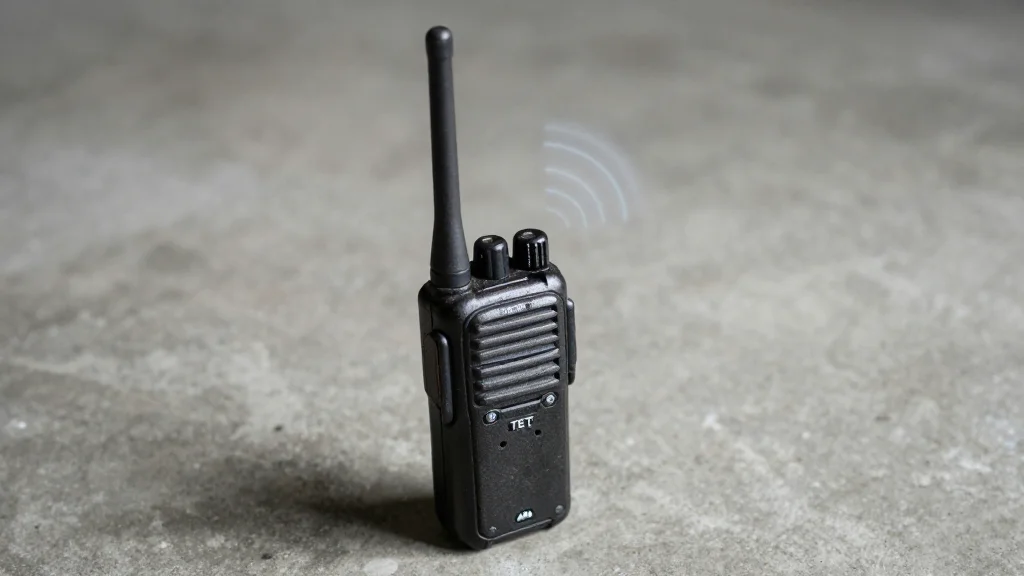
Tetra-Networks-for-Mission-Critical-Voice-Communications
Why It Matters
Reliable voice connectivity can be the difference between life and death for emergency responders, and TETRA’s resilience safeguards that lifeline where cellular networks falter. Its integration with broadband expands situational awareness without sacrificing mission‑critical reliability.
Key Takeaways
- •TETRA operates around 400 MHz, offering superior indoor penetration.
- •Lower-frequency signals diffract, reaching reinforced concrete stairwells and basements.
- •Direct‑mode operation lets radios communicate without any infrastructure.
- •Redundant base stations keep local communications alive if core fails.
- •TETRA complements 4G/5G by providing reliable voice where data networks falter.
Pulse Analysis
Public safety agencies have long relied on dedicated radio systems, but the surge of 4G and 5G deployments has sparked debate over whether commercial cellular can replace legacy networks. TETRA’s ultra‑high‑frequency band, roughly 400 MHz, provides a physical advantage: lower‑frequency waves travel farther and diffract around obstacles, delivering coverage in subways, basements, and reinforced concrete stairwells where Wi‑Fi and mobile broadband lose signal. This inherent reach is crucial for first responders who must maintain contact in the most hostile environments.
Beyond reach, TETRA’s architecture is engineered for resilience. Multiple layers of geographic and local redundancy mean a single equipment failure rarely cripples the network. The local site‑trunking feature isolates base stations, allowing on‑site communication even if the central core goes down. The standout Direct‑Mode Operation (DMO) lets radios form ad‑hoc peer‑to‑peer links without any infrastructure, a capability that most 4G/5G devices lack due to power limits and reliance on network routing. With transmission powers of up to 10 watts, TETRA radios can bridge gaps that cellular devices cannot, ensuring voice connectivity during disasters or in remote locations.
Rather than viewing TETRA as a competitor to broadband, industry leaders see it as a complementary layer. While TETRA secures voice, 4G/5G delivers high‑bandwidth data such as video, imagery, and real‑time location, creating a unified communications picture for command centers. Emerging solutions that route voice over both PMR and cellular backbones further blur the line, offering seamless handoffs and richer situational awareness. As municipalities modernize their emergency infrastructure, the hybrid model—leveraging TETRA’s proven reliability alongside the data prowess of 5G—will likely become the standard for resilient, mission‑critical communications.
tetra-networks-for-mission-critical-voice-communications
Comments
Want to join the conversation?
Loading comments...