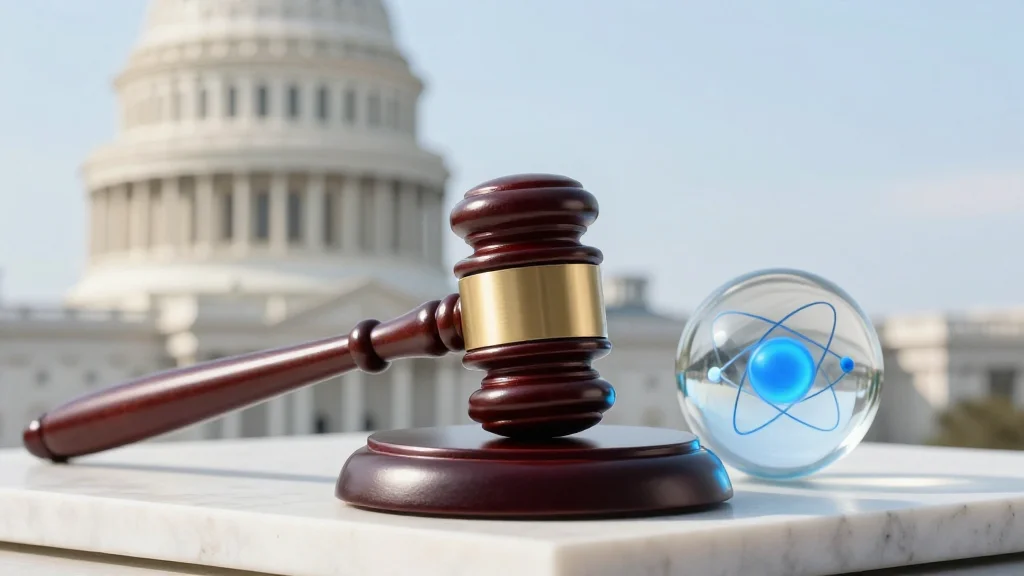
Trump Administration Fires Entire NSF Board, Sparking Governance Crisis

Why It Matters
The National Science Board serves as the primary conduit for scientific expertise in shaping federal research priorities. Its removal not only disrupts the NSF’s governance but also signals a willingness to subordinate independent scientific counsel to political considerations. This could erode confidence among researchers, affect the pipeline of talent, and diminish the United States’ ability to compete in high‑tech sectors where sustained, peer‑reviewed investment is critical. Beyond the immediate governance vacuum, the decision may influence international perceptions of U.S. commitment to science. Allies and rivals alike watch how the U.S. safeguards its research ecosystem; any perceived weakening could accelerate talent migration to regions like the European Union, which is actively increasing R&D spending, or to private sector hubs that operate outside federal oversight.
Key Takeaways
- •All 22 National Science Board members were terminated via email on Friday
- •White House cites 2021 Supreme Court case (*U.S. v. Arthrex*) as legal basis
- •Rep. Zoe Lofgren called the action a "real Bozo the Clown move"
- •Scientists warn the move jeopardizes $10 billion NSF budget oversight
- •EU announced a $568 million research initiative in 2025, heightening competition
Pulse Analysis
The board’s dismissal reflects a broader pattern of executive overreach in the Trump era, where institutional checks on policy have been systematically eroded. Historically, the National Science Board has acted as a buffer, ensuring that NSF funding decisions are grounded in scientific merit rather than electoral calculus. By removing that buffer, the administration not only consolidates control but also creates a governance gap that could be exploited by future administrations to reshape research agendas.
From a market perspective, uncertainty around NSF governance may dampen private sector collaborations that rely on stable federal funding pipelines. Venture capital firms that invest in deep‑tech startups often cite NSF grants as a validation signal; a politicized advisory structure could reduce the predictability of such grants, prompting investors to shift capital toward more stable jurisdictions. Moreover, the timing coincides with aggressive budget cuts proposed for the 2027 fiscal year, amplifying concerns that the U.S. could fall behind in emerging technologies like quantum computing and AI.
Looking ahead, the outcome will hinge on congressional action. If lawmakers succeed in reinstating an independent board or passing legislation that limits executive discretion over appointments, the NSF could regain its advisory capacity and reassure the research community. Conversely, a failure to act may institutionalize a precedent where scientific oversight is subject to the whims of political leadership, potentially reshaping the U.S. innovation landscape for years to come.
Trump Administration Fires Entire NSF Board, Sparking Governance Crisis
Comments
Want to join the conversation?
Loading comments...