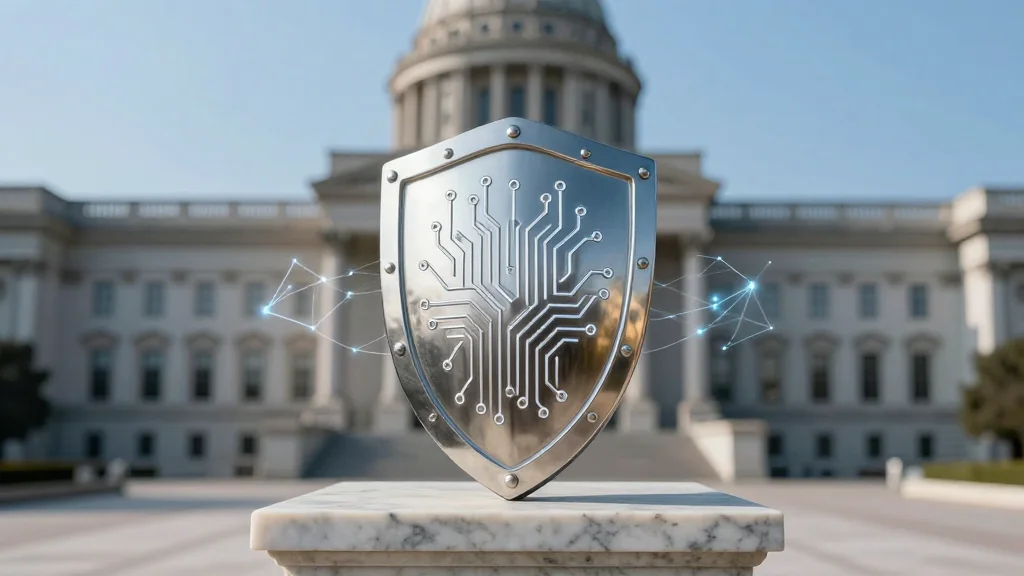
Trump Signs AI Security Order, Rules Out Mandatory Approval for New Models
Why It Matters
The order balances rapid AI innovation with national‑security safeguards, signaling a U.S. approach that could set global standards for AI governance without stifling industry growth.
Key Takeaways
- •Executive order creates voluntary AI security framework for frontier models.
- •No mandatory licensing; developers retain freedom to launch new models.
- •Federal agencies must enhance cyber‑defence tools within 30‑60 days.
- •AI cybersecurity clearinghouse will coordinate vulnerability remediation across sectors.
- •Attorney General to prioritize criminal AI misuse enforcement.
Pulse Analysis
President Donald Trump’s June 2026 executive order marks the latest federal push to embed security into the rapid expansion of artificial intelligence. Titled “Promoting Advanced Artificial Intelligence Innovation and Security,” the directive blends an “America First” cyber‑defence stance with a pledge to keep AI development unfettered by heavy regulation. By directing agencies such as the Department of Homeland Security and the National Institute of Standards and Technology to roll out enhanced protection measures within 30 to 60 days, the order seeks to safeguard national‑security systems while accelerating AI‑enabled defensive capabilities for critical infrastructure.
The order’s most notable provision is a voluntary framework that invites developers of “covered frontier models” to share pre‑release versions with government analysts for security assessment. Unlike the European Union’s AI Act, which imposes mandatory conformity assessments on high‑risk systems, the U.S. approach deliberately avoids licensing or pre‑clearance mandates, aiming to preserve the country’s competitive edge. This flexibility is expected to reassure venture‑backed startups and large tech firms alike, while still providing a structured channel for threat intelligence and coordinated remediation.
For cybersecurity vendors, the creation of an AI cybersecurity clearinghouse opens a new market for tools that detect, classify, and patch AI‑specific vulnerabilities. Critical‑infrastructure operators—from hospitals to community banks—will likely seek third‑party solutions that integrate with the federal clearinghouse, driving demand for interoperable platforms. As the administration also tasks the Attorney General with cracking down on criminal AI misuse, firms offering robust audit trails and compliance automation stand to gain a competitive advantage. Overall, the order balances innovation with risk mitigation, signaling a pragmatic U.S. stance that could shape global AI governance norms.
Trump signs AI security order, rules out mandatory approval for new models
Comments
Want to join the conversation?
Loading comments...