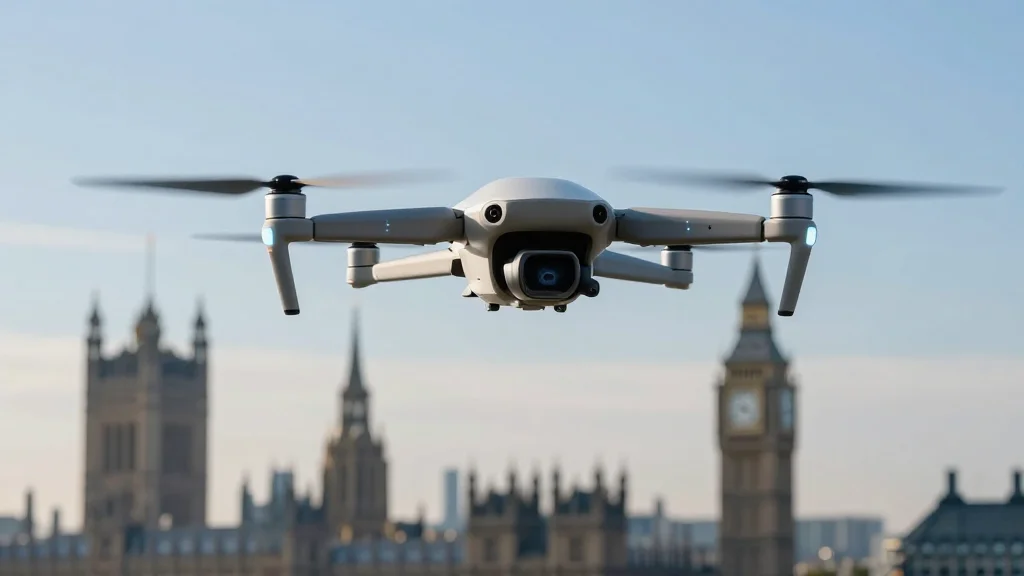
UK Pours £46.5 Million Into Drone ID System and Flying‑Taxi R&D

Why It Matters
The investment marks the UK’s most substantial public commitment to advanced air‑mobility, signalling that government policy will no longer be a barrier but a catalyst for drone and flying‑taxi growth. By tackling the illegal‑drone problem head‑on, the initiative seeks to remove a key obstacle that has hampered public acceptance and delayed commercial roll‑outs worldwide. If successful, the programme could reshape logistics, emergency response and urban transport, delivering faster, greener services while creating a new export‑focused industry. The £46.5 million spend also demonstrates how targeted public funds can de‑risk emerging technologies, encouraging private capital to flow into a sector projected to be worth over $130 billion globally by 2050.
Key Takeaways
- •£46.5 million (≈$59 M) announced for drone ID system and regulatory reforms
- •£26.5 million earmarked to cut red tape and streamline commercial drone approvals
- •Hybrid Remote ID will broadcast real‑time drone ID and location to authorised users
- •Industry forecasts value the UK advanced air‑mobility market at up to £103 billion by 2050
- •Full national rollout of the drone number‑plate system planned for 2027
Pulse Analysis
The UK’s decision to fund both security and regulatory pathways reflects a nuanced understanding of the market’s pain points. Historically, drone adoption has been throttled by two opposing forces: innovators eager to test new use cases and regulators wary of safety and privacy risks. By allocating more than half of the budget to a real‑time identification system, the government is effectively buying confidence for the sector, a move that could accelerate private investment by reducing perceived risk.
Comparatively, other leading economies such as the United States and Germany have focused largely on voluntary standards, leaving enforcement to local authorities. The UK’s top‑down approach may give it a competitive edge, especially if the CAA can deliver a seamless, privacy‑respecting database that integrates with police and emergency services. The success of this model could set a global benchmark, prompting other nations to adopt similar hybrid ID frameworks.
Looking ahead, the true test will be how quickly the regulatory reforms translate into commercial pilots. If eVTOL operators can secure air‑space clearance and demonstrate safe operations within the next 12‑18 months, the UK could capture a sizable share of the projected $130 billion global market. Conversely, delays in standard‑setting or public backlash over data use could stall momentum. The upcoming public consultation on privacy safeguards will be a critical juncture, determining whether the balance between innovation and civil liberties tilts in favour of rapid deployment or cautious oversight.
UK Pours £46.5 Million into Drone ID System and Flying‑Taxi R&D
Comments
Want to join the conversation?
Loading comments...