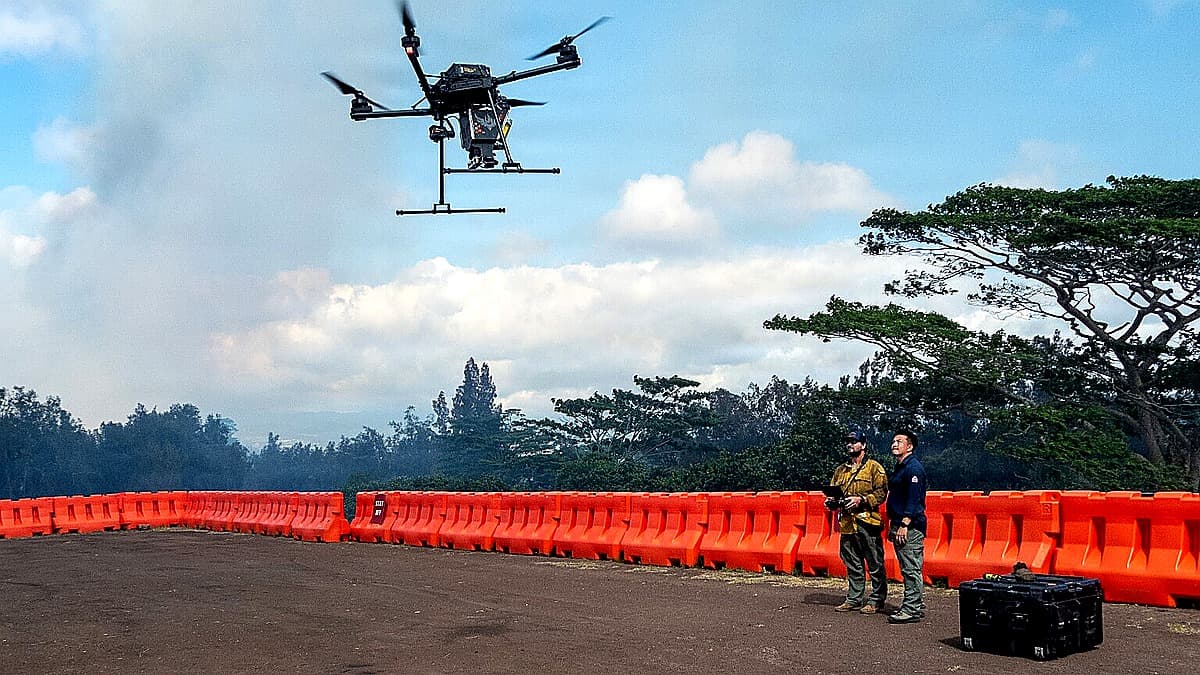
US Army Deploys Drones in Hawaii’s Forests to Cut Wildfire Risk
Why It Matters
The operation demonstrates how drone‑based ignition can enhance wildfire mitigation and habitat stewardship while safeguarding military training readiness, signaling a scalable model for fire‑prone regions nationwide.
Key Takeaways
- •1,707 acres of Guinea grass burned via drone ignition.
- •First USFS drone‑ignition deployment at Schofield Barracks, Hawaii.
- •Drones lower crew risk and expand burn coverage per operation.
- •Prescribed burn protects endangered species habitat on upper slopes.
- •Program supports Army training readiness while enhancing community safety.
Pulse Analysis
Hawaii’s wildfire threat has been amplified by invasive Guinea grass, a fast‑curing species that contributed to the devastating 2023 Maui fires. Managing this fine‑fuel layer is a priority for both the U.S. Army Garrison and the Forest Service, which conduct annual prescribed burns to thin vegetation and protect native ecosystems. The recent 1,707‑acre treatment at Schofield Barracks illustrates how targeted ignition can reduce fuel loads, lower the probability of uncontrolled ignitions, and preserve critical habitat for federally listed species.
The introduction of unmanned aerial ignition drones marks a significant shift in fire‑management tactics. Equipped with ruggedized ground‑control stations and real‑time weather monitoring, the drones can ignite prescribed fires from the air, extending the reach of a single crew and minimizing exposure to steep, hazardous terrain. Early results show faster deployment, more precise ignition patterns, and a measurable reduction in personnel risk compared with traditional drip‑torch methods. The technology is part of a broader U.S. Forest Service rollout across the western United States, aiming to standardize remote‑ignition capabilities for faster, safer fuel‑treatment operations.
Beyond immediate risk reduction, the collaboration between the Army and the Forest Service underscores a growing trend of inter‑agency partnerships in natural‑resource management. By aligning military training requirements with community safety and environmental stewardship, the program delivers a dual benefit: preserving readiness while protecting nearby civilian populations. As climate change intensifies fire seasons, the successful drone deployment in Hawaii could serve as a template for other fire‑prone jurisdictions seeking to modernize prescribed‑burn strategies and safeguard both people and ecosystems.
US Army Deploys Drones in Hawaii’s Forests to Cut Wildfire Risk
Comments
Want to join the conversation?
Loading comments...