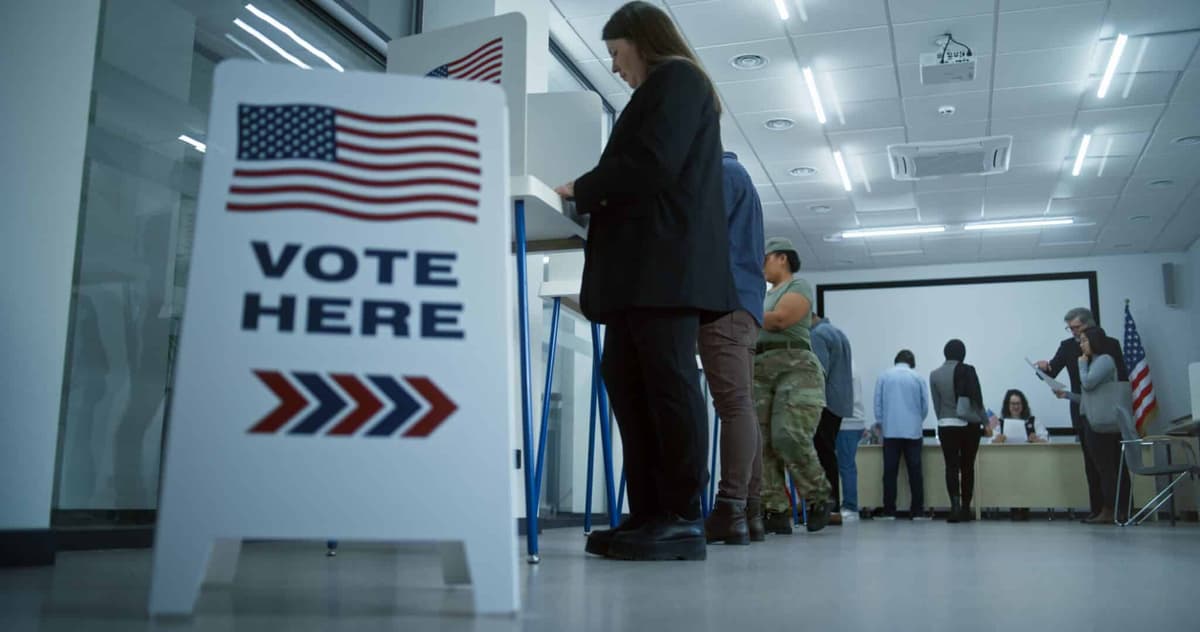
US Senators Propose Curbs on AI-Generated Election Deception
Why It Matters
The FAIR Act gives federal authorities a direct tool to curb AI‑driven voter suppression and raises the evidentiary bar for voter‑challenge operations, protecting both turnout and registration integrity.
Key Takeaways
- •FAIR Act bans knowingly sharing false AI election media to suppress voters
- •Bill requires voter‑removal challenges to rely on verified, government‑approved data sets
- •Attorney General can seek injunctive relief in federal court for AI disinformation
- •Individuals can sue the federal government for illegal voter‑list checks
- •AI‑generated robocalls in New Hampshire prompted $1 million FCC settlement, highlighting enforcement gaps
Pulse Analysis
Artificial intelligence has accelerated the scale of election misinformation, turning once‑labor‑intensive tactics into mass‑distribution threats. In the 2024 cycle, AI‑generated deepfake videos and synthetic‑voice robocalls have been deployed to confuse voters about polling locations, dates, and eligibility. The New Hampshire incident, where AI‑mimicked President Biden urged voters to stay home, culminated in a $1 million FCC settlement, underscoring the urgency for a federal response. As generative models become cheaper and more accessible, the risk of coordinated disinformation campaigns that can sway voter behavior grows exponentially.
The FAIR Act seeks to close that gap by criminalizing the knowing dissemination of false AI‑generated election content intended to suppress voting. By defining prohibited material across text, images, audio, and video, the bill equips the Attorney General with civil authority to obtain injunctions against perpetrators. Simultaneously, the legislation amends the National Voter Registration Act, mandating that any voter‑removal challenge be based on government‑approved, verifiable data sets such as full Social Security numbers or driver’s licenses, updated monthly. This dual approach targets both the supply side of AI‑driven misinformation and the demand side of mass voter‑challenge operations that rely on scraped public records.
Beyond immediate enforcement, the FAIR Act signals a broader shift toward modernizing election law for the digital age. By establishing a private right of action, individuals can hold the federal government accountable for unlawful voter‑list checks, curbing the use of federal databases in partisan eligibility reviews. The bill also sets a precedent for future legislation that may blend civil and criminal tools to address emerging technologies. As states grapple with their own AI regulations, the FAIR Act could become a template for nationwide standards, reinforcing the integrity of U.S. elections amid rapid technological change.
US senators propose curbs on AI-generated election deception
Comments
Want to join the conversation?
Loading comments...