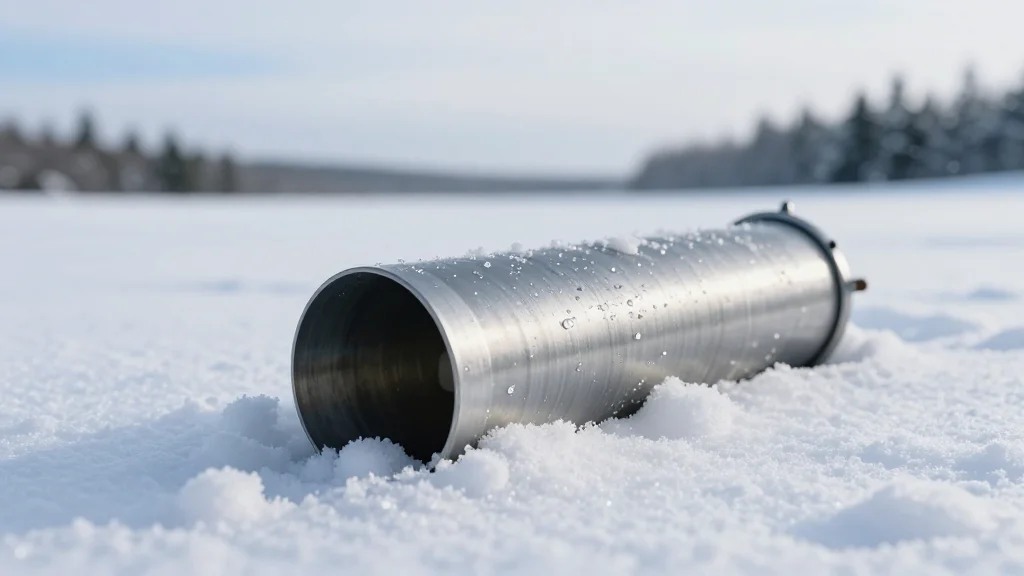
USDA Relies on Century‑Old Metal Tube to Forecast Drought Across the West

Why It Matters
The continued use of the Church Sampler illustrates how GovTech can leverage low‑cost, rugged hardware to generate reliable data for critical public‑service functions. In an era where budgets are tight and climate risk is rising, the ability to collect high‑quality, on‑the‑ground measurements without expensive infrastructure is a strategic advantage for federal agencies. Moreover, the sensor’s data feed directly into decision‑making pipelines that affect agriculture, municipal water supplies, and wildfire preparedness, underscoring the tangible impact of simple technology on public safety and economic stability. For the broader GovTech ecosystem, the Church Sampler serves as a reminder that innovation does not always require cutting‑edge electronics. Proven, inexpensive tools can be scaled quickly, deployed in remote locations, and integrated with modern data platforms to enhance situational awareness. This hybrid approach—combining legacy field methods with contemporary analytics—offers a pragmatic roadmap for other agencies seeking to modernize service delivery while managing fiscal constraints.
Key Takeaways
- •USDA NRCS hydrologist Toby Rodgers uses the Church Sampler, a simple aluminum tube, to weigh snowpack.
- •The device, invented by James Church in the early 1900s, converts snow weight into water‑equivalent inches.
- •Rodgers says the tool is still used in every western state for seasonal drought forecasting.
- •Measurements feed into USDA water‑budget models that guide water‑allocation decisions.
- •Climate‑change‑driven variability makes on‑the‑ground snow measurements increasingly vital.
Pulse Analysis
The resurgence of the Church Sampler in USDA’s drought‑forecasting workflow highlights a broader GovTech trend: the strategic deployment of low‑tech sensors to complement high‑tech data streams. While satellite imagery and automated snow pillows provide broad coverage, they can miss micro‑scale variations that directly affect local water supplies. A cheap, portable metal tube bridges that gap, delivering point‑level data that can be rapidly validated and fed into existing analytical models.
Historically, government agencies have struggled to balance the cost of cutting‑edge instrumentation with the need for widespread coverage. The Church Sampler’s longevity demonstrates that a well‑designed, simple instrument can outlast multiple generations of technology, offering a cost‑effective baseline that newer tools can calibrate against. This hybrid data architecture reduces reliance on any single technology, enhancing resilience against sensor failures or data latency.
Looking forward, the USDA’s continued reliance on the Church Sampler suggests that future GovTech investments may prioritize modular, interoperable sensor suites that blend legacy hardware with IoT connectivity. By retrofitting classic tools with digital logging and wireless transmission, agencies could harvest real‑time snow‑water data at scale without overhauling field operations. Such an approach would align budgetary realities with the urgent need for granular climate data, positioning the public sector to respond more nimbly to drought risk and water‑resource challenges.
USDA Relies on Century‑Old Metal Tube to Forecast Drought Across the West
Comments
Want to join the conversation?
Loading comments...