USDA Relies on Century‑Old Metal Tube to Forecast Drought in Pacific Northwest

Why It Matters
The Church Sampler’s ongoing use illustrates how legacy technologies can remain indispensable in modern government operations, especially when budget constraints and rugged field conditions limit the deployment of expensive high‑tech alternatives. Reliable snowpack data directly influence water‑allocation decisions that affect agriculture, hydroelectric power, and municipal supplies across the drought‑prone western United States. As climate change intensifies variability, maintaining a diversified measurement toolkit becomes a strategic imperative for federal agencies tasked with safeguarding water security. Moreover, the NRCS’s reliance on a simple, reproducible method underscores a broader GovTech trend: the integration of low‑cost, high‑impact tools with advanced data‑analytics platforms. This hybrid approach can accelerate decision‑making while preserving the transparency and repeatability that policymakers demand.
Key Takeaways
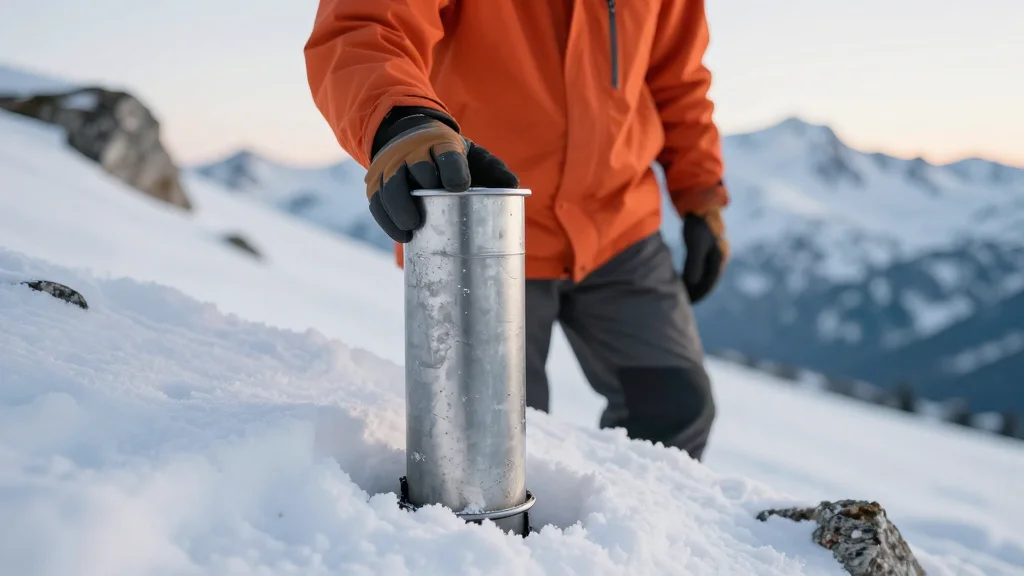
- •USDA NRCS hydrologist Toby Rodgers used the Church Sampler metal tube in Washington’s Cascades to measure snowpack.
- •The Church Sampler, invented by James Church in the early 1900s, converts snow weight into water‑equivalent inches.
- •Rodgers emphasized the device’s simplicity: "You plop a tube through the snow, pull out a core, weigh it, and get water inches."
- •Climate‑induced variability is reducing the reliability of historic snow courses, increasing reliance on ground‑based measurements.
- •Data from the sampler feed into regional water‑resource planning, reservoir management, and drought‑forecasting models.
Pulse Analysis
The continued fielding of the Church Sampler by USDA’s NRCS highlights a pragmatic GovTech philosophy: leverage proven, low‑cost hardware while layering sophisticated analytics on top. In an era where federal budgets are scrutinized, the ability to obtain high‑value data without large capital outlays offers a competitive edge. The sampler’s durability and minimal training requirements enable rapid deployment across remote mountain sites, a capability that many satellite‑based systems lack due to cloud cover or terrain shadowing.
Historically, the device’s diffusion from James Church’s experiments to a nationwide network mirrors the diffusion of other GovTech standards—simple, open‑source tools that become de‑facto infrastructure. As climate change accelerates, the demand for granular, real‑time snow data will only grow, prompting agencies to blend the Church Sampler’s tactile measurements with AI‑driven melt‑runoff models. This convergence could produce more accurate forecasts, reducing the economic impact of drought on agriculture and energy production.
Looking forward, the NRCS’s strategy may serve as a template for other agencies confronting legacy‑versus‑innovation dilemmas. By preserving the operational relevance of century‑old instruments while investing in data‑integration platforms, the government can achieve cost‑effective resilience. The key question remains how quickly these hybrid systems can be scaled to cover the full breadth of the western water‑basin network, especially as funding streams shift toward digital transformation.
USDA Relies on Century‑Old Metal Tube to Forecast Drought in Pacific Northwest
Comments
Want to join the conversation?
Loading comments...