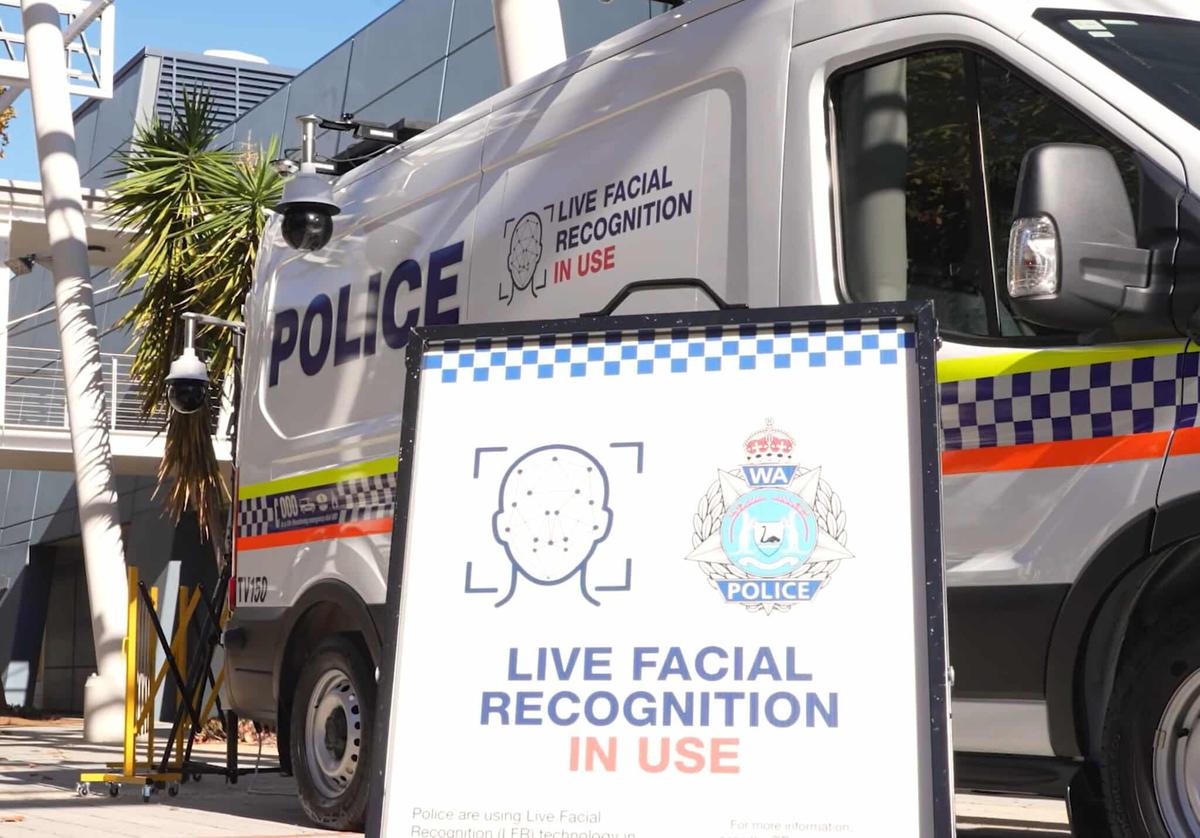
Western Australia Police Launch Trial of Live Facial Recognition
Companies Mentioned
Why It Matters
The pilot marks Australia’s first live‑FRT police deployment, testing a technology that could reshape crime‑prevention tactics while igniting privacy debates across democratic societies.
Key Takeaways
- •WA police test live facial recognition on a single patrol van.
- •System alerts officers to individuals on a controlled police alert list.
- •Non‑alert faces are pixelated in real time and not stored.
- •Trial mirrors UK deployments but claims to avoid mass surveillance.
- •NEC logo suggests the vendor may be NEC’s facial‑recognition platform.
Pulse Analysis
The Western Australia Police’s live facial‑recognition trial introduces a new layer of real‑time analytics to street policing. By mounting visible cameras on a patrol van, officers can instantly match faces against a curated alert list that includes serious offenders, missing individuals and those subject to court‑ordered restrictions. The technology promises faster identification, potentially reducing response times and improving public safety outcomes. However, the trial’s limited scope—one vehicle and a single jurisdiction—means its operational impact remains to be measured, and the lack of a disclosed vendor adds an element of opacity to the rollout.
Privacy advocates are watching the WA experiment closely, drawing parallels with the United Kingdom’s contentious live‑FRT pilots. In Britain, deployments across train stations and city centres have sparked legal challenges over alleged mass surveillance and algorithmic bias. Western Australia attempts to sidestep those criticisms by pixelating non‑alert faces in real time and refusing to store any image data. While these safeguards address some civil‑liberties concerns, questions linger about the accuracy of the underlying algorithms, the criteria for inclusion on the alert list, and the oversight mechanisms governing the system’s use.
If the trial proves effective, it could pave the way for broader adoption across Australian states, influencing national policy on biometric policing tools. The visible NEC branding hints at a partnership with a major global vendor, suggesting that the technology may be built on established facial‑recognition platforms already deployed in airports and border control. As law‑enforcement agencies balance operational benefits against public trust, the WA pilot will likely become a benchmark for future debates on the role of live biometric surveillance in democratic societies.
Western Australia police launch trial of live facial recognition
Comments
Want to join the conversation?
Loading comments...