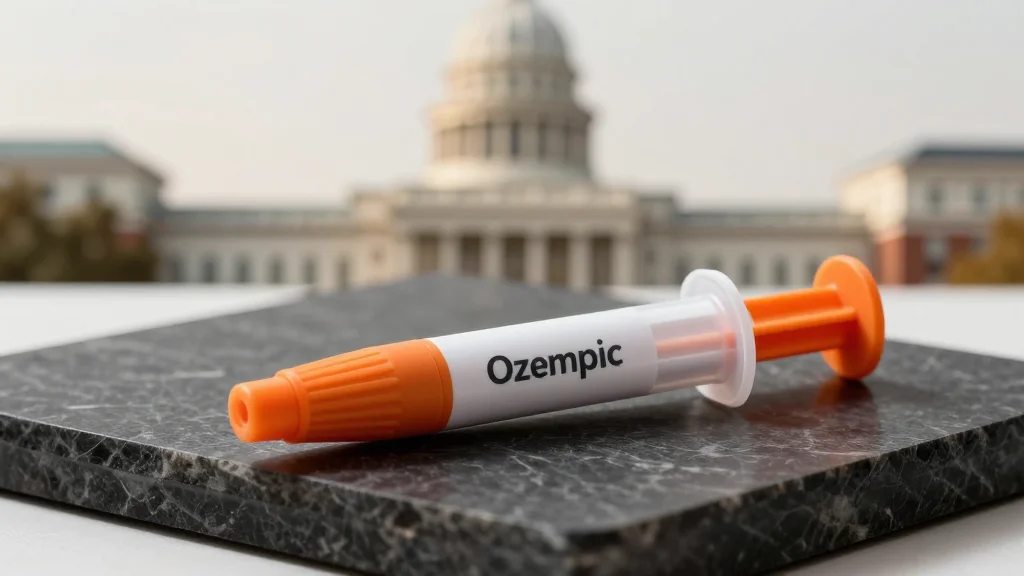
Maryland Board Caps Ozempic at $274 per Month, Second State Drug‑Cost Limit

Companies Mentioned
Why It Matters
The Maryland cap on Ozempic illustrates how state policymakers are increasingly willing to intervene directly in pharmaceutical pricing, a domain traditionally dominated by market forces and federal regulation. By setting a concrete price ceiling for a high‑demand, high‑cost drug, Maryland signals to other states that aggressive price controls are feasible and can be enacted through existing legal frameworks. This could accelerate a wave of similar legislation, reshaping the economics of drug distribution and potentially prompting manufacturers to reevaluate pricing models for their flagship products. For patients relying on Ozempic through public health plans, the cap could translate into lower out‑of‑pocket costs or reduced tax‑payer burden. Conversely, if manufacturers respond by limiting supply or altering rebate structures, access could be affected. The decision also adds pressure on Novo Nordisk to engage in price negotiations, potentially influencing its global pricing strategy for Ozempic and related GLP‑1 therapies.
Key Takeaways
- •Maryland PDAB voted to cap Ozempic at $274 per month for state and local health plans.
- •The cap becomes effective in January 2027 and follows an April limit on Jardiance.
- •The decision uses a controversial state authority to control pharmaceutical costs.
- •The cap applies only to government‑run health plans, not private insurers.
- •Implementation will require adjustments by Novo Nordisk and plan administrators before the 2027 benefit year.
Pulse Analysis
Maryland’s Ozempic cap is a strategic gamble that leverages the state’s purchasing clout to force price concessions from a drug that has become a cultural and medical phenomenon. Historically, price‑control efforts have been hampered by federal preemption and industry pushback, but the PDAB’s willingness to set a hard ceiling sidesteps negotiations in favor of a definitive limit. This approach could compel Novo Nordisk to offer deeper discounts to retain its market share in the public sector, especially as other states watch Maryland’s experiment.
If the cap proves effective—delivering measurable savings without compromising patient access—it could serve as a template for a national patchwork of state‑level price ceilings. Such a mosaic would fragment the pricing landscape, forcing manufacturers to juggle multiple price points and potentially eroding the premium pricing model that has underpinned GLP‑1 drug profitability. However, the risk remains that manufacturers might respond by limiting supply to public plans or shifting costs to private markets, a scenario that could spark legal challenges and further regulatory scrutiny.
In the broader context, Maryland’s action reflects escalating political pressure to address drug affordability, a pressure that has intensified since the surge in demand for weight‑loss medications. As more states contemplate similar caps, the pharmaceutical industry may need to adopt more transparent pricing frameworks or risk a cascade of state‑driven interventions that could reshape revenue expectations for high‑margin drugs like Ozempic.
Maryland Board Caps Ozempic at $274 per Month, Second State Drug‑Cost Limit
Comments
Want to join the conversation?
Loading comments...