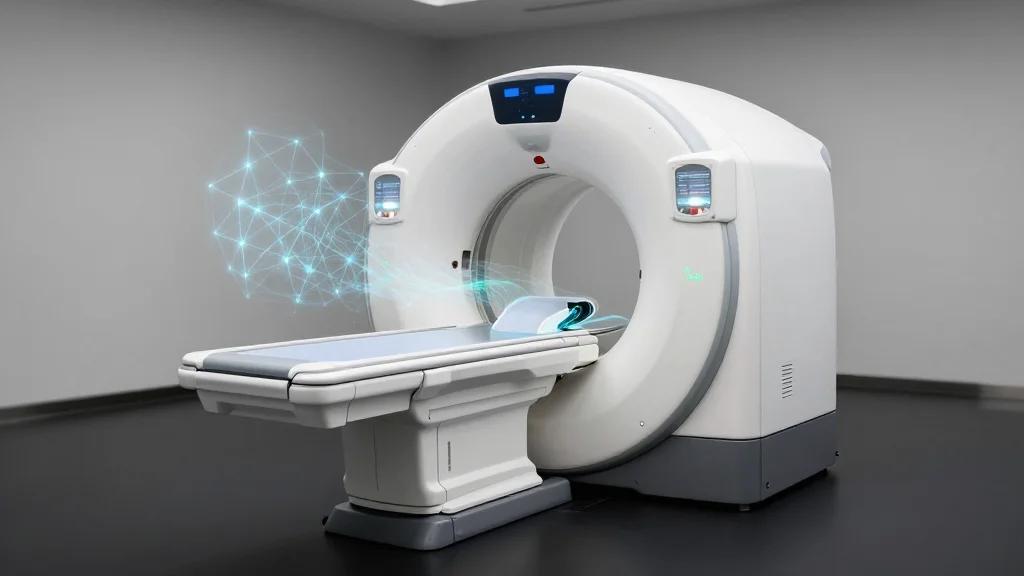
FDA Clears First AI-Enabled, Detector-Based Spectral CT System
Companies Mentioned
Why It Matters
The clearance positions Philips to accelerate adoption of AI‑enhanced spectral CT, improving diagnostic speed and accuracy while lowering radiation dose—a competitive edge in a rapidly evolving imaging market.
Key Takeaways
- •AI-powered Verida reconstructs 145 images per second.
- •Always‑on spectral imaging eliminates need for extra scans.
- •Exam time reduced to ~30 seconds, doubling typical speed.
- •Potential to handle up to 270 exams daily per scanner.
- •Lowers radiation dose by acquiring high‑ and low‑energy data simultaneously.
Pulse Analysis
Artificial intelligence is reshaping medical imaging, and Philips' Verida marks a pivotal step by embedding AI directly into the reconstruction pipeline of a detector‑based spectral CT. Unlike conventional dual‑energy systems that toggle modes or require additional hardware, Verida’s Nano‑panel dual‑layer detector captures high‑ and low‑energy data simultaneously, while AI algorithms suppress noise and enhance contrast. This integration yields consistently high‑quality images across a range of clinical protocols, reducing the need for repeat scans and streamlining workflow for radiologists and technologists alike.
Operational efficiency is a core selling point of Verida. With a reconstruction rate of 145 images per second, the scanner can finish a typical exam in about 30 seconds—roughly twice as fast as legacy CT units. In high‑throughput environments, this speed translates to the capacity for up to 270 examinations per day per machine, easing bottlenecks in busy hospitals and imaging centers. Faster turnaround also shortens patient wait times and improves scheduling flexibility, while the always‑on spectral capability provides immediate material decomposition data for cardiac, oncology and interventional applications without extra radiation exposure.
The FDA clearance gives Philips a strategic foothold in a market where competitors are racing to add AI and spectral features to their platforms. Early adopters stand to gain clinical differentiation by offering lower dose, higher‑resolution imaging that supports advanced decision‑making, such as virtual mono‑energetic reconstructions for vascular assessment or iodine quantification for tumor characterization. However, capital costs and the need for staff training may temper rapid uptake. As reimbursement models evolve to reward value‑based imaging, Verida’s efficiency and diagnostic depth could drive broader acceptance, setting a new benchmark for next‑generation CT technology.
FDA clears first AI-enabled, detector-based spectral CT system
Comments
Want to join the conversation?
Loading comments...