AI Meets Olfaction: SpotitEarly Unveils LUCID 2.0, Scaling Early Cancer Detection to Millions
Key Takeaways
- •LUCID 2.0 can run up to 1.73 million breath tests per year per center
- •Platform merges trained dogs with AI to deliver a 0‑to‑100 confidence score
- •Clinical study of 1,300 patients showed 94% sensitivity across four cancers
- •Two new trials: 2,000‑patient PINK breast study and Fox Chase lung trial
- •Automated workflow links app ordering, canine screening, cloud AI, and physician‑signed results
Pulse Analysis
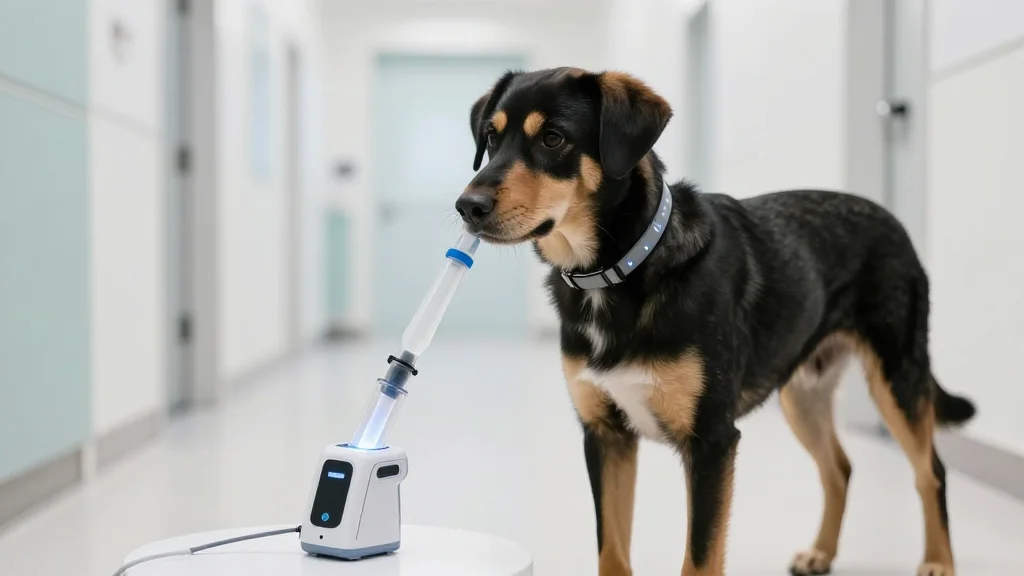
The convergence of artificial intelligence and biological olfaction is poised to disrupt traditional cancer screening paradigms. While imaging and blood‑based biomarkers dominate the market, they often require expensive equipment and invasive procedures. SpotitEarly’s LUCID 2.0 leverages the innate ability of dogs to detect volatile organic compounds in exhaled breath, translating those subtle cues into quantifiable data streams. By embedding video, audio and motion sensors into each screening port, the platform captures thousands of micro‑signals per sniff, feeding a cloud‑based deep‑learning model that produces a calibrated confidence score. This hybrid approach not only sidesteps costly hardware but also creates a continuously expanding dataset that improves accuracy over time.
Scalability is the linchpin of any diagnostic breakthrough, and LUCID 2.0 addresses that head‑on. With a capacity of 1.73 million tests per year per site, the system can be deployed in hospitals, urgent‑care centers, or even mobile clinics without overwhelming existing workflows. The end‑to‑end digital infrastructure—patient app, automated sample handling, AI analysis, and instant physician‑signed reporting—eliminates manual bottlenecks that have hampered earlier bio‑sensor attempts. Moreover, the platform’s cloud architecture ensures that new facilities inherit the full analytical engine instantly, turning each new location into a high‑throughput hub without retraining the AI from scratch.
From a business perspective, LUCID 2.0 arrives at a moment when payers and providers are aggressively seeking cost‑effective early‑detection solutions. The 94% sensitivity demonstrated in a 1,300‑patient double‑blind trial positions the technology alongside established screening modalities, while its non‑invasive breath test could drive higher patient adherence. Ongoing multicenter trials, including the 2,000‑patient PINK breast study, will generate the clinical evidence needed for regulatory clearance and reimbursement pathways. If successful, SpotitEarly could capture a sizable share of the $50 billion global cancer‑screening market, establishing a defensible moat built on proprietary canine‑AI data that competitors would find difficult to replicate.
AI Meets Olfaction: SpotitEarly Unveils LUCID 2.0, Scaling Early Cancer Detection to Millions
Comments
Want to join the conversation?