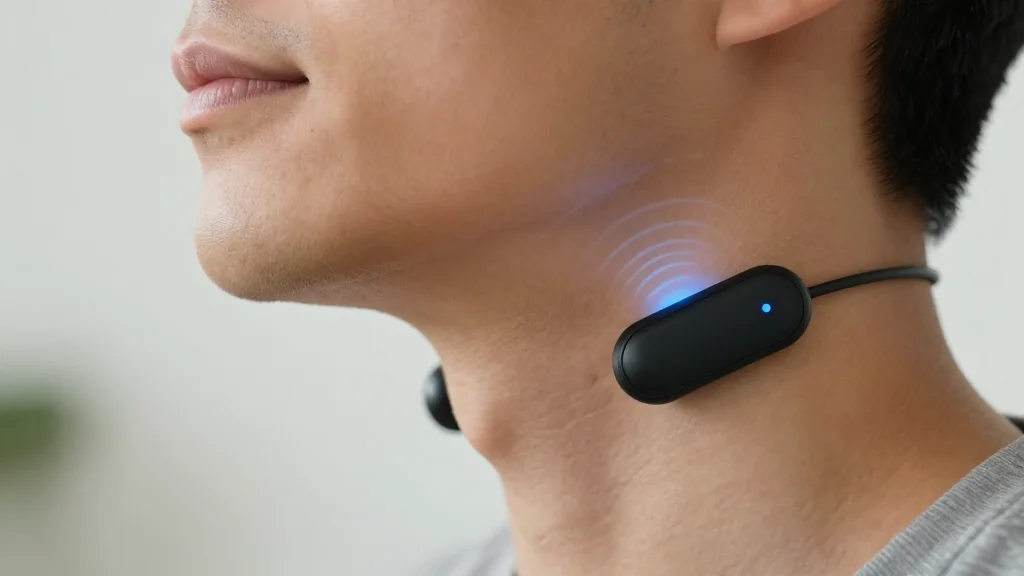
AI Restores Voice by Reading Neck Muscle Movements
Key Takeaways
- •AI sensor translates neck muscle motion into spoken words
- •Uses light‑based camera and silicone markers for non‑invasive tracking
- •Recreates user’s voice via personalized speech synthesis
- •Outperforms EMG/EEG methods in comfort and accuracy
- •Enables silent communication in noisy factories and libraries
Pulse Analysis
The loss of a speaking voice, whether from laryngeal cancer, trauma, or surgical removal of the vocal cords, has long been a painful barrier to personal and professional interaction. Traditional assistive devices rely on electromyography or brain‑wave recordings, which demand cumbersome electrodes and often produce noisy output. The recent breakthrough from Pohang University of Science and Technology sidesteps these limitations by capturing the minute skin deformations that accompany speech. By interpreting these biomechanical cues with deep‑learning algorithms, the system offers a more natural, wearable solution that could redefine voice prosthetics.
The core of the technology is a multiaxial strain‑mapping sensor—a miniature camera paired with soft silicone patches dotted with reference markers. Illuminated by low‑power light, the camera records sub‑millimeter movements across multiple axes, feeding a convolutional neural network trained on thousands of phoneme‑level examples. The AI translates the motion patterns into textual predictions, which are then fed into a voice‑synthesis engine calibrated to the user’s original timbre. Laboratory tests reported reconstruction accuracy exceeding 90 % even when ambient factory noise reached 80 dB, a level that would drown conventional microphones.
Beyond restoring speech for laryngectomised patients, the silent‑speech interface opens commercial avenues in environments where audible communication is impractical—assembly lines, clean rooms, or quiet libraries. Companies developing hands‑free control systems may integrate the sensor to issue commands without vocalizing, enhancing safety and privacy. However, scaling the device will require regulatory clearance for medical use and robust data‑privacy safeguards, given the intimate biometric data it captures. If these hurdles are cleared, the market for non‑invasive speech augmentation could expand rapidly, attracting investment from both health‑tech and industrial automation sectors.
AI restores voice by reading neck muscle movements
Comments
Want to join the conversation?