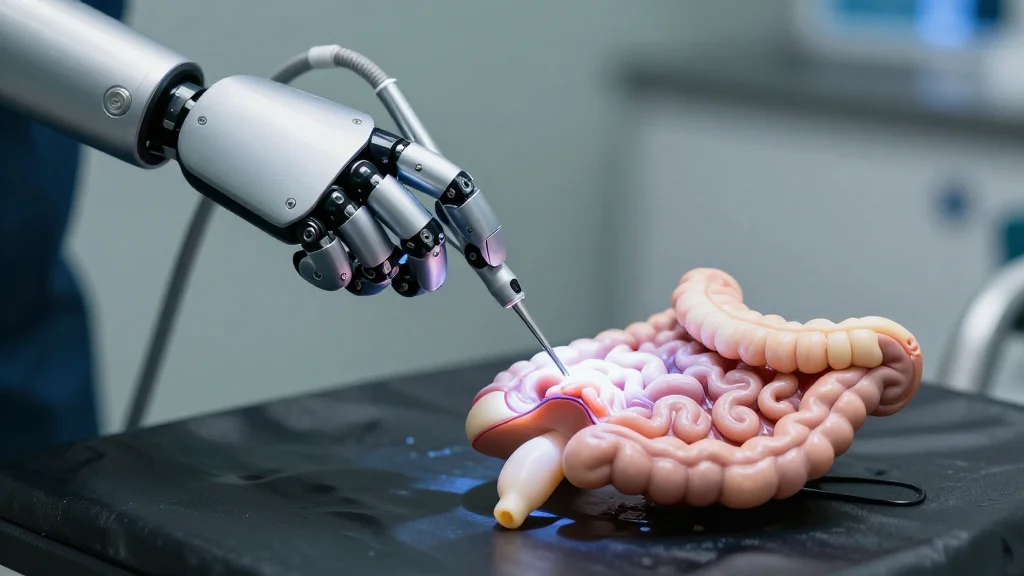
EndoQuest Advances Multicenter PARADIGM Trial with Completion of Procedures at Baylor St. Luke’s Medical Center
Key Takeaways
- •Baylor St. Luke’s joins PARADIGM trial, completing first robotic ESD procedures.
- •Trial enrolls 50 patients across five major U.S. health systems.
- •EndoQuest aims for De Novo FDA classification after trial completion.
- •Robotic ESD could shift treatment of rectal and sigmoid lesions.
- •Success may accelerate adoption of endoluminal surgical robotics industry-wide.
Pulse Analysis
EndoQuest Robotics is at the forefront of endoluminal robotic innovation, leveraging its flexible Endoluminal Surgical (ELS) System to bring true surgical dexterity to the endoscopy suite. By enabling precise control during complex procedures such as endoscopic submucosal dissection, the platform promises to reduce procedural time, improve resection margins, and expand therapeutic options beyond what conventional endoscopic tools can achieve. The recent activation of Baylor St. Luke’s as a trial site adds a high‑volume academic center to the PARADIGM study, providing valuable real‑world data that complements earlier results from Mayo Clinic, Cleveland Clinic, AdventHealth, and HCA Healthcare.
The PARADIGM trial is a prospective, multicenter assessment enrolling up to 50 patients with lesions in the rectum or sigmoid colon. Its primary endpoints focus on safety—monitoring adverse events such as perforation or bleeding—and efficacy, measured by complete resection rates and histologic outcomes. By spanning five geographically diverse institutions, the study captures a broad spectrum of operator experience and patient demographics, strengthening the evidence base needed for a De Novo FDA classification request. EndoQuest’s strategy to seek this regulatory pathway reflects confidence that the ELS System meets the novelty and risk criteria for a new device classification, potentially accelerating market entry.
If the trial meets its safety and efficacy goals, the implications for the gastroenterology market could be profound. Robotic assistance may become the preferred modality for complex colorectal lesions, prompting hospitals to invest in specialized platforms and training programs. This shift could also spur competitive responses from established endoscopic device manufacturers, driving further innovation in robotic articulation, haptic feedback, and AI‑guided navigation. Ultimately, EndoQuest’s progress may set a new standard for minimally invasive colorectal care, delivering better outcomes for patients while opening revenue streams for technology‑focused healthcare providers.
EndoQuest Advances Multicenter PARADIGM Trial with Completion of Procedures at Baylor St. Luke’s Medical Center
Comments
Want to join the conversation?