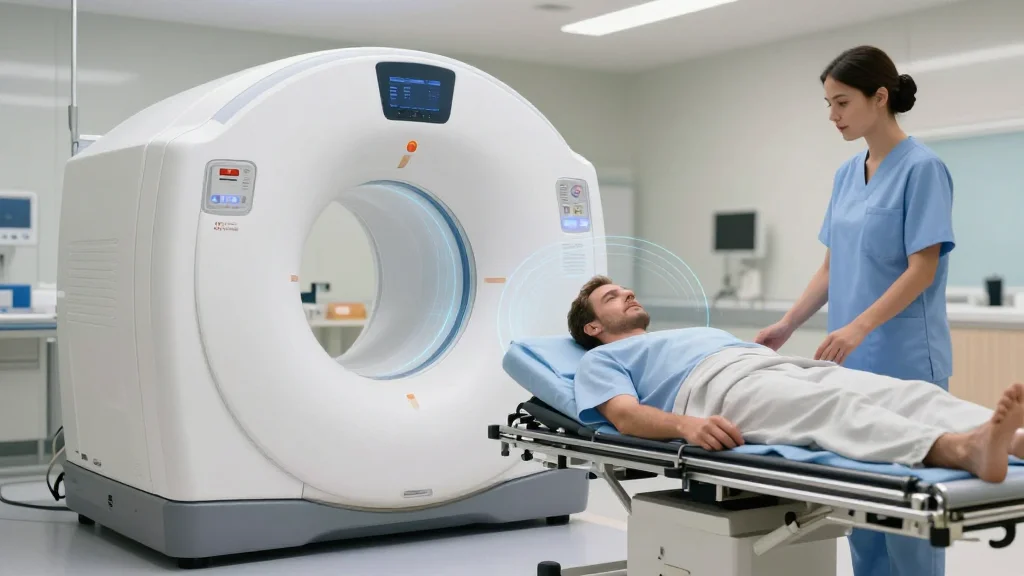
Hyperfine Announces Presentation of Results From the PRIME Study Showing Portable MRI Substantially Reduces Time to Imaging in Emergency Departments
Key Takeaways
- •Portable MRI cut imaging wait times by over six hours in ED
- •18.6% of scans revealed critical brain pathology, all confirmed on standard MRI
- •Study enrolled 100 patients, comparing bedside Swoop® to conventional MRI workflow
- •Rapid bedside imaging may reduce ED boarding and improve triage decisions
- •Hyperfine's results could accelerate adoption of ultra‑low‑field MRI in hospitals
Pulse Analysis
Emergency departments have long struggled with bottlenecks caused by limited access to conventional MRI scanners, which often require patient transport and scheduling delays. The emergence of ultra‑low‑field, AI‑enhanced portable MRI devices like Hyperfine's Swoop® addresses this gap by delivering clinically useful brain images at the bedside. FDA clearance and advances in Optive AI™ software have made the technology viable for a range of neuro‑emergencies, positioning it as a disruptive tool in acute care settings.
The PRIME study, a single‑center randomized trial, quantified that disruption. Patients assigned to the portable MRI arm received imaging in a median 1.28 hours, compared with 7.76 hours for the traditional pathway—a six‑hour reduction that can be decisive in stroke or intracranial hemorrhage cases. Moreover, 18.6% of scans uncovered critical findings such as acute ischemic stroke and mass effect, all corroborated by follow‑up conventional MRI, confirming diagnostic fidelity. These efficiency gains promise to ease ED boarding, free up conventional scanners for elective cases, and enable faster therapeutic interventions.
From a market perspective, Hyperfine's data strengthens the business case for hospitals to invest in portable MRI, especially in facilities where MRI capacity is constrained or where patient transport poses safety risks. The study’s positive outcomes may accelerate reimbursement discussions and stimulate competition among low‑field MRI vendors. As more institutions adopt bedside imaging, we can expect a ripple effect: improved patient flow, reduced length‑of‑stay costs, and expanded research opportunities into point‑of‑care neurodiagnostics. Hyperfine’s momentum could redefine neuroimaging standards across the United States.
Hyperfine Announces Presentation of Results from the PRIME Study Showing Portable MRI Substantially Reduces Time to Imaging in Emergency Departments
Comments
Want to join the conversation?