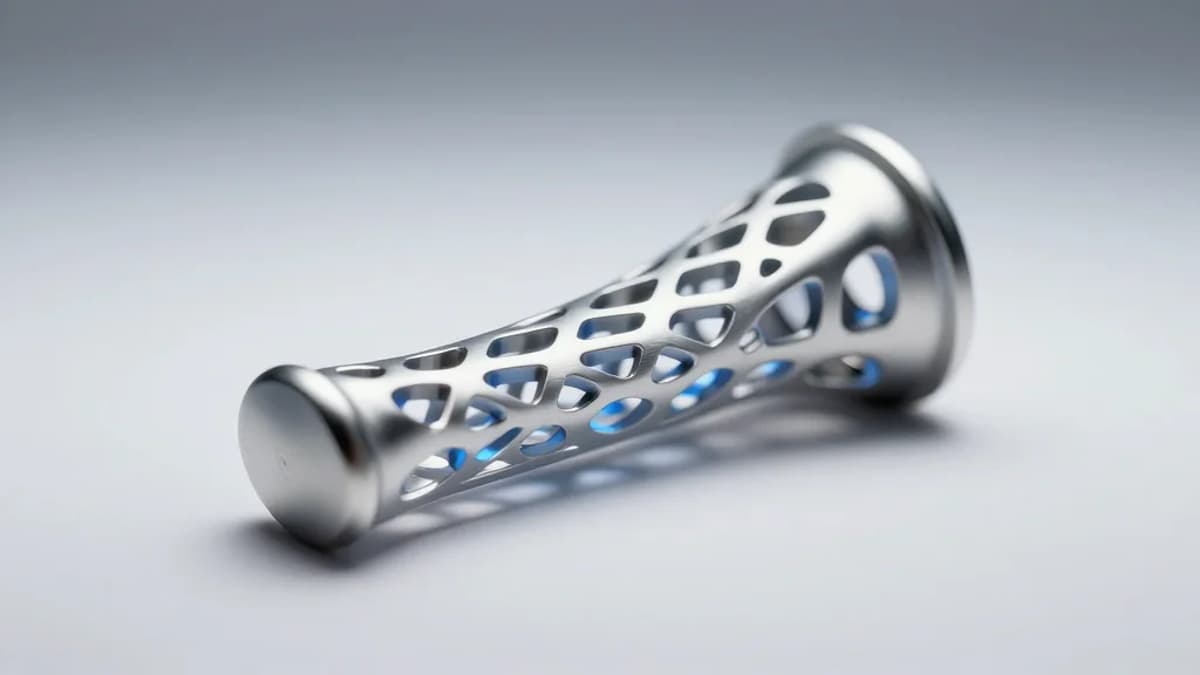
Orthofuse Raises £2.2m for 3D-Printed Implants
•February 17, 2026
0
Why It Matters
The funding enables a potentially safer, more efficient implant system that could lower operative times and complications, reshaping orthopaedic care standards. Successful adoption may set a new benchmark for medtech innovation in high‑risk surgeries.
Key Takeaways
- •Raised £2.2m seed for 3D-printed orthopaedic implants.
- •Implants target trauma and spinal degeneration surgeries.
- •Additive manufacturing enables reversible, fewer-step procedures.
- •Funding supports regulatory prep and early clinical trials.
- •Angel investors include ACF, Cambridge Angels, Empirical Ventures.
Pulse Analysis
The orthopaedic market has long struggled with implants that are difficult to adjust once placed, especially in cases of poor bone quality. Orthofuse’s approach leverages additive manufacturing to create patient‑specific geometries that can be repositioned without extensive tissue disruption. This flexibility not only shortens operative time but also reduces the risk of intra‑operative complications, addressing a critical pain point for surgeons and hospitals alike.
Beyond the technical advantages, the £2.2 million seed injection signals strong investor confidence in the convergence of digital fabrication and surgical practice. Angel groups such as ACF Investors and Cambridge Angels see the venture as a bridge between engineering innovation and clinical practicality, anticipating a faster regulatory pathway given the clear safety benefits. The capital will fund prototype refinement, compliance testing, and the first wave of clinical evaluations, positioning Orthofuse to capture early market share in a niche yet high‑impact segment.
If Orthofuse’s implants deliver on their promise, the ripple effects could extend across the broader medtech ecosystem. Surgeons would gain a tool that adapts to variable anatomy, potentially expanding the eligibility for minimally invasive procedures. Hospitals could see cost savings from reduced operating‑room time and lower revision rates. Ultimately, the company’s success may accelerate the adoption of 3D‑printed solutions across orthopaedics, setting a precedent for how additive manufacturing can redefine surgical standards.
Orthofuse raises £2.2m for 3D-printed implants
0
Comments
Want to join the conversation?
Loading comments...