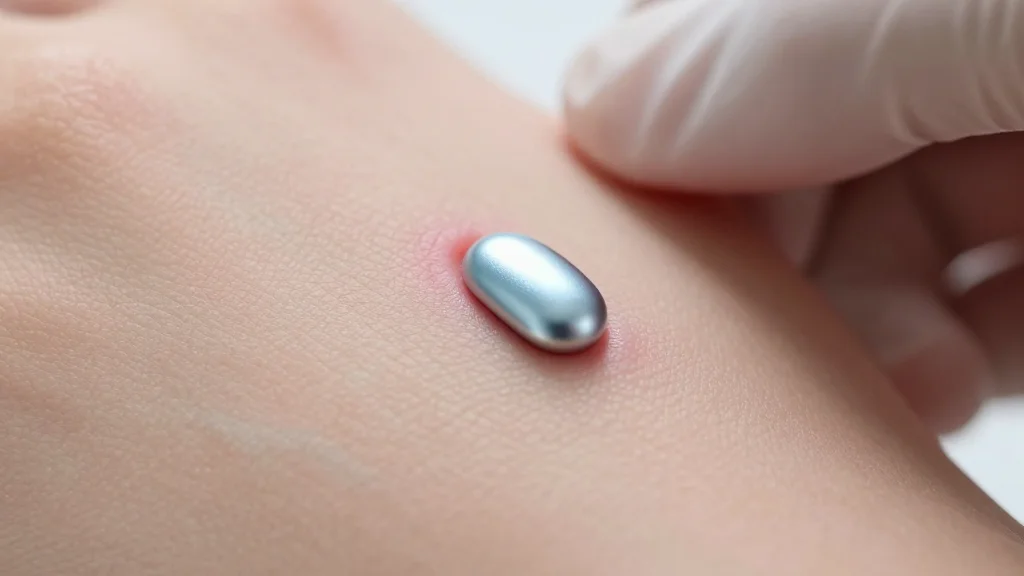
Researchers Develop Body-Compatible Dermal Electrode
Key Takeaways
- •Rigid‑to‑soft electrode penetrates skin, then softens in dermis.
- •Effervescent sacrificial layer enables seconds‑long insertion.
- •No measurable immune response in animal and human trials.
- •Stable signals persist despite sweat, dehydration, and motion.
Pulse Analysis
Wearable health monitors have become ubiquitous, yet their sensor layers remain a bottleneck. Surface electrodes suffer from signal drift caused by sweat, skin dryness, and motion, while microneedle arrays improve accuracy but provoke irritation and inflammation. The POSTECH team’s dermal bioelectrode bridges this gap by combining a rigid insertion tip with a post‑implantation soft matrix, delivering the best of both worlds: painless entry and long‑term biocompatibility.
The breakthrough hinges on ultra‑precision micro‑fabrication and an effervescent sacrificial layer that dissolves within seconds after breaching the stratum corneum. Once the layer vanishes, the device relaxes into a compliant form that matches the mechanical properties of surrounding tissue, effectively rendering it invisible to the immune system. In both animal models and limited human studies, the electrode showed negligible cellular stress and maintained consistent signal quality across varied conditions such as perspiration, dehydration, and extended wear periods.
Beyond improving everyday health trackers, this technology could accelerate the rollout of “Physical AI” platforms that require high‑dimensional biometric streams for robotics, virtual reality, and industrial automation. Reliable, deep‑layer biosignals enable more accurate motion intent detection, closed‑loop prosthetic control, and real‑time physiological feedback for autonomous systems. As AI-driven interfaces demand richer data, the dermal bioelectrode positions itself as a foundational component for the next generation of seamless human‑machine interaction.
Researchers develop body-compatible dermal electrode
Comments
Want to join the conversation?