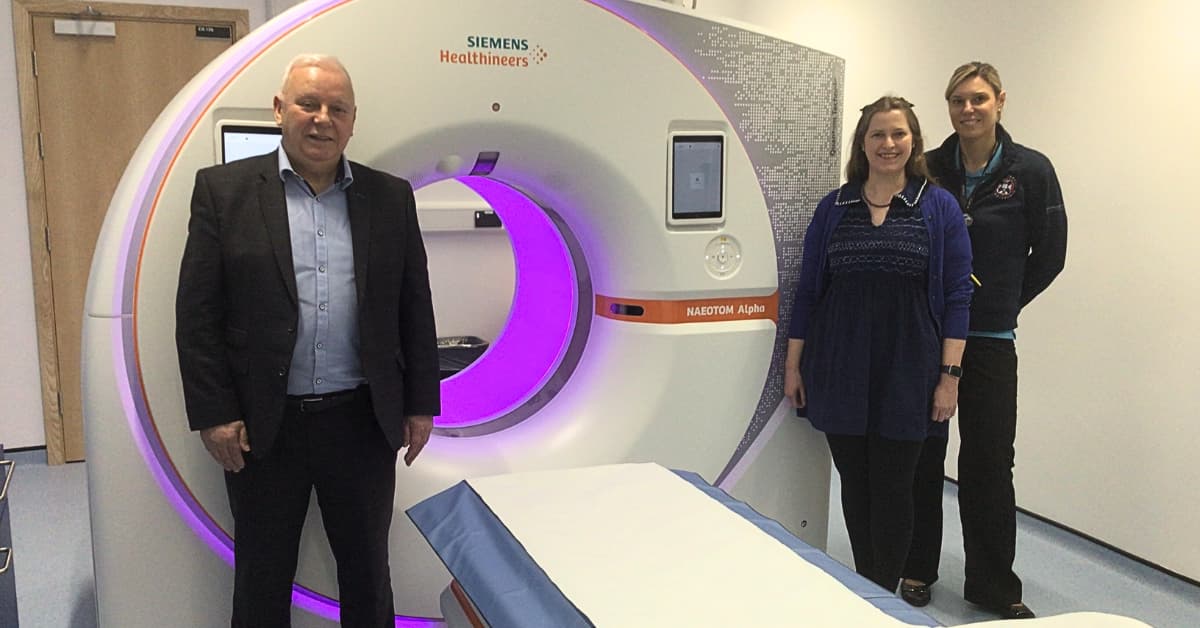
Scotland’s First Photon-Counting CT Scanner Set to Advance Multi-Organ Research and Enhance Patient Diagnosis & Care
•February 19, 2026
0
Why It Matters
Photon‑counting CT provides unprecedented image detail, enabling earlier disease detection and more accurate risk assessment, which can transform clinical decision‑making and accelerate research breakthroughs. Its adoption signals a shift toward precision medicine across Scotland and the broader UK market.
Key Takeaways
- •First photon‑counting CT installed in Scotland
- •Joint funding from University and British Heart Foundation
- •Enables ultra‑high‑resolution, spectral imaging for heart and brain
- •Supports SCOT‑HEART 2 trial for early heart‑attack detection
- •Photon‑counting detectors capture each X‑ray photon directly
Pulse Analysis
Photon‑counting computed tomography marks a paradigm shift in medical imaging. Unlike traditional CT scanners that first convert X‑rays to visible light, the Siemens Healthineers NAEOTOM Alpha uses detectors that count individual photons, extracting richer spectral data with each rotation. This architecture delivers markedly higher spatial resolution, reduced noise, and the ability to differentiate tissue types without additional contrast agents. As a result, clinicians can visualize micro‑vascular structures and subtle lesions that were previously obscured, opening new diagnostic possibilities across specialties. The system also reduces scan time, improving patient throughput in busy clinical settings.
The University of Edinburgh’s installation positions Scotland at the forefront of cardiovascular and neuro‑imaging research. The ultra‑high‑resolution scans will feed into the BHF‑funded SCOT‑HEART 2 trial, where precise coronary CT angiography aims to identify plaque characteristics that predict heart attacks earlier than conventional risk models. Beyond cardiology, the spectral capabilities enable researchers to map brain perfusion and white‑matter integrity with unprecedented clarity, accelerating the discovery of imaging biomarkers for stroke, dementia, and inflammatory disorders. These data will be shared through open‑access repositories, fostering collaboration across European research networks.
Adoption of photon‑counting CT across the UK is expected to accelerate as hospitals seek to improve diagnostic accuracy while managing radiation dose. Siemens Healthineers projects that the technology will become the new standard for high‑performance imaging within the next five years, driven by demand from research institutions and health systems alike. For the private sector, the richer data sets open avenues for AI‑driven analysis, potentially shortening interpretation times and supporting personalized treatment pathways. Ultimately, the Edinburgh deployment serves as a benchmark, encouraging further investment in next‑generation imaging platforms nationwide.
Scotland’s first photon-counting CT scanner set to advance multi-organ research and enhance patient diagnosis & care
0
Comments
Want to join the conversation?
Loading comments...