Telestroke Services Market Projected to Reach $7.2 Billion by 2033 as Stroke Rates Rise and Rural Access Gaps Widen
•March 6, 2026
0
Key Takeaways
- •Stroke incidence up 8% since 2011, 15% under 65.
- •Neurologist wait times exceed three months, hindering acute care.
- •Telestroke market projected $7.2B by 2033, 11.1% CAGR.
- •AI, 5G, cloud boost remote stroke diagnosis speed.
- •Rural hospitals gain faster thrombolysis via telestroke networks.
Summary
Stroke incidence in the United States is climbing, with an 8% rise overall and a 15% surge among adults under 65, while neurologist wait times exceed three months. These trends create urgent demand for telestroke platforms that connect remote specialists to emergency departments in minutes. The global telestroke services market is projected to grow from $3.1 billion in 2025 to $7.2 billion by 2033, a CAGR of 11.1%. AI, 5G, and cloud‑based solutions are accelerating adoption, especially in rural hospitals lacking on‑site neurologists.
Pulse Analysis
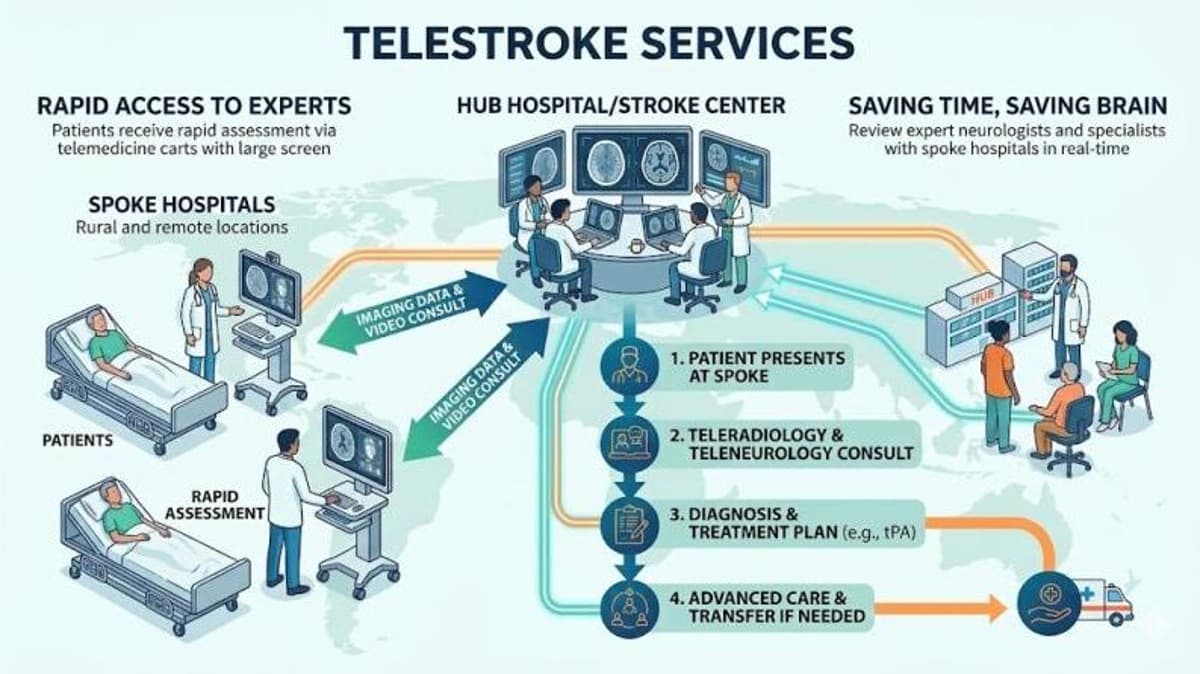
The surge in stroke cases across all U.S. demographics is reshaping emergency care priorities. With more than 795,000 strokes annually—one every 40 seconds—the time‑critical nature of treatment collides with a chronic neurologist shortage. Rural facilities, which bear a disproportionate disease burden, often wait months for specialist referrals, a timeline incompatible with thrombolytic therapy. Telestroke services bridge this gap by delivering real‑time neuro‑assessment, imaging review, and treatment recommendations, effectively turning any equipped emergency department into a virtual stroke center.
Technology is the catalyst driving telestroke’s rapid expansion. Integrated AI algorithms now flag ischemic patterns on CT scans within seconds, while 5G connectivity ensures high‑definition video streams even in bandwidth‑limited regions. Cloud platforms facilitate seamless data exchange between hospitals and central hub specialists, reducing decision latency from an hour to under twenty minutes, as demonstrated by leading vendors like Teladoc Health and Philips. These innovations not only accelerate diagnosis but also standardize protocols across disparate facilities, boosting thrombolysis rates and patient outcomes.
For investors and health‑system executives, the market presents a compelling growth narrative. Forecasts predict the telestroke sector will more than double by 2033, fueled by reimbursement reforms, consolidation of rural health networks, and escalating demand for remote specialist care. However, challenges remain: broadband gaps, high upfront capital costs, and stringent privacy regulations must be addressed to sustain momentum. Companies that can deliver scalable, secure, and AI‑enhanced solutions are poised to capture significant market share while simultaneously narrowing the rural‑urban health disparity.
Comments
Want to join the conversation?