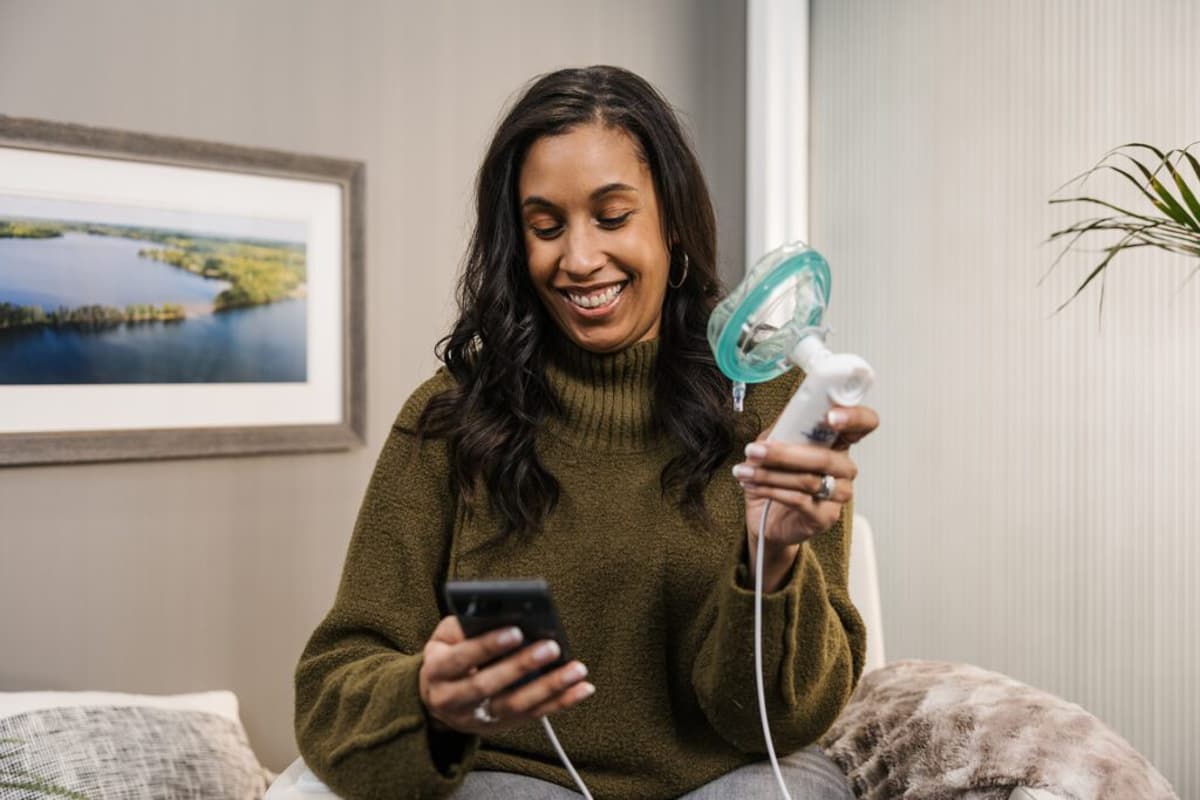
Vocxi Health and Forj Medical Partner to Miniaturise MyBreathPrint Device
•March 4, 2026
0
Key Takeaways
- •Handheld breath test fits in pocket, enabling point‑of‑care screening
- •Graphene sensors detect VOCs at parts‑per‑billion levels
- •AI algorithms deliver results within seconds, improving workflow
- •500‑unit production run validated clinical performance, ready for scale
- •Partnership generated three patents, accelerating market entry
Summary
Vocxi Health has teamed with Forj Medical to shrink its MyBreathPrint breath‑analysis system from a tabletop prototype to a handheld device the size of a deck of cards. The platform leverages graphene‑based nano sensors and AI‑driven algorithms to detect disease‑linked volatile organic compounds at parts‑per‑billion concentrations, delivering results in seconds. Over an 18‑month effort the teams resolved signal‑noise and humidity challenges, filed three joint patents, and produced a first run of 500 units that performed well in clinical trials. The compact, cloud‑connected system is positioned for large‑scale cancer screening and potential home use.
Pulse Analysis
Breath‑based diagnostics have long promised a non‑invasive window into disease, yet most prototypes remain confined to research labs. The convergence of ultra‑sensitive graphene nano‑sensors with machine‑learning analytics now makes it feasible to identify volatile organic compounds linked to lung cancer and other conditions at parts‑per‑billion levels. This level of sensitivity, combined with near‑instant data processing, positions breath analysis as a viable alternative to imaging or blood tests, especially for high‑throughput screening environments.
The engineering feat achieved by Forj Medical goes beyond simple size reduction. By applying design‑for‑manufacturability principles, the team condensed hundreds of components onto a single printed circuit board, tackled electrical noise through custom hardware and software, and solved humidity interference—an endemic issue in breath sensors. These innovations not only preserved the device's analytical precision but also enabled automated testing and scalable assembly lines, culminating in a 500‑unit pilot that met rigorous clinical benchmarks.
From a commercial perspective, the handheld MyBreathPrint could reshape early‑detection pathways. Its portability allows deployment in primary‑care clinics, community health centers, and eventually households, expanding access to life‑saving screening without the infrastructure costs of traditional imaging. The three joint patents provide a defensible IP moat, while the partnership’s rapid prototyping cycle demonstrates a replicable model for bringing advanced diagnostics to market. As healthcare systems prioritize cost‑effective, preventive care, such scalable, AI‑enhanced breath tests are poised to capture significant market share and drive a new era of personalized, point‑of‑care diagnostics.
Comments
Want to join the conversation?