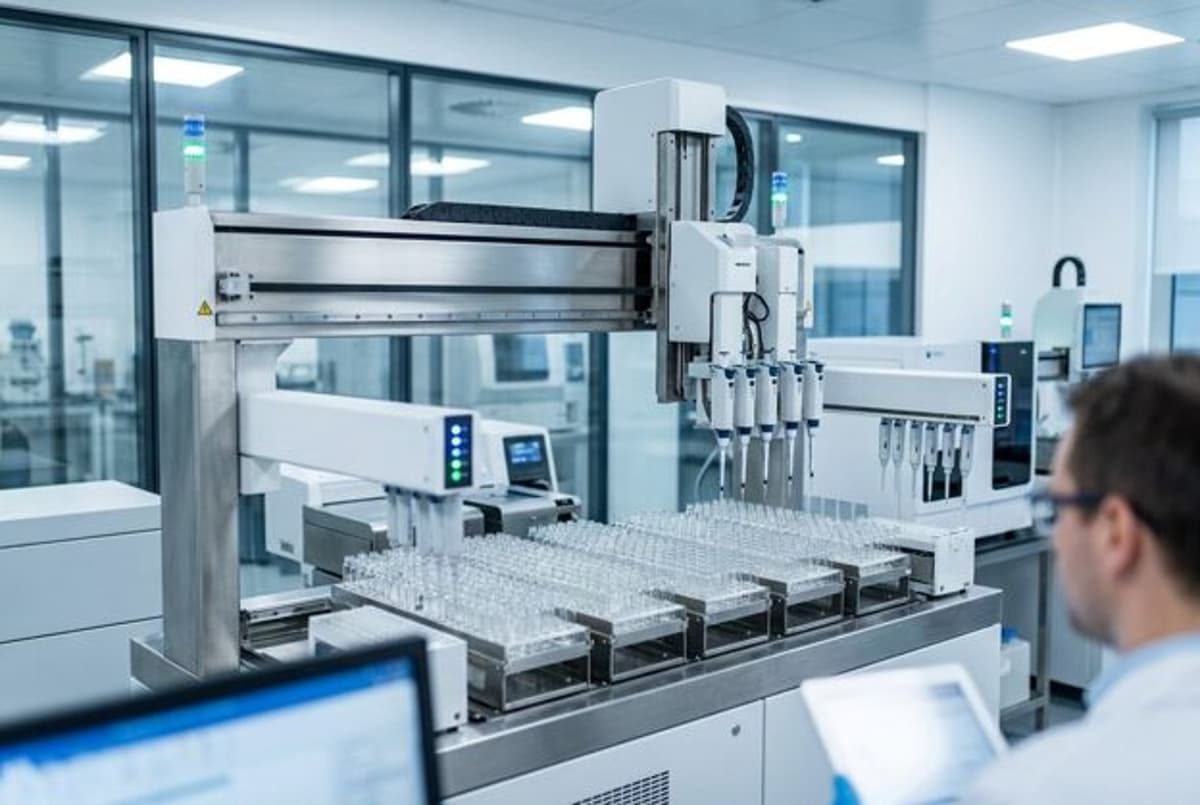
5 Ways Chromatography Advances Digital Diagnostics
Why It Matters
The quality of chromatographic data determines the accuracy of AI‑driven diagnostics and EHR integration, making analytical consistency a critical factor for patient safety and scalable telehealth services.
Key Takeaways
- •High‑resolution chromatography columns reduce data noise for AI diagnostic models
- •Automated sample‑prep kits ensure consistent extracts across distributed telehealth labs
- •Advanced syringe filters prevent artifact peaks that can mislead personalized‑medicine AI
- •Native software interfaces produce structured, auditable chromatograms for seamless EHR integration
- •Scalable column setups deliver uniform results across sites, enabling real‑time pathogen profiling
Pulse Analysis
Digital diagnostics rely on a seamless flow of high‑fidelity biological data, and chromatography remains the cornerstone of that pipeline. High‑resolution liquid and gas chromatography deliver compound‑specific, quantitative measurements that feed machine‑learning algorithms and electronic health record (EHR) decision tools. Unlike raw sensor outputs, chromatographic results are inherently reproducible, a legacy of decades in pharmaceutical quality control and environmental testing. This reproducibility translates into lower signal‑to‑noise ratios and fewer co‑eluting peaks, which in turn reduces the risk of false positives in AI‑based disease models. As health platforms scale, the analytical rigor of chromatography safeguards the integrity of predictive analytics.
The five innovations outlined in the article address the most vulnerable points of the data pipeline. Ultra‑low bleed columns eliminate chemical noise, ensuring that AI training sets remain valid over months of clinical use. Automated sample‑preparation kits standardize extraction across geographically dispersed telehealth labs, eliminating operator‑induced variability that can corrupt biomarker signals. Advanced syringe filters prevent membrane‑derived artifacts that would otherwise masquerade as disease markers in personalized‑medicine applications. Native chromatography software generates structured, auditable files that integrate directly with laboratory information management systems and EHRs, cutting manual data‑reconciliation steps. Finally, modular, scalable column platforms provide consistent performance across multiple sites, enabling near‑real‑time pathogen profiling without site‑specific calibration.
From a business perspective, investing in these upstream technologies yields downstream cost savings and competitive advantage. Reliable analytical data shortens validation cycles for new diagnostic assays, accelerates regulatory submissions, and reduces the likelihood of costly recall or misdiagnosis events. Health‑IT vendors that embed chromatography‑validated data streams into their platforms can market truly interoperable solutions, attracting hospitals seeking to expand telehealth and remote monitoring capabilities. As AI continues to dominate precision medicine, the demand for clean, reproducible inputs will grow, prompting laboratory equipment manufacturers to innovate further in column chemistry and automation. Stakeholders who recognize chromatography’s strategic role will be better positioned to capture value in the evolving digital health ecosystem.
5 Ways Chromatography Advances Digital Diagnostics
Comments
Want to join the conversation?
Loading comments...