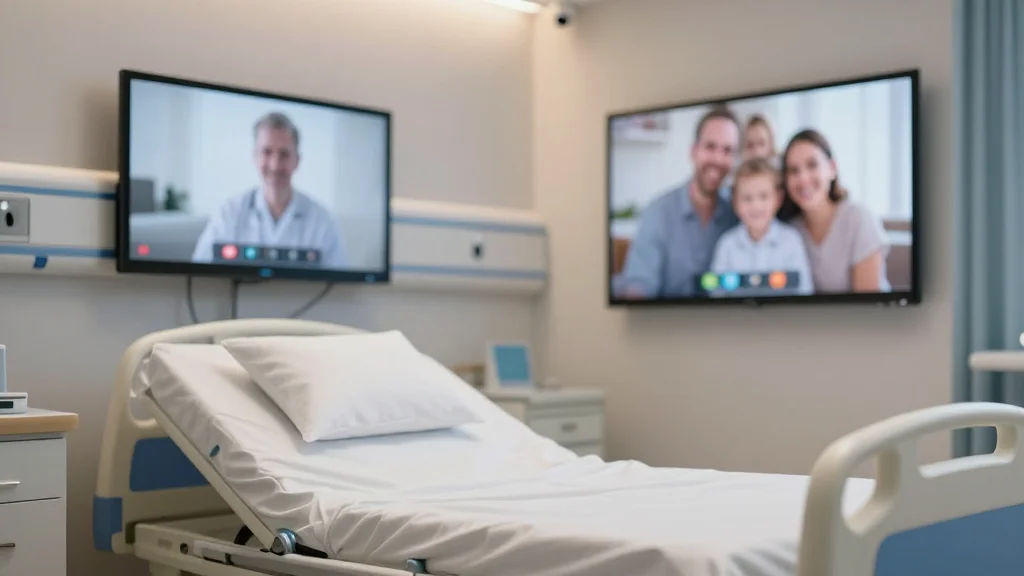
AdventHealth's Smart Rooms Enable, Not Dampen, Human Connection
Why It Matters
Personalized, data‑driven bedside care can lift patient satisfaction while streamlining clinical workflows, giving hospitals a competitive edge in the accelerating digital‑health era.
Key Takeaways
- •AdventHealth rolling out smart rooms across system, finish 2026
- •Rooms feature computer‑vision cameras, digital whiteboards, EHR‑linked door signs
- •Patient and family input shaped technology choices to boost engagement
- •Digital tools aim to streamline staff workflow and improve retention
- •Real‑time info reduces patient anxiety and supports remote caregiver involvement
Pulse Analysis
The push toward digital transformation has turned hospital rooms into potential data hubs, but many institutions risk over‑engineering spaces that alienate patients. Smart rooms—equipped with sensors, integrated displays and connectivity—promise to bridge that gap, yet adoption has been uneven due to cost, workflow disruption, and concerns about depersonalizing care. AdventHealth’s approach reflects a broader industry shift: technology must serve the human element, not replace it, as hospitals seek to meet rising expectations for transparency and convenience.
AdventHealth’s rollout focuses on three core components. Computer‑vision cameras enable virtual consults and bring distant family members into the care loop, a boon for older adults with dispersed relatives. Digital whiteboards pull real‑time data from the electronic health record, displaying care‑team assignments, test schedules and patient‑reported priorities, eliminating stale handwritten notes. EHR‑linked door signs communicate isolation precautions and special needs, reducing errors at the point of entry. Crucially, the health system involved patients, families and clinicians in prototype testing, ensuring each tool addressed real‑world pain points rather than adding unnecessary screens.
If the early metrics hold, AdventHealth could set a benchmark for how smart rooms drive both clinical and operational gains. Real‑time information reduces patient anxiety, which correlates with shorter lengths of stay and lower readmission rates. For staff, streamlined workflows free time for direct interaction, potentially improving retention in a sector plagued by burnout. As more health systems evaluate ROI, the AdventHealth model—technology selected through multidisciplinary feedback and tied to measurable outcomes—offers a replicable pathway for scaling patient‑centric digital infrastructure across the United States.
AdventHealth's smart rooms enable, not dampen, human connection
Comments
Want to join the conversation?
Loading comments...