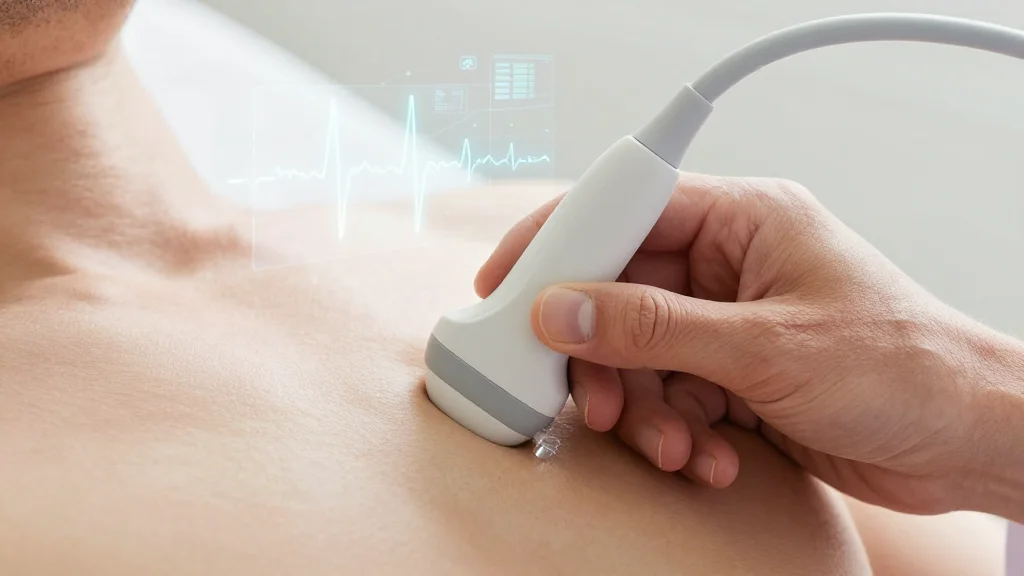
AI-Guided Training Lets Novices Capture Diagnostic-Quality Cardiac Ultrasound in 97.7% of Cases

Companies Mentioned
Why It Matters
The study demonstrates that AI can dramatically shorten the learning curve for cardiac ultrasound, a skill traditionally requiring months of hands‑on mentorship. By empowering non‑sonographer clinicians to acquire diagnostic‑grade images, health systems can alleviate sonographer shortages, accelerate emergency triage, and expand access to cardiac imaging in underserved settings. Moreover, the model validates a hybrid workflow where AI provides real‑time guidance while preserving physician oversight, addressing safety concerns that have slowed AI adoption in imaging. If replicated at scale, AI‑guided training could shift the economics of point‑of‑care echocardiography, reducing per‑scan costs and freeing specialist time for complex interpretations. This could accelerate the broader move toward decentralized diagnostics, a key pillar of value‑based care and tele‑medicine expansion.
Key Takeaways
- •Novice operators achieved diagnostic‑quality cardiac ultrasound in 97.7% of 159 scans after 8 hours of AI‑guided training.
- •Study involved nine nurses and medical students across three academic medical centers.
- •Three blinded cardiologists independently confirmed image quality, ensuring rigorous validation.
- •UltraSight’s Echosystem combines AI guidance, structured training, and physician oversight.
- •Findings address chronic cardiac sonographer shortages and could shorten emergency department imaging delays.
Pulse Analysis
UltraSight’s results arrive at a tipping point for AI in procedural training. Historically, echocardiography has been a bottleneck because acquiring high‑quality images demands tactile skill and nuanced anatomy knowledge. By offloading the real‑time acquisition decision‑making to an algorithm, the platform reduces the cognitive load on novices, allowing them to focus on patient positioning and probe handling. This mirrors trends in other specialties—such as AI‑assisted colonoscopy—where machine guidance has already shown measurable improvements in detection rates.
From a market perspective, the study gives UltraSight a defensible data point to differentiate its Echosystem from competing AI imaging tools that lack peer‑reviewed evidence. Investors will likely view the 97.7% success metric as a catalyst for deeper penetration into hospital networks, especially those facing sonographer staffing crises. However, scalability hinges on integration with existing electronic health records and the willingness of cardiology departments to cede initial image acquisition to non‑specialists.
Looking forward, the next frontier will be outcome‑based validation. While image quality is a necessary prerequisite, insurers and health systems will demand proof that AI‑guided scans translate into faster diagnoses, reduced length of stay, or lower mortality. UltraSight’s commitment to publish longitudinal data will be critical to moving from a promising pilot to a standard of care. If the company can demonstrate that AI‑accelerated training maintains diagnostic fidelity over time, it could set a new benchmark for point‑of‑care imaging across the health tech ecosystem.
AI-Guided Training Lets Novices Capture Diagnostic-Quality Cardiac Ultrasound in 97.7% of Cases
Comments
Want to join the conversation?
Loading comments...