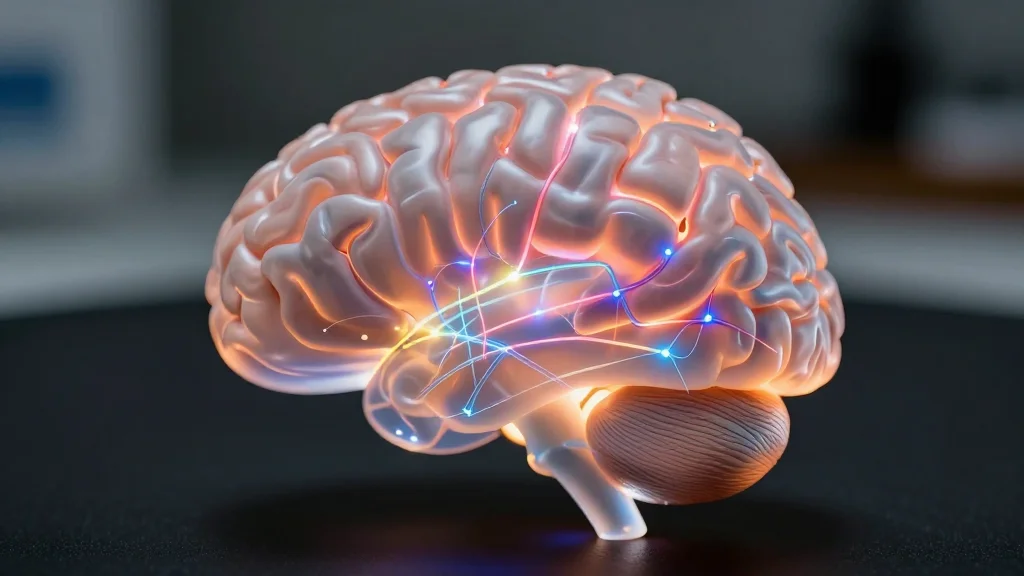
AI Model Enables More than a Million-Fold Acceleration of Diffuse Optical Tomography for Real-Time Diagnosis
Why It Matters
The breakthrough transforms diffuse optical tomography from a slow, research‑only tool into a real‑time clinical imaging modality, expanding non‑invasive diagnostic options for brain injuries and tumors.
Key Takeaways
- •AI model predicts light propagation in 2 ms, >1 million‑fold speedup
- •Enables real‑time diffuse optical tomography for brain hemorrhage detection
- •Neural network trained on extensive simulation data generalizes to unseen cases
- •Combines with statistical sampling to locate and size abnormalities accurately
- •Offers radiation‑free, non‑invasive imaging alternative for tumors
Pulse Analysis
Diffuse optical tomography (DOT) has long promised a safe, radiation‑free window into the human body by using near‑infrared light to map tissue properties. In practice, the technique’s diagnostic power is hampered by the need to solve the radiative transfer equation, a computation that can consume several hours for a single scan. The recent breakthrough from the University of Tsukuba replaces this bottleneck with a neural‑network emulator that delivers predictions in roughly two milliseconds, effectively turning a once‑offline method into a real‑time tool.
The researchers trained a deep neural network on a massive library of Monte‑Carlo simulations covering a wide range of absorber shapes, sizes, and depths. Once trained, the model interpolates the photon‑density field for new configurations with an error margin limited only by the noise in the original data. Benchmarks show a speed increase of more than one million times compared with conventional solvers, while maintaining fidelity sufficient for clinical decision‑making. By coupling the emulator with Bayesian sampling, the system can also infer the location and volume of hemorrhages or tumors directly from measured signals.
From a business perspective, this acceleration opens the door to portable DOT devices that can be deployed in emergency rooms, intensive‑care units, or even ambulances, expanding the market for point‑of‑care imaging. The technology also aligns with growing demand for non‑ionizing diagnostic modalities, positioning it as a complementary alternative to CT and MRI for brain monitoring. As hospitals seek faster, cost‑effective imaging, vendors that integrate the AI‑driven DOT engine into their product lines could capture a sizable share of the emerging neuro‑diagnostic market.
AI model enables more than a million-fold acceleration of diffuse optical tomography for real-time diagnosis
Comments
Want to join the conversation?
Loading comments...