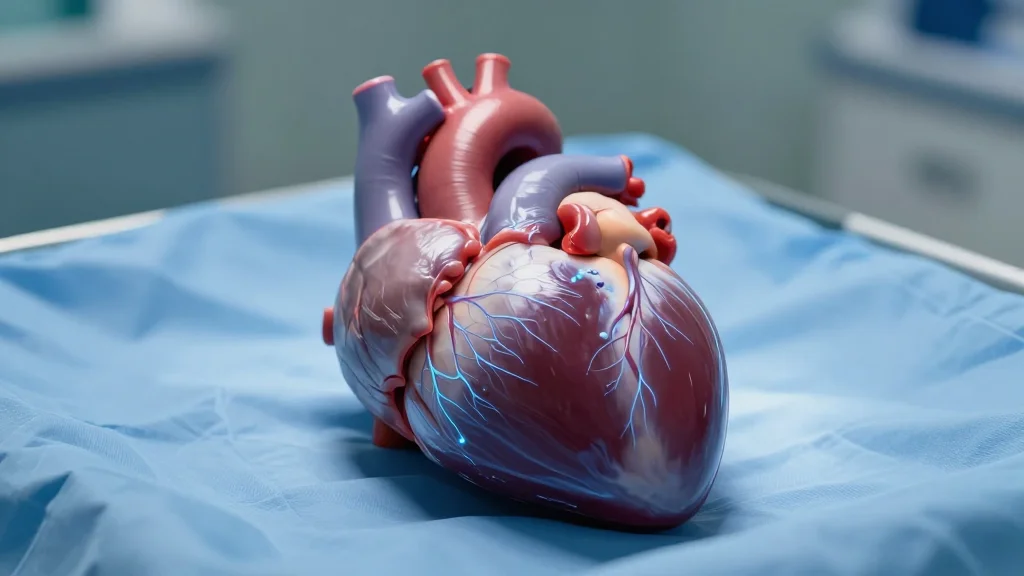
AI Tools Let Surgeons Evaluate Heart Transplants in Minutes, Cutting Wait Times

Why It Matters
The shortage of donor hearts is a chronic bottleneck in transplant medicine, with patients often dying while awaiting a suitable organ. By compressing the decision window to minutes and providing a data‑driven risk profile, AI tools could increase the utilization rate of available hearts from the current 30‑40% toward a higher threshold, directly saving lives. Moreover, standardized AI assessments may reduce geographic disparities, ensuring that transplant centers across the country apply consistent criteria rather than relying on individual clinician experience alone. Beyond immediate clinical benefits, the rollout of AI decision‑support in transplantation signals a broader shift toward algorithmic assistance in high‑stakes, time‑critical medical decisions. Successful adoption could pave the way for similar tools in liver, lung, and kidney allocation, reshaping organ‑sharing networks and prompting new regulatory frameworks for AI in acute care.
Key Takeaways
- •Dr. Brian Wayda unveiled AI tools at ISHLT meeting on April 22, 2026.
- •TOPHAT uses 20 donor variables to predict acceptance probability in seconds.
- •Only 30‑40% of offered hearts are currently transplanted; AI aims to raise that figure.
- •AI‑assisted echocardiogram reads improve consistency over manual ejection‑fraction measurement.
- •Multi‑center trials and FDA SaMD discussions planned for later 2026.
Pulse Analysis
The introduction of AI decision‑support for heart transplantation arrives at a moment when the organ‑allocation ecosystem is under pressure from both supply constraints and increasing patient acuity. Historically, transplant centers have relied on seasoned clinicians to synthesize a flood of data under tight deadlines, a process prone to variability and cognitive bias. Wayda’s TOPHAT model leverages decades of national transplant data, offering a reproducible benchmark that could level the playing field among centers of differing experience.
From a market perspective, the technology sits at the intersection of health‑IT, AI SaaS, and medical device regulation. Companies that can certify their algorithms as FDA‑approved SaMD will likely command premium pricing, especially if they demonstrate a measurable lift in organ utilization rates. The open‑access version slated for early 2027 suggests a hybrid model: free research tools to build credibility, followed by enterprise‑grade, integrated platforms sold to hospital networks. Competitors such as IBM Watson Health and emerging startups in the organ‑allocation space will need to differentiate on data breadth, real‑time integration, and clinician trust.
Looking ahead, the key challenges will be data privacy, algorithmic transparency, and the need for rigorous prospective validation. If the upcoming multi‑center trials confirm that AI‑augmented decisions improve post‑transplant outcomes without increasing adverse events, payers may incentivize adoption, and policy makers could incorporate AI metrics into allocation guidelines. In short, Wayda’s announcement could be the catalyst that transforms heart‑transplant logistics from a reactive, intuition‑driven process to a proactive, evidence‑based workflow, with ripple effects across the entire organ‑donation continuum.
AI Tools Let Surgeons Evaluate Heart Transplants in Minutes, Cutting Wait Times
Comments
Want to join the conversation?
Loading comments...