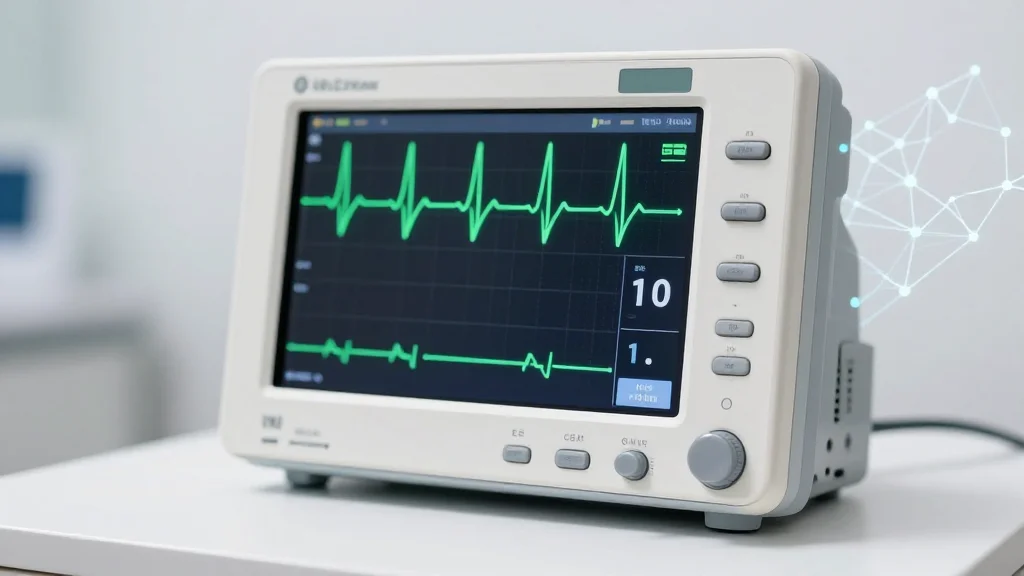
AI Uses 12-Lead ECGs to Predict Long-Term Stroke Risk
Companies Mentioned
Why It Matters
By extracting stroke risk from routine ECGs, ECG2Stroke could enable earlier, cost‑effective identification of high‑risk individuals, guiding preventive interventions before a stroke occurs.
Key Takeaways
- •ECG2Stroke predicts stroke risk with AUC around 0.78–0.80.
- •Model trained on >100,000 ECGs from three Boston hospitals.
- •Performance matches Framingham Stroke Risk Profile without extra labs.
- •P‑wave variations drive most of the AI’s risk predictions.
Pulse Analysis
The emergence of ECG2Stroke marks a pivotal shift in cardiovascular risk assessment, leveraging deep‑learning techniques to transform a ubiquitous diagnostic test into a predictive stroke‑screening tool. Traditional stroke risk models rely on demographic and laboratory data, often requiring separate appointments and costly tests. By repurposing the 12‑lead ECG—already performed for millions of patients annually—this AI approach offers a low‑cost, high‑throughput avenue to flag individuals who may benefit from intensified lifestyle counseling or pharmacologic therapy, potentially curbing the rising global stroke burden.
Performance metrics underscore the model’s clinical relevance. Across three independent datasets from Brigham and Women’s, Massachusetts General, and Beth Israel Deaconess, ECG2Stroke consistently delivered AUC values near 0.78, on par with the well‑validated Framingham Stroke Risk Profile. Notably, the algorithm maintained discriminative power in both atrial fibrillation and sinus rhythm cohorts, suggesting it captures underlying atrial cardiopathy signals beyond overt arrhythmia. Saliency map analysis revealed that variations in the P‑wave region—reflecting atrial depolarization—were the dominant drivers of risk estimation, aligning with emerging evidence linking atrial substrate abnormalities to cardio‑embolic strokes.
If integrated into electronic health records, ECG2Stroke could automate risk stratification at the point of care, prompting clinicians to initiate targeted preventive measures such as tighter blood pressure control, statin therapy, or rhythm monitoring. The scalability of an ECG‑based solution also opens pathways for population‑level screening programs, especially in resource‑constrained settings where advanced imaging or biomarker panels are impractical. Ongoing validation in diverse demographics and prospective trials will be essential to confirm its utility, but the technology already signals a new frontier where AI augments routine diagnostics to preempt one of the world’s leading causes of disability.
AI uses 12-lead ECGs to predict long-term stroke risk
Comments
Want to join the conversation?
Loading comments...