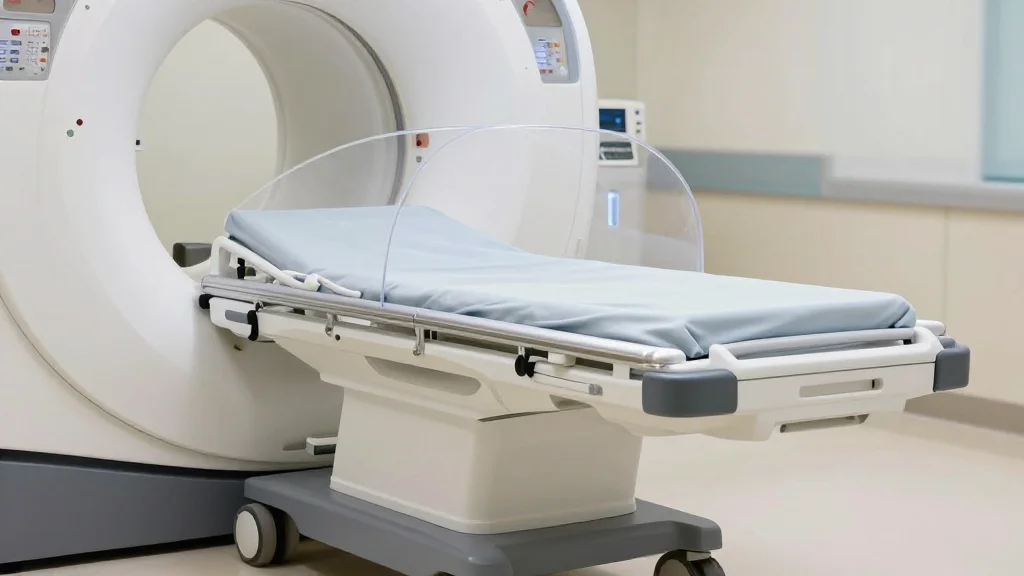
AIIMS Deploys India's First Bedside Portable MRI for Critical Care

Why It Matters
The bedside MRI addresses a long‑standing gap in critical‑care diagnostics, where moving unstable patients to a traditional scanner can delay treatment and increase risk. By bringing imaging to the patient, AIIMS improves the speed of decision‑making for life‑threatening conditions such as stroke and traumatic brain injury, potentially saving lives and reducing ICU length of stay. Beyond clinical benefits, the technology could democratize advanced neuro‑imaging in resource‑constrained hospitals. Lower acquisition costs and reduced infrastructure requirements make it feasible for regional centers to offer MRI capabilities without the capital outlay of a full‑scale suite, accelerating equitable access to high‑quality diagnostics across India’s health system.
Key Takeaways
- •AIIMS New Delhi launched India’s first portable bedside MRI, a low‑field device approved by regulators.
- •The system is already in use at the Center for Neurological Conditions under Dr. Shailesh Gaikwad.
- •Portable MRI eliminates the need to transport unstable ICU patients, reducing diagnostic delays.
- •Internationally, similar bedside MRI units are deployed in the US, Canada, UK, Australia, New Zealand and EU countries.
- •The technology may lower imaging costs and expand MRI access to smaller hospitals lacking dedicated suites.
Pulse Analysis
AIIMS’s deployment of a bedside MRI reflects a broader trend toward point‑of‑care imaging that began in high‑income markets a decade ago. Low‑field magnetic resonance technology has matured enough to deliver clinically actionable images while sidestepping the massive infrastructure and safety constraints of high‑field systems. In India, where public hospitals often grapple with space, budget and patient volume pressures, the move could catalyze a new segment of domestic manufacturers aiming to capture a price‑sensitive market.
Historically, MRI adoption in India has been hampered by high capital costs and limited availability outside major metros. By demonstrating a functional, regulatory‑cleared low‑field unit in a flagship institution, AIIMS provides a proof‑point that may encourage both public and private providers to reconsider their imaging strategies. If early outcome data show comparable diagnostic accuracy for acute neuro‑emergencies, insurers and policymakers could incorporate bedside MRI into reimbursement frameworks, further accelerating uptake.
Looking forward, the competitive landscape will likely see established MRI vendors—Siemens, GE, Philips—pushing low‑field variants, while Indian startups may partner with research hospitals to co‑develop indigenous solutions. The key differentiator will be integration with hospital information systems and AI‑driven image analysis, enabling rapid interpretation at the bedside. AIIMS’s early adoption positions it as a testbed for such innovations, and the data it generates will shape the next wave of health‑tech investments in India’s imaging ecosystem.
AIIMS Deploys India's First Bedside Portable MRI for Critical Care
Comments
Want to join the conversation?
Loading comments...