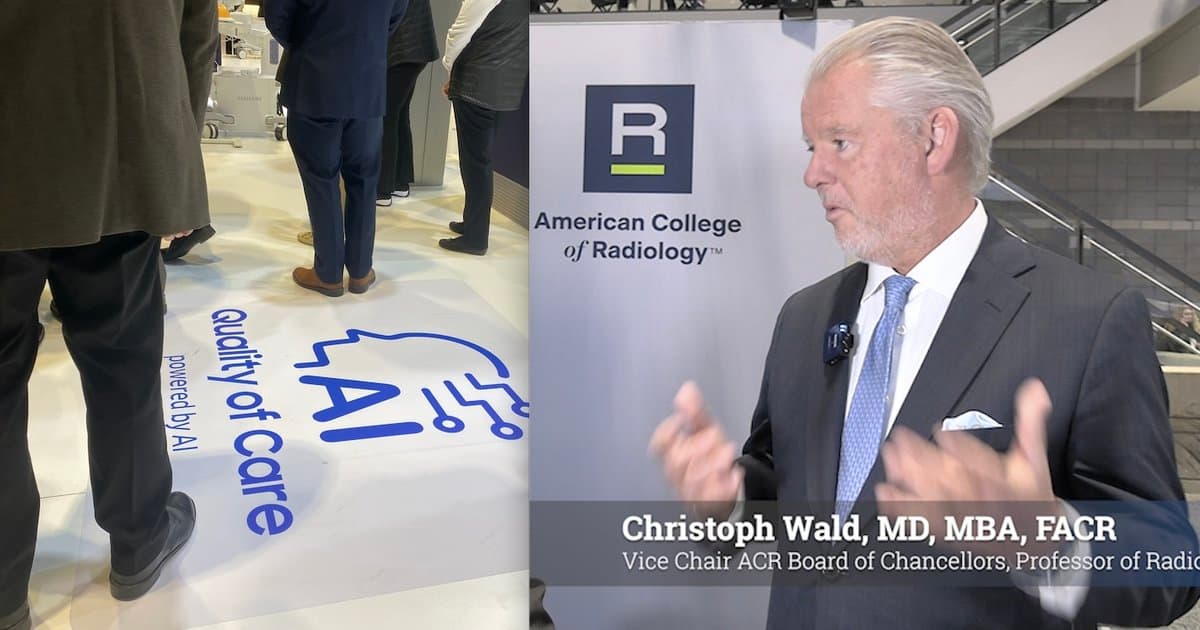
American College of Radiology Expands Tools to Help Practices Evaluate Imaging AI
Why It Matters
Providing standardized evaluation and monitoring tools reduces the risk of ineffective or drifting AI, safeguarding diagnostic quality and patient outcomes. This guidance accelerates responsible AI adoption across radiology practices, strengthening the specialty’s competitive edge.
Key Takeaways
- •ACR’s Data Science Institute catalogues all FDA‑cleared pixel‑based AI
- •New Assess AI registry tracks performance and detects algorithm drift
- •Over 1,400 FDA‑cleared AI algorithms exist, 80% for imaging
- •Tools guide practices in selection, testing, and ongoing monitoring
- •Non‑pixel AI expands workflow, reporting, and asset management capabilities
Pulse Analysis
Artificial intelligence has moved from experimental labs into everyday radiology departments, driven by a surge of vendor offerings and regulatory approvals. With more than 1,400 FDA‑cleared algorithms—80 percent focused on imaging—radiology leaders face a paradox of choice: the potential for faster diagnoses and workflow efficiencies is counterbalanced by uncertainty about real‑world efficacy. Variations in scanner hardware, imaging protocols, and patient demographics can cause an algorithm that performed well in trials to underperform in practice, a phenomenon known as model drift. Consequently, clinicians demand transparent, evidence‑based frameworks to vet, implement, and continuously assess AI tools.
The ACR’s Data Science Institute, launched in 2017, now serves as a central hub for such governance. By maintaining a comprehensive repository of pixel‑based AI and introducing the Assess AI registry, the college offers a dual‑track approach: a searchable catalog for procurement decisions and a de‑identified data portal that aggregates DICOM images and outcome metrics. This infrastructure enables practices to conduct acceptance testing, benchmark algorithm performance against institutional baselines, and receive alerts when statistical drift emerges. The registry’s longitudinal tracking also supports research collaborations, feeding anonymized data back to developers for iterative improvement.
Beyond compliance, the ACR’s initiatives have strategic market implications. Vendors are incentivized to demonstrate post‑market robustness, while hospitals can differentiate themselves by adopting AI with proven, monitored outcomes. As non‑pixel AI—such as large language model‑driven report generation and asset‑management tools—gains traction, the need for holistic evaluation frameworks will only intensify. Ultimately, the ACR’s expanded toolkit equips radiology practices to harness AI’s promise while mitigating risks, fostering a more reliable, patient‑centric imaging ecosystem.
American College of Radiology expands tools to help practices evaluate imaging AI
Comments
Want to join the conversation?
Loading comments...