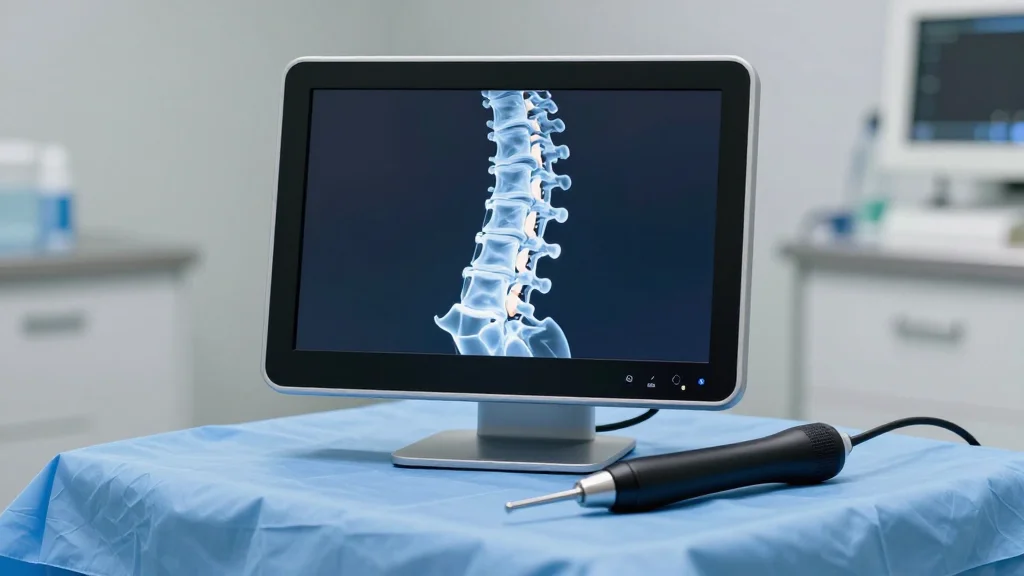
Amplify Surgical and Emory Healthcare Perform First Continuously Navigated Endoscopic TLIF

Companies Mentioned
Why It Matters
The successful execution of a continuously navigated endoscopic TLIF signals a shift toward fully integrated surgical suites that combine imaging, robotics and implant technology in a single, uninterrupted workflow. By eliminating navigation gaps, surgeons can achieve higher precision while preserving the benefits of minimally invasive approaches, potentially lowering complication rates and accelerating patient recovery. If the technique scales, it could reshape training pathways for spine surgeons, making endoscopic fusion more accessible and reducing the steep learning curve that has limited its adoption. The collaboration among Amplify Surgical, Stryker, VB Spine and Emory also illustrates how strategic partnerships can fast‑track innovation, setting a template for future joint ventures in the HealthTech arena.
Key Takeaways
- •Amplify Surgical and Emory Healthcare performed the first continuously navigated endoscopic TLIF.
- •The procedure used dualPortal two‑portal endoscopic system, dualX expandable cage, and Stryker’s Q Guidance navigation suite.
- •Continuous navigation was maintained from skin incision through powered pedicle‑screw placement.
- •Dr. Daniel Refai highlighted the precision and confidence gained from uninterrupted navigation.
- •The case may accelerate adoption of integrated robotic‑imaging platforms in spine surgery.
Pulse Analysis
The Emory‑Amplify case is more than a technical showcase; it marks a convergence point for three market forces reshaping spine care: the push for minimally invasive techniques, the rise of real‑time navigation, and the strategic bundling of devices across manufacturers. Historically, endoscopic TLIFs have suffered from limited adoption due to steep learning curves and concerns over accuracy. By marrying continuous navigation with a dedicated two‑portal platform, the procedure directly addresses those pain points, offering a reproducible workflow that could lower the barrier to entry for community hospitals.
From a competitive standpoint, Amplify Surgical’s dualPortal system is positioned against established endoscopic platforms from companies like Medtronic and Globus Medical. The integration with Stryker’s navigation suite gives Amplify a differentiator that could attract surgeons seeking a turnkey solution. Meanwhile, VB Spine’s ES2 screw system gains visibility as part of a high‑profile case, potentially expanding its market share in minimally invasive pedicle‑screw fixation. If outcome data confirm reduced operative times and comparable fusion rates, insurers may be quicker to reimburse these bundled solutions, further driving adoption.
Looking forward, the real test will be scalability. The Emory case was performed by a highly experienced team with access to cutting‑edge equipment. Replicating the workflow across varied hospital settings will require robust training programs, streamlined instrumentation sets, and clear evidence of cost‑effectiveness. Should Amplify and its partners deliver on those fronts, the continuously navigated endoscopic TLIF could become a new standard, reshaping the economics of lumbar fusion and cementing the role of integrated HealthTech ecosystems in surgical innovation.
Amplify Surgical and Emory Healthcare Perform First Continuously Navigated Endoscopic TLIF
Comments
Want to join the conversation?
Loading comments...