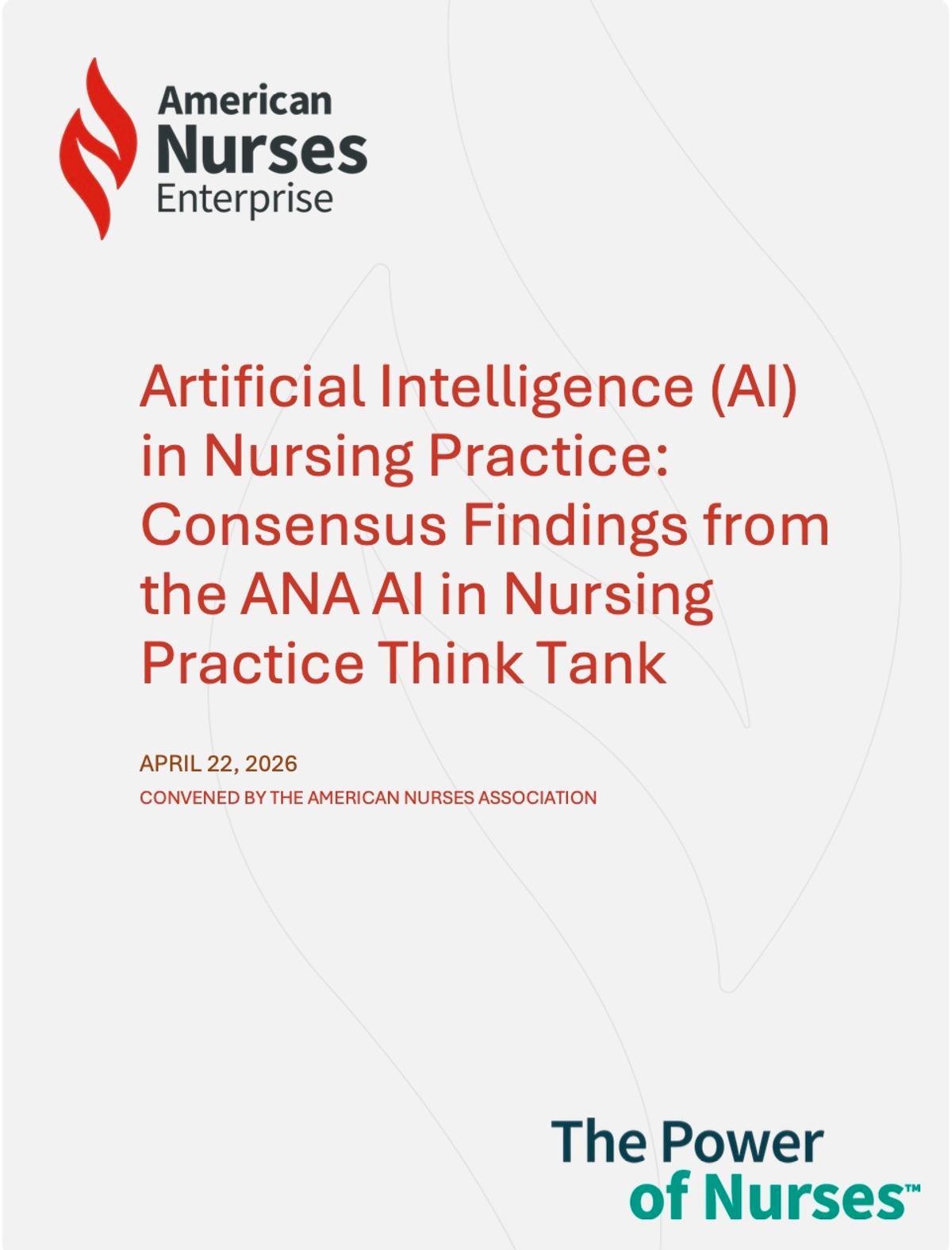
ANA Releases Landmark Consensus Report on Artificial Intelligence in Nursing Practice
Why It Matters
By defining clear principles and education standards, the report protects patient safety while shaping regulatory and market expectations for AI tools in healthcare. It positions nurses as the decisive voice in AI deployment, influencing vendor design and hospital policy.
Key Takeaways
- •Automation bias flagged as top patient safety risk
- •Nurses retain final authority over AI recommendations
- •AI literacy now mandatory for all registered nurses
- •Explainable AI required for accountability and ethics
- •Nursing AI Playbook to guide nationwide implementation
Pulse Analysis
Artificial intelligence is rapidly moving from experimental labs into the daily workflow of the United States' five million registered nurses. As predictive algorithms, decision‑support platforms, and robotic assistants become commonplace, the profession faces a paradox: unprecedented efficiency gains alongside new cognitive hazards. The ANA's consensus report arrives at this inflection point, offering a unified stance that balances innovation with the core tenets of nursing—clinical judgment, ethical responsibility, and patient advocacy. By codifying AI literacy as a baseline competency, the association signals that future hiring, credentialing, and continuing‑education programs will need to embed technical fluency alongside traditional bedside skills.
At the heart of the report are four non‑negotiable principles: human‑in‑the‑loop decision‑making, alignment with the ANA Code of Ethics, demand for explainable AI, and lifelong learning. These guidelines directly address the "automation bias" risk, where over‑reliance on algorithmic output can erode holistic patient assessment. Moreover, the document spotlights an "accountability vacuum"—the unclear liability split among bedside nurses, health‑system administrators, and AI vendors. By insisting on transparent, auditable models, the ANA pushes regulators and manufacturers toward designs that support traceable decision pathways, reducing legal exposure for clinicians and fostering trust among patients.
Looking ahead, the ANA's five priority actions, especially the development of a Nursing AI Playbook, will serve as a practical roadmap for hospitals, health systems, and technology partners. The playbook is expected to outline workflow integration steps, training curricula, and governance structures that keep nurses at the helm of AI adoption. For vendors, this translates into a market demand for user‑friendly, explainable solutions that can be seamlessly incorporated into existing nursing protocols. For policymakers, the report offers a template for crafting regulations that safeguard patient outcomes while encouraging responsible AI innovation. In sum, the ANA's consensus report not only protects the nursing profession but also sets a benchmark for AI governance across the broader healthcare ecosystem.
ANA Releases Landmark Consensus Report on Artificial Intelligence in Nursing Practice
Comments
Want to join the conversation?
Loading comments...