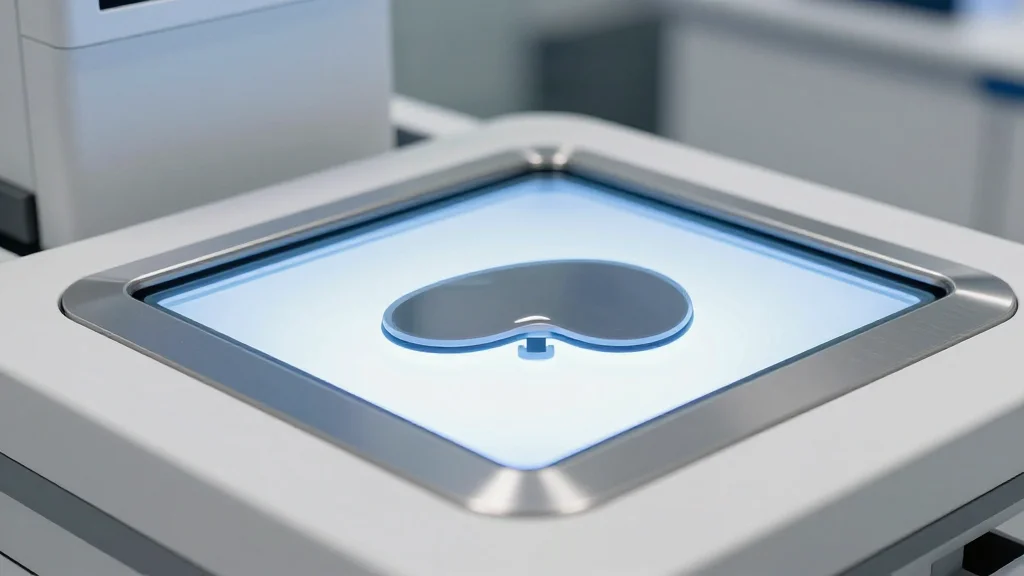
Arkana Laboratories Finishes $24 Million Lab Renovation, Adds 70 Jobs and Same‑day Kidney Biopsies

Why It Matters
The renovation underscores the critical role of pathology infrastructure in modern health‑tech. Faster, same‑day biopsy results accelerate clinical decision‑making, directly impacting patient care for kidney disease—a condition affecting millions. By investing in advanced molecular testing, Arkana also bridges the gap between traditional pathology and emerging precision‑medicine approaches, setting a benchmark for other specialty labs. The project illustrates how state‑level incentives can catalyze health‑tech investment, creating jobs while enhancing national diagnostic capacity. As the kidney biopsy market expands toward $3.7 billion by 2035, Arkana’s expanded capabilities position it to capture a larger share of a growing, technology‑driven segment of health care.
Key Takeaways
- •Arkana completed a $24 million, 24,000‑sq‑ft lab renovation in Little Rock.
- •The new facility will create more than 70 jobs, raising total staff to 243.
- •Same‑day kidney biopsy results will be offered nationwide, improving turnaround times.
- •State incentives (Advantage Arkansas and Tax Back) helped fund the project.
- •Kidney biopsy market projected to reach $3.7 billion by 2035, driven by tech advances.
Pulse Analysis
Arkana’s expansion arrives at a moment when health‑tech investors are prioritizing diagnostic speed and molecular precision. The $24 million outlay, while modest compared with mega‑scale biotech builds, reflects a strategic focus on niche specialization. By doubling down on kidney pathology—a high‑volume, high‑impact area—Arkana can leverage economies of scale that many generalist labs cannot.
The same‑day biopsy service is more than a convenience; it reshapes care pathways for acute kidney injury and chronic kidney disease, where early intervention can prevent costly dialysis or transplant procedures. This capability may also attract partnerships with tele‑medicine platforms that need rapid lab feedback to close the loop on virtual visits. Competitors lacking such speed risk losing market share to Arkana, especially as insurers increasingly tie reimbursement to outcome‑based metrics.
State incentives played a pivotal role, demonstrating how public policy can accelerate health‑tech infrastructure. The Advantage Arkansas tax credits and Tax Back refunds effectively reduced the net capital cost, allowing Arkana to allocate more resources to R&D. If other states replicate similar incentive structures, we could see a wave of regional diagnostic hubs, decentralizing what has traditionally been a centralized lab ecosystem. Arkana’s move could thus serve as a template for aligning public policy with private health‑tech growth.
Future growth will hinge on Arkana’s ability to integrate its molecular testing platform with emerging data‑analytics tools. As genomic and proteomic data become routine in pathology reports, labs that can seamlessly combine these layers will command premium pricing and stronger clinical partnerships. Arkana’s expanded footprint provides the physical capacity; the next challenge will be the digital infrastructure to turn raw molecular data into actionable insights for clinicians.
Overall, the renovation signals a broader shift: health‑tech firms are investing in physical assets to complement software‑first strategies, recognizing that faster, more accurate diagnostics are a cornerstone of value‑based care. Arkana’s gamble appears well‑timed, and its success could encourage similar investments across other specialty labs.
Arkana Laboratories finishes $24 million lab renovation, adds 70 jobs and same‑day kidney biopsies
Comments
Want to join the conversation?
Loading comments...